 Save to Pinterest
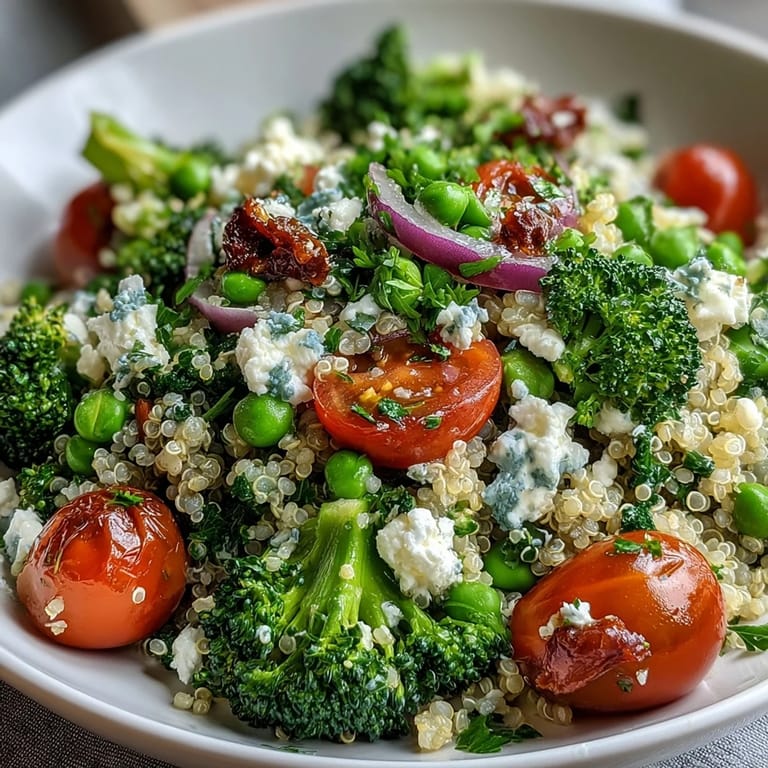
 There's something about a grain bowl that caught me off guard the first time I really paid attention to one—not just throwing things together, but realizing each element mattered. I was rushing through a Tuesday afternoon when I grabbed some leftover quinoa from the fridge and started roasting vegetables without a plan, and somehow the combination of nutty grains, bright green broccoli, and that salty feta made me slow down. It became the kind of meal I actually look forward to making, especially when I want something that feels both substantial and light.
I made this for a friend who mentioned she was tired of eating the same salads, and watching her face when she tried it was genuinely rewarding—she went back for seconds and asked for the recipe immediately. That moment stuck with me because it reminded me that simple food, when done with intention, becomes something people actually want to eat again. It's not fancy, but it feels like you care about what you're serving.
Ingredients
- Quinoa: Rinsing it first removes any bitterness and prevents that weird coating that can make it taste slightly off—this small step genuinely changes everything.
- Broccoli florets: Keep them roughly the same size so they cook evenly; overcooking turns them mushy and gray instead of that vibrant green you're after.
- Green peas: Frozen ones are actually better than fresh for this because they're already blanched and have better texture; thaw them gently rather than boiling them to death.
- Cherry tomatoes: Halving them releases their juices into the dressing, creating a subtle sweetness that balances the tang of the feta.
- Red onion: Thinly slicing it raw gives a sharp bite that wakes up the whole bowl; if it feels too intense, give it a quick rinse under cold water.
- Feta cheese: Crumbling it by hand instead of using pre-crumbled gives you better texture and prevents clumping from the anti-caking agents they add.
- Extra-virgin olive oil: This isn't the time to skimp on quality—it's one of the few ingredients where you really taste the difference in a simple dressing.
- Lemon juice: Fresh squeezed matters here; bottled juice tastes flat and slightly metallic by comparison.
- Dijon mustard: This acts as an emulsifier, helping the dressing coat the vegetables instead of pooling at the bottom of the bowl.
Tired of Takeout? 🥡
Get 10 meals you can make faster than delivery arrives. Seriously.
One email. No spam. Unsubscribe anytime.
Instructions
- Rinse and cook your quinoa:
- Combine rinsed quinoa with water or broth in a medium saucepan, bring it to a boil, then immediately reduce the heat to low and cover it. Let it simmer for exactly 15 minutes—no peeking around the 10-minute mark, just trust the timing. When the liquid is absorbed, give it a gentle fluff with a fork and let it cool for a minute or two while you tackle the vegetables.
- Get your broccoli tender-crisp:
- Whether you steam or blanch it, the goal is that perfect texture where it's cooked through but still has a slight bite. A quick cold water rinse stops the cooking immediately and keeps the color bright green instead of that drab olive tone.
- Wake up the peas:
- Frozen peas just need a quick dunk in boiling water or a brief blanch if they're fresh. Drain them well so they don't make your bowl watery.
- Build your dressing:
- In a small bowl, whisk together the olive oil, lemon juice, mustard, and minced garlic until it emulsifies and looks slightly thicker and paler. Taste it before you finish—this is where salt and pepper actually matter because a bland dressing sinks the entire bowl.
- Combine everything with intention:
- Toss the cooled quinoa with vegetables gently so nothing gets bruised, then pour the dressing over and mix just enough to coat everything evenly. Don't oversee this step or you'll end up with mush.
- Plate and finish:
- Divide among bowls and top each with a handful of crumbled feta and fresh parsley—adding it on top rather than mixed in means it stays creamy and distinct instead of getting lost in the grains.
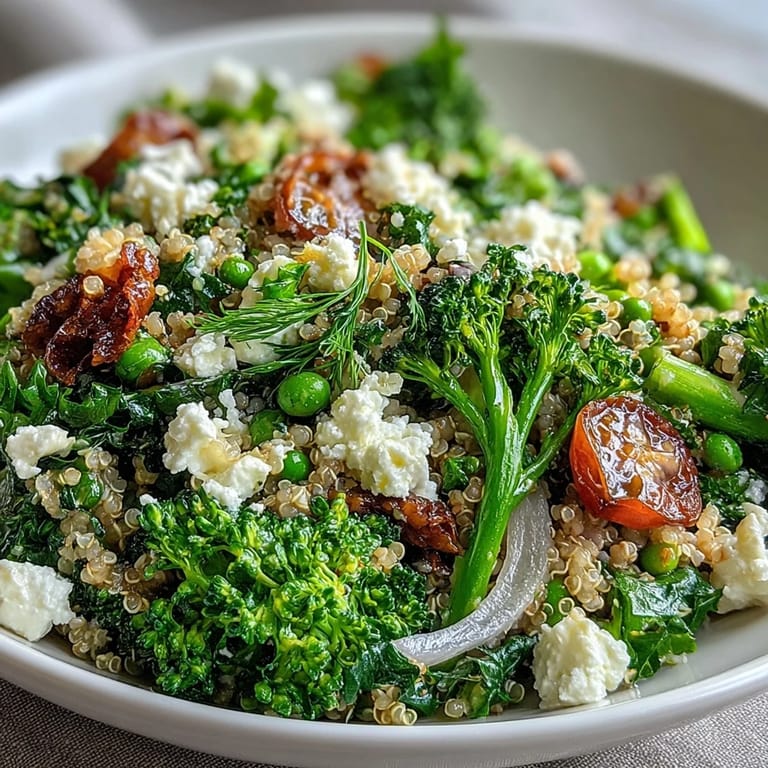 Save to Pinterest
 There was a morning I made a huge batch of this for a work potluck, and someone asked if it was from a restaurant—not because it was complicated, but because it looked intentional and tasted alive. That's when I realized this recipe isn't about being fancy; it's about respecting your ingredients enough to let them shine.
Timing Your Bowl
The beauty of this dish is its flexibility around when you eat it—serve it warm right after combining everything if you want the feta soft and the vegetables still steaming, or let it chill for an hour if you prefer cooler textures and flavors that have had time to meld. I've found that making it in the morning and eating it for lunch actually improves the dressing distribution because the grains continue to absorb flavor as it sits. The bowl stays fresh in the fridge for two days, which means meal prep becomes actually enjoyable instead of tedious.
Variations That Actually Work
Once you understand the structure of this bowl, you can play with it honestly rather than randomly swapping things out. I've replaced the quinoa with farro when I wanted something earthier, or mixed in some cooked chickpeas when I needed more protein and a different texture. The dressing formula stays the same because it's balanced—three parts oil to one part acid—so changing the vegetables doesn't throw everything off. What matters is keeping a mix of colors, textures, and that tangy element that the feta and mustard provide together.
Making It Your Own
The most satisfying version of this bowl comes when you stop following the recipe exactly and start noticing what you actually have in your kitchen and what you're in the mood for. Someone made this with goat cheese instead of feta and swore it was better; another person added toasted walnuts and suddenly it became their go-to for impressing people at dinners. The quinoa is your foundation, the vegetables are your canvas, and everything else is just figuring out what makes you want to come back for more.
- Swap the feta for goat cheese, ricotta salata, or just skip it entirely if you want a dairy-free version that still tastes intentional.
- Add crunch with toasted pumpkin seeds, sunflower seeds, or walnuts stirred in just before serving so they don't get soggy.
- Keep the dressing ratio in mind and you can make it work with whatever herbs, vinegars, or mustards you have on hand.
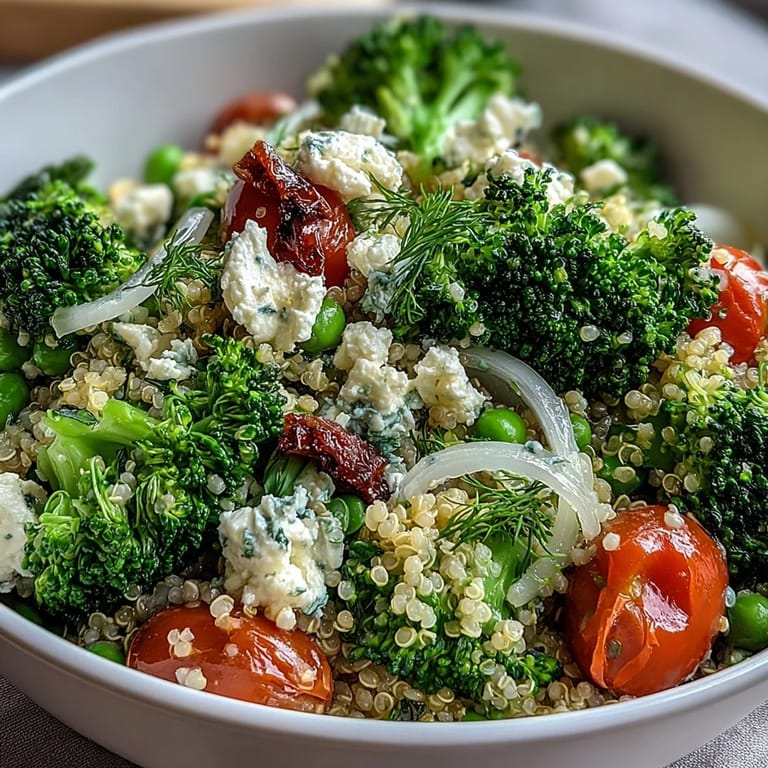 Save to Pinterest
 This bowl became my answer to the question of what to make when you want something nourishing but not heavy, satisfying but quick. It's proof that simple ingredients treated with a little attention create something worth eating more than once.
Questions & Answers
- → What is the best way to cook quinoa for this bowl?
Rinse quinoa thoroughly before boiling it with water or vegetable broth. Simmer covered on low heat for 15 minutes until the liquid is absorbed, then fluff with a fork.
- → How can I prepare the broccoli for optimal texture?
Steam or blanch broccoli florets for 3–4 minutes until crisp-tender, then rinse under cold water to stop cooking and preserve color and crunch.
- → Can I use fresh peas instead of frozen ones?
Yes, fresh peas can be blanched quickly for about 1 minute in boiling water, then drained and cooled to maintain their sweetness and texture.
- → What dressing ingredients enhance the flavors in this bowl?
A simple mix of extra-virgin olive oil, lemon juice, Dijon mustard, minced garlic, salt, and black pepper complements the ingredients without overpowering them.
- → Are there any suggested substitutions for feta cheese?
Feta can be swapped for goat cheese or omitted altogether for a dairy-free variation; toasted pumpkin seeds or walnuts add crunch in such cases.
- → How long can the prepared bowl be refrigerated?
It can be kept chilled in the refrigerator for up to 2 days, making it convenient for meal prep or leftovers.