 Save to Pinterest
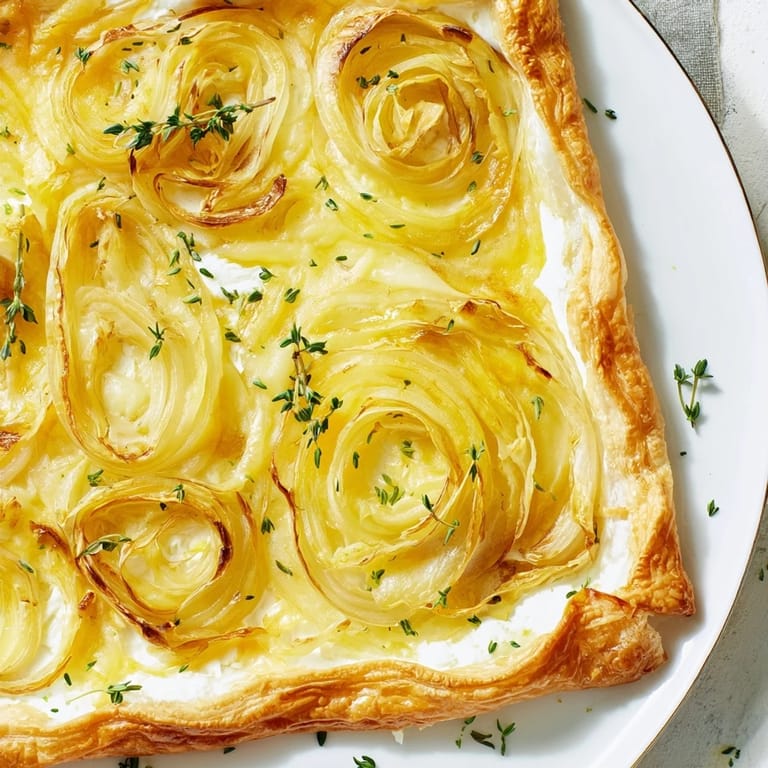
 The first time I made a caramelized onion tart, I didn't realize those three humble onions would transform into something so golden and sweet that my kitchen smelled like a French bistro. I was skeptical—just onions?—but then I tasted that first warm slice with its flaky pastry giving way to the silky, jammy filling. That was the moment I understood why this tart has shown up on tables from farmhouses to fine dining for generations.
I remember bringing a warm tart to a potluck where everyone expected something complicated, and watching their surprise when I told them it was just caramelized onions and pastry. One guest asked for the recipe, then another, and suddenly I realized this wasn't just convenient—it was genuinely craveable in a way that simple food often is.
Ingredients
- Frozen puff pastry (1 sheet, about 250 g): Thaw it beforehand so it's pliable, and don't stress about it being perfect—rustic is the whole point.
- Yellow onions (3 large, thinly sliced): The variety matters more than you'd think; yellow onions give you that natural sweetness as they caramelize.
- Unsalted butter (2 tbsp) and olive oil (1 tbsp): The combination gives you deep flavor without burning, which is the secret to not ending up with bitter onions.
- Sugar (1 tsp), salt (1/2 tsp), and black pepper (1/4 tsp): The sugar speeds up caramelization and rounds out the savory notes.
- Crème fraîche or sour cream (1/2 cup): This tangy base keeps the tart from feeling heavy and provides a cool contrast to warm onions.
- Dijon mustard (1 tsp): Just a whisper of it—enough to wake up your palate without tasting like mustard.
- Gruyère cheese (1/2 cup, grated): It melts into the onions and adds a nutty depth that's absolutely irreplaceable here.
- Fresh thyme (1 tsp) or dried (1/2 tsp): The herb that belongs here more than any other; it echoes the caramel notes.
- Fresh chives (1 tbsp, optional): A bright finish that cuts through the richness if you want that final lift.
Tired of Takeout? 🥡
Get 10 meals you can make faster than delivery arrives. Seriously.
One email. No spam. Unsubscribe anytime.
Instructions
- Get your oven ready and start the magic:
- Heat your oven to 400°F and line your baking sheet with parchment—this prevents sticking and makes cleanup painless. While it preheats, set out your pastry to thaw if it's still cold.
- Melt and cook the onions low and slow:
- In your largest skillet, combine butter and olive oil over medium heat. Once it's shimmering, add your onions along with the sugar, salt, and pepper, then settle in—this is going to take 25 to 30 minutes of patient stirring. You'll notice them go from raw and sharp-smelling to soft, then golden, then deep caramel-brown with a sweet, almost jammy aroma.
- Roll out your pastry:
- While the onions do their thing, lightly flour your work surface and unroll that puff pastry into a rough 12-inch square or circle. Transfer it to your prepared baking sheet and let it rest for a moment.
- Build the layers:
- Stir together your crème fraîche and mustard, then spread it evenly over the pastry, leaving about an inch clear around the edges. Scatter half your Gruyère over that creamy base.
- Add the caramelized onions and finish:
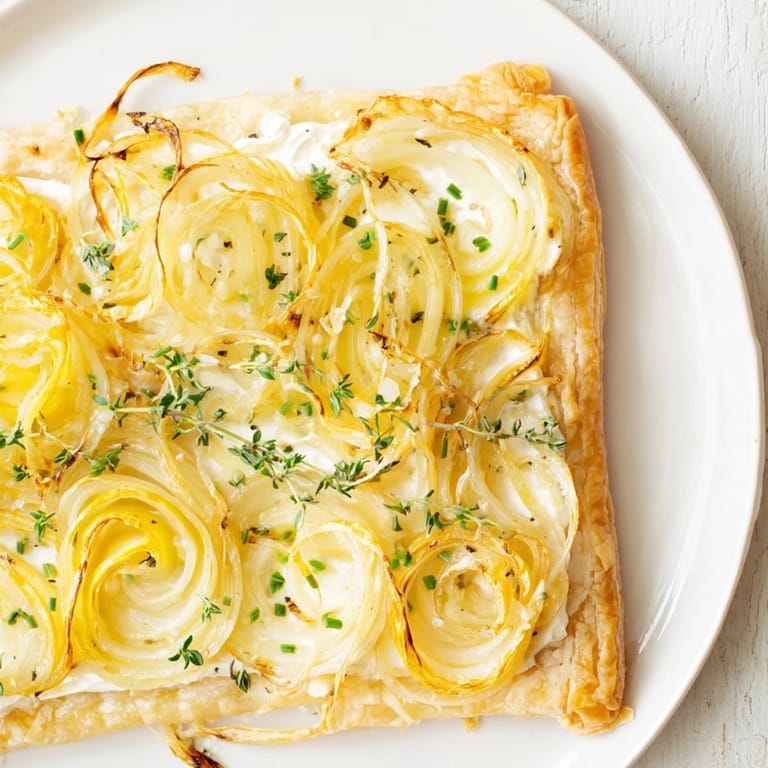
- By now your onions should be silky and golden—taste them to make sure they're sweet, not burnt, then spread them over the cheese layer. Sprinkle with thyme, then top with the remaining Gruyère cheese.
- Create the rustic border:
- Fold those pastry edges gently up and over the filling—it doesn't need to be neat, just enough to cradle everything.
- Bake until golden:
- Slide it into your hot oven for 20 to 25 minutes until the pastry is puffed and golden brown and the edges look crispy.
- Cool and serve:
- Let it rest for a few minutes before slicing—this allows the pastry to set slightly. Serve it warm, at room temperature, or even cold the next day.
 Save to Pinterest
 There's something almost meditative about standing at the stove, stirring golden onions while the rest of your day falls away. By the time they're ready, your whole kitchen smells like caramel and butter, and somehow that simple aroma makes whatever comes next feel like a celebration.
Variations and Swaps
I've made this tart a hundred different ways depending on what was in my fridge. Swap Gruyère for Emmental if you want something milder, or use sharp cheddar for more bite. Some nights I add a splash of balsamic vinegar to the onions in those last five minutes for an earthy depth that changes everything.
Timing and Make-Ahead Tips
One of my favorite things about this tart is that it doesn't demand perfect timing. You can caramelize the onions hours ahead and reheat them gently before assembling, or make the whole thing in the morning and serve it room temperature at dinner. The pastry stays crisp and the flavors actually improve as everything melds together.
Serving Suggestions
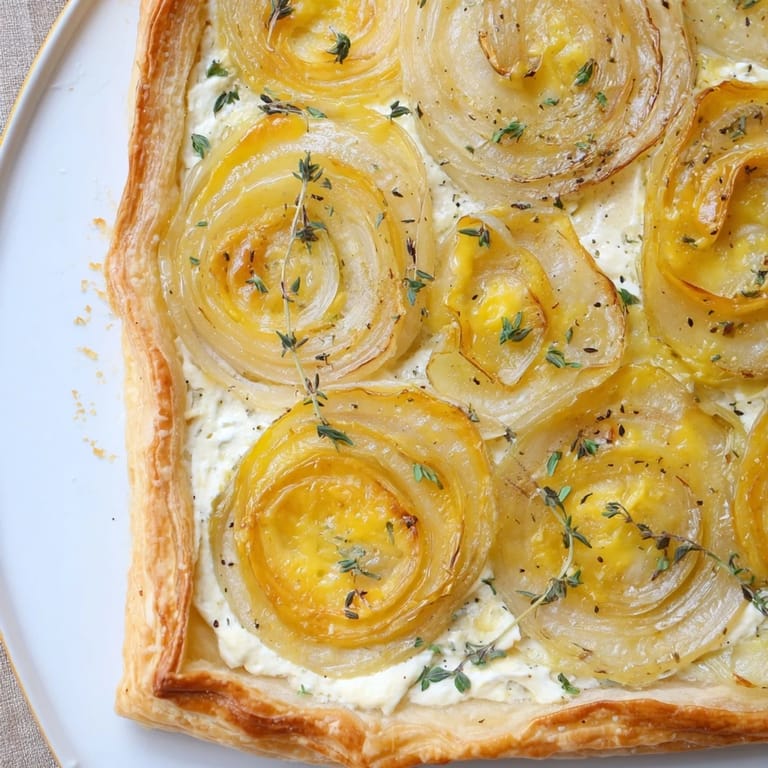
Serve this warm or at room temperature with a simple green salad and a crisp white wine—Sauvignon Blanc is my go-to because its acidity cuts right through the richness. It works as a main course with soup, as an elegant appetizer at a dinner party, or as a quiet lunch with nothing but good bread and maybe some cheese on the side.
- Pair with a Sauvignon Blanc or other crisp white wine to balance the richness.
- A simple arugula salad with lemon vinaigrette makes the perfect light accompaniment.
- Serve it at room temperature if you're bringing it somewhere, then let people warm it up if they like.
 Save to Pinterest
 This tart has become the thing I make when I want to feel like I've spent hours in the kitchen but really I've just been patient. There's beauty in simplicity, and this one proves it.
Questions & Answers
- → How do I achieve perfectly caramelized onions?
Cook sliced onions slowly over medium heat with butter and olive oil, stirring often until deeply golden and soft, about 25–30 minutes.
- → What type of cheese works best for this tart?
Gruyère cheese melts well and adds a rich, nutty flavor; alternatives include Emmental or sharp cheddar.
- → Can I use a different pastry base?
Frozen puff pastry is ideal for its flakiness, but homemade shortcrust can also be used for a sturdier texture.
- → Is it necessary to add Dijon mustard and crème fraîche?
They provide a tangy, creamy layer that balances sweetness of the onions and enriches the overall flavor.
- → What herbs complement the tart’s flavors?
Fresh thyme adds an earthy note; garnishing with chopped chives offers a subtle oniony freshness.