 Save to Pinterest
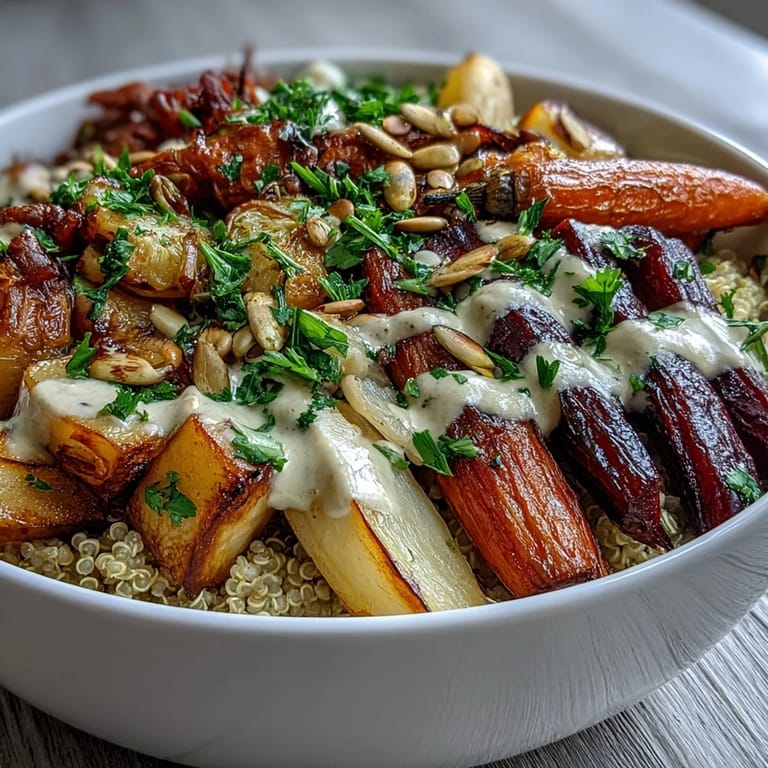
 Last winter, I was standing in my kitchen on a gray Tuesday afternoon, staring at a bunch of muddy root vegetables I'd grabbed from the farmers market without much of a plan. I chopped them almost absently, tossed them with oil and salt, and by the time they emerged from the oven—all caramelized and sweet-smelling—I realized I'd stumbled onto something that felt both comforting and surprisingly elegant. That roasted root vegetable bowl has become my go-to when I want something that tastes like it took effort but honestly, it's just vegetables and time doing the heavy lifting.
I made this for a friend who'd been working double shifts, and when she took that first bite, she actually paused and said it tasted like I'd spent hours in the kitchen. The truth is, it's mostly hands-off cooking—you roast, you simmer, you drizzle—but somehow it feels like a gift both to give and to eat. She's made it three times since, and now she texts me photos of her variations.
Ingredients
- Carrots: Their natural sweetness intensifies when roasted, creating those caramelized edges that make you reach for more.
- Beets: These earthy roots stain your cutting board but reward you with jewel-toned, tender pieces that taste like concentrated earthiness.
- Turnips: Often overlooked, but they become mild and slightly sweet when roasted, balancing the earthier roots.
- Parsnips: The understated star—creamy-textured and naturally buttery when caramelized.
- Olive oil: Use a good quality one; it's what creates those golden, crispy edges on the vegetables.
- Sea salt and black pepper: Don't skip the freshly ground pepper—it adds a subtle bite that keeps everything from feeling one-note.
- Dried thyme or rosemary: These herbs whisper in the background, adding complexity without shouting.
- Quinoa: Rinsing it removes the bitter coating and prevents that gummy texture people often complain about.
- Vegetable broth: It adds more flavor than water, but water works if that's what you have on hand.
- Tahini: This is the binding element that makes everything taste intentional and creamy.
- Lemon juice: The acid cuts through richness and brightens everything on your plate.
- Fresh garlic: Minced raw garlic in the sauce keeps things lively and prevents the bowl from feeling heavy.
- Maple syrup or honey: Just a touch rounds out the tahini sauce's flavors without making it sweet.
- Fresh parsley: A handful scattered on top adds color and a clean, herbal finish.
- Toasted seeds: Pumpkin or sunflower seeds add crunch and turn the bowl into something with actual textural contrast.
Tired of Takeout? 🥡
Get 10 meals you can make faster than delivery arrives. Seriously.
One email. No spam. Unsubscribe anytime.
Instructions
- Get your oven ready and prep your workspace:
- Heat the oven to 425°F and line your sheet with parchment paper—this prevents sticking and makes cleanup nearly effortless. A clean workspace and ready tools mean you won't scramble halfway through.
- Toss the vegetables in oil and seasonings:
- In a large bowl, coat your chopped root vegetables with olive oil, salt, pepper, and herbs if you're using them. Make sure each piece gets a light coating; this is what creates those caramelized, golden edges.
- Spread and roast until golden:
- Arrange the vegetables in a single layer on your sheet—crowding the pan steams them instead of roasting them, so give them space. After about 15 minutes, give everything a stir so the pieces that were on the bottom get their turn in the heat, then let them finish until they're fork-tender and the edges are deep golden.
- Cook the quinoa while vegetables roast:
- Pour rinsed quinoa, water or broth, and salt into a saucepan and bring to a boil over medium-high heat. Once it boils, reduce the heat to low, cover, and let it simmer undisturbed for 15 minutes, then let it sit off heat for 5 more minutes—this resting period is what keeps it fluffy instead of mushy.
- Make the tahini sauce smooth and pourable:
- Whisk tahini, lemon juice, water, minced garlic, salt, and a touch of maple syrup in a small bowl until it's creamy and flows easily. If it's too thick, add water a tablespoon at a time until it reaches the consistency of thick cream.
- Assemble your bowls with intention:
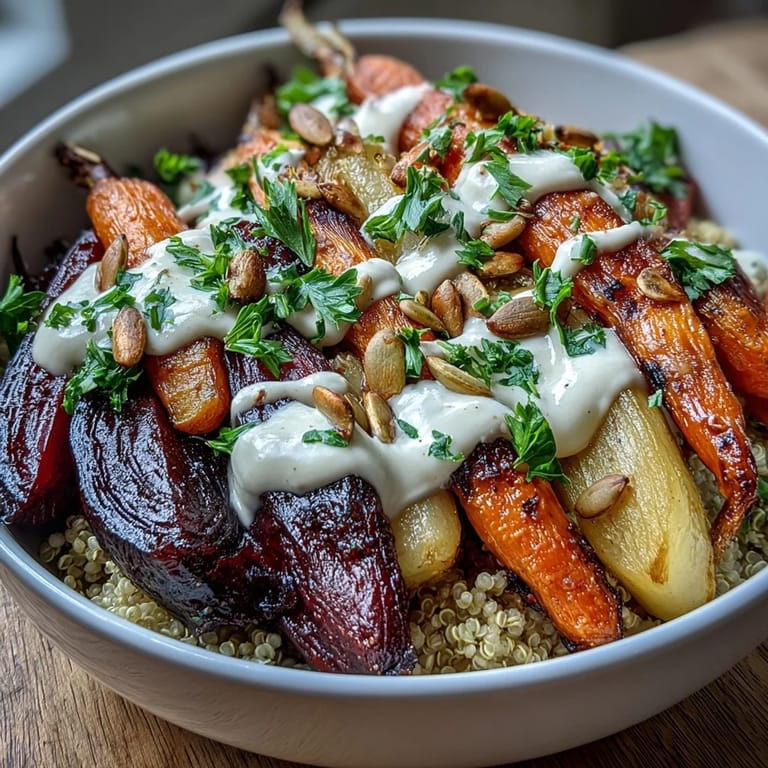
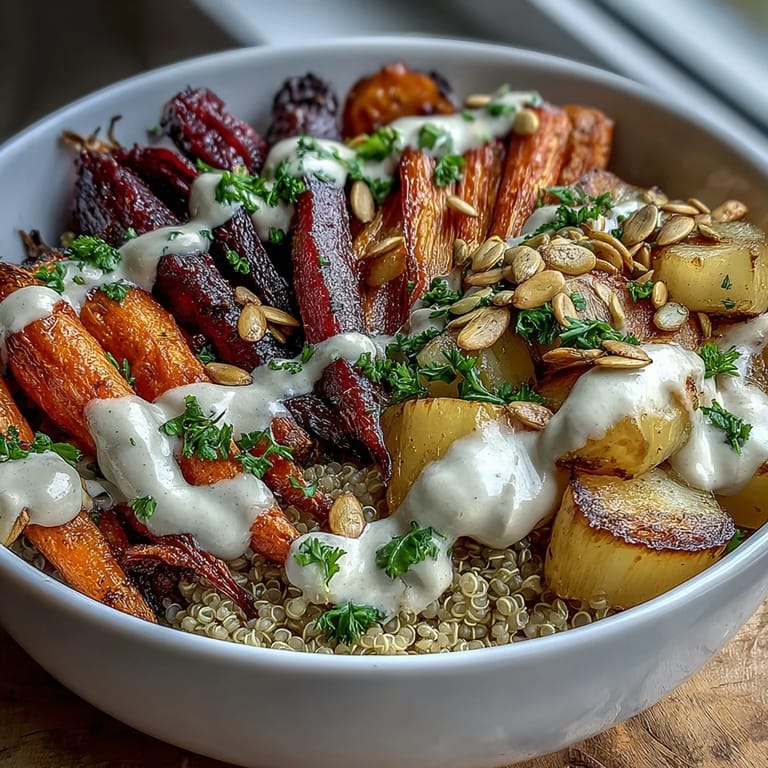
- Divide the fluffy quinoa among four bowls as your base, pile the warm roasted vegetables on top, then drizzle generously with tahini sauce. Finish with a scatter of fresh parsley and toasted seeds, which add both visual appeal and a satisfying crunch.
 Save to Pinterest
 There's something grounding about cooking this bowl on a random weeknight—it turns a simple dinner into a moment of care you're giving yourself. The smell of roasting root vegetables filling your kitchen, the anticipation of what they'll taste like when they've transformed, it all reminds you that even the easiest meals can feel nourishing in more ways than one.
Why Root Vegetables Are Worth Your Time
Root vegetables are often relegated to soups or stews, which means people miss out on how spectacular they become when roasted. The dry heat of the oven concentrates their natural sugars and creates these crispy, caramelized surfaces while the insides turn creamy and tender. Once you roast a beet or a parsnip, you'll never look at them the same way again. They're also incredibly forgiving—slightly undercooked and they're still good, slightly overcooked and they're still edible. This makes them perfect for home cooks who are still finding their timing.
Making This Bowl Your Own
The beauty of this recipe is that it's a template, not a prescription. Swap sweet potatoes in for turnips, use farro instead of quinoa, drizzle with a cilantro-lime dressing instead of tahini—the structure holds up to whatever you want to do with it. I've made versions with roasted chickpeas for extra protein, topped with a fried egg that bleeds into everything, even stirred in some sautéed kale for a friend who wanted more greens. The roasted vegetables are the anchor; everything else is negotiable based on what you have and what you're craving that day.
Storage, Leftovers, and Why This Meal Prep Matters
This bowl actually improves in the refrigerator because the flavors marry and deepen over a day or two, making it an unexpectedly excellent meal prep recipe. Store the components separately—roasted vegetables in one container, quinoa in another, tahini sauce in a third—and you can mix and match throughout the week or refresh them as needed. The quinoa stays fluffy, the vegetables stay tender, and the sauce stays creamy for up to four days. Assemble the bowl fresh when you're ready to eat, or bring everything to work and build it there so it tastes like you just made it.
- The roasted vegetables are best enjoyed within three days but will keep up to five if stored properly in an airtight container.
- Make the tahini sauce no more than two days ahead, as the lemon juice will gradually soften the tahini's texture over time.
- A quick reheat in a 300°F oven for five minutes brings everything back to temperature without drying it out.
 Save to Pinterest
 This roasted root vegetable bowl became a regular in my rotation not because it's complicated, but because it's one of those rare dishes that tastes thoughtful without asking for much in return. Make it when you need comfort, when you want to eat well, or when you're looking for proof that simple ingredients can still feel special.
Questions & Answers
- → What vegetables work best in this bowl?
Carrots, beets, turnips, and parsnips create a wonderful mix of flavors and textures. Sweet potatoes, rutabaga, or butternut squash also work beautifully.
- → Can I make the tahini sauce ahead of time?
Absolutely. The sauce keeps refrigerated for up to a week. You may need to whisk in a little water when reheating as it thickens when chilled.
- → How do I know when the vegetables are done roasting?
Look for golden edges and tender flesh when pierced with a fork. They should caramelize nicely but still hold their shape. Stir halfway through for even browning.
- → What can I add for more protein?
Chickpeas, lentils, or a poached egg complement the flavors beautifully. Crumbled feta or grilled tofu also work well for vegetarian options.
- → Is this bowl suitable for meal prep?
Yes. Store components separately in airtight containers—the vegetables and quinoa keep for 4-5 days. Add fresh garnish and drizzle with sauce when serving.
- → Can I use different grains?
Farro, brown rice, or wheat berries make excellent substitutions. Adjust cooking time accordingly and rinse grains before cooking for best texture.