 Save to Pinterest
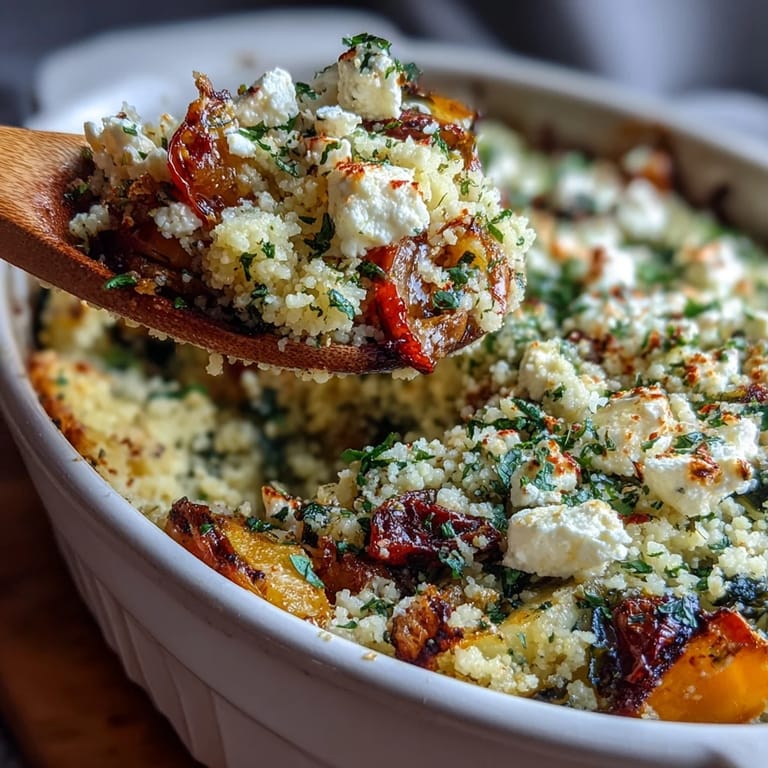
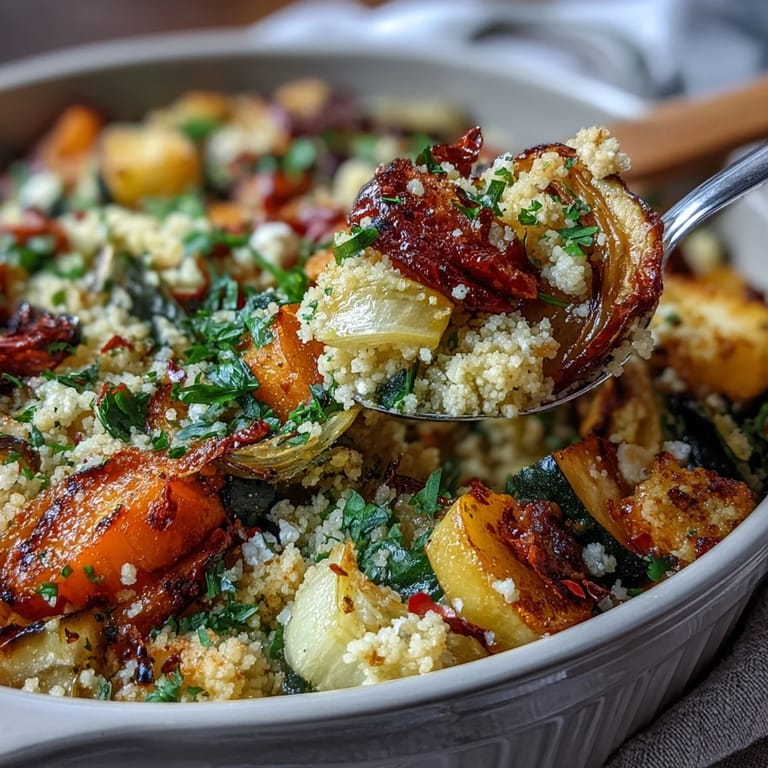
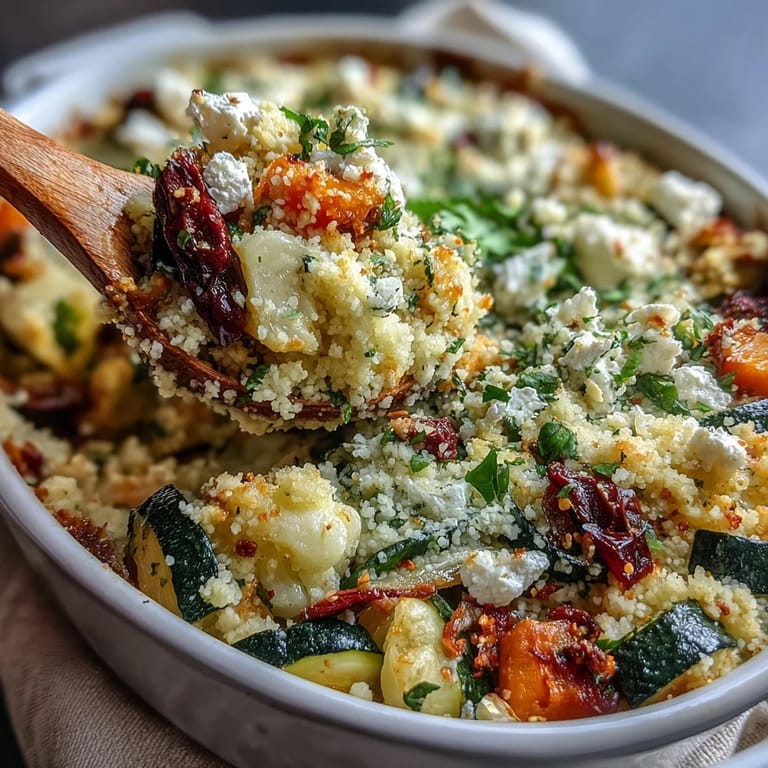
 There's something about the way roasted vegetables smell that makes a kitchen feel instantly alive—that slightly caramelized sweetness mixed with oregano hits different on a weeknight when you're craving color on your plate. I stumbled onto this couscous bake during one of those "what do I actually have in the fridge" moments, throwing together roasted zucchini, peppers, and eggplant with fluffy couscous and melting feta, and somehow it became the dish I make whenever I need something that feels both comforting and bright. The beauty of it is how forgiving it is; the vegetables get golden while you're prepping the couscous, and then everything comes together in one baking dish without fuss.
I made this for my neighbor last summer when she'd just moved in and mentioned being vegetarian, and I remember her actually asking for the recipe—which, let's be honest, doesn't happen often. She said it was the first time in weeks someone had cooked something that didn't feel like an afterthought, and that stuck with me. Now whenever I make it, I think about how food can just be that simple gesture that says you care enough to actually try.
Ingredients
- Zucchini, red bell pepper, yellow bell pepper, red onion, and eggplant: These are your backbone—they caramelize beautifully when roasted hot and fast, developing this sweet, almost nutty depth that makes the whole dish sing, so don't skip the high heat or the halfway stir.
- Olive oil: Use good olive oil here, not the budget bottle you cook bacon in; it's a small ingredient but you taste it in every bite.
- Dried oregano: Mediterranean dishes live and die by oregano, and dried actually works better in roasting because it won't burn like fresh herbs would.
- Sea salt and black pepper: Season your vegetables generously before roasting—this is where half your flavor comes from.
- Couscous: The tiny grain that's technically pasta, and it needs just boiling broth and 5 minutes of rest to become fluffy and tender without any fussing.
- Vegetable broth: Warm or boiling makes a difference; cold broth will cool everything down and take longer to absorb.
- Lemon zest: This brightens everything right before serving, cutting through the richness of the feta in the best way possible.
- Fresh parsley: A handful stirred into the couscous and a sprinkle on top changes the whole vibe from heavy to fresh.
- Feta cheese: Crumble it yourself if you have time; pre-crumbled tends to be drier, and you want that creamy, salty richness to melt slightly when it bakes.
- Pine nuts and chili flakes: Optional but honestly the pine nuts add this buttery crunch that makes people actually pause when they eat it, and the chili flakes give it a gentle wake-up call.
Tired of Takeout? 🥡
Get 10 meals you can make faster than delivery arrives. Seriously.
One email. No spam. Unsubscribe anytime.
Instructions
- Heat your oven and prep your vegetables:
- Crank the oven to 220°C (425°F) and get your baking tray ready. While it's preheating, dice your zucchini, peppers, onion, and eggplant into roughly equal-sized pieces so they roast evenly—uneven pieces will leave you with some that are barely tender and others that are turning to mush.
- Roast the vegetables until they're golden:
- Toss everything with olive oil, oregano, salt, and pepper, spread it in a single layer, and slide it into that hot oven. You want to hear them sizzle when they hit the tray; that's the heat doing its job. Stir them around halfway through, and you're looking for about 20–25 minutes total until the edges are caramelized and they've released their moisture.
- Couscous comes together while everything roasts:
- Put your couscous in a bowl with a tight-fitting lid or cover it with plastic wrap, pour boiling vegetable broth over it along with the olive oil, and let it sit untouched for exactly 5 minutes—this is not a suggestion, this is how couscous becomes fluffy instead of gummy. After 5 minutes, fluff it gently with a fork, then stir in the lemon zest and fresh parsley.
- Lower the heat and combine everything:
- Turn your oven down to 190°C (375°F). In a large bowl, combine the roasted vegetables with your fluffed couscous and half of the crumbled feta, mixing gently so you don't smash the couscous grains or break up the vegetables too much.
- Transfer to your baking dish:
- Pour everything into a lightly oiled baking dish, then scatter the remaining feta over the top and sprinkle with pine nuts and chili flakes if you're using them. This is the moment where it starts looking intentional.
- Final bake until it's bubbly:
- Back into the oven for 12–15 minutes, just long enough for the top to turn golden and the feta to get slightly melty and warm. You want to catch it before the feta browns too much, so keep an eye on it the last few minutes.
- Serve warm with a final flourish:
- Pull it out, let it sit for just a minute so it's not mouth-burning hot, and scatter a bit more fresh parsley on top if you have it.
 Save to Pinterest
 The first time someone told me this dish reminded them of a meal they'd had in Greece, I realized that sometimes cooking isn't about following a recipe perfectly—it's about creating a moment that tastes like a place or feeling. That's what this bake does for people.
Vegetable Substitutions That Actually Work
Seasonal vegetables are your friend here, and honestly the best version of this dish is the one you make with whatever your farmers market is selling that week. Butternut squash is incredible in the fall, diced into small cubes and roasted alongside red onions; asparagus and baby tomatoes work beautifully in spring when you want something lighter; in winter, try Brussels sprouts halved and tossed with a bit of balsamic vinegar before roasting. The only rule is that everything should be roughly the same size so it finishes cooking at the same time, and you want pieces small enough to mix easily with the couscous without the whole thing becoming a chunky mess.
Making It Even More Mediterranean
If you want to push this closer to the flavors of the actual Mediterranean coast, consider adding Kalamata olives or sun-dried tomatoes to the mix—they go in with the roasted vegetables, no extra cooking needed. A handful of fresh mint stirred in with the parsley gives it this unexpected brightness, and if you have it, a splash of good balsamic vinegar whisked into the olive oil before you coat the vegetables adds this subtle sweetness that makes people ask what's different. You can also swap some of the vegetable broth for vegetable stock that's been mixed with a squeeze of lemon juice, which adds tanginess that plays nicely with the feta's saltiness.
Storage, Leftovers, and Why This Gets Better
This dish is one of those rare things that somehow tastes better the next day when the flavors have all settled together in the fridge, so if you're not eating it all immediately, that's actually a gift. Store it in an airtight container and it keeps for about 3 days; you can eat it cold straight from the container like a salad, or reheat it gently in a 350°F oven for about 10 minutes until it's warm through without drying out. It also freezes decently if you're planning ahead, though the feta loses some of its creamy texture, so my move is always to eat it fresh or refrigerated and save freezing for desperate times.
- If you're making this for meal prep, don't mix everything together until you're ready to eat it; store the roasted vegetables and couscous separately so the couscous doesn't get soggy from the vegetables' moisture.
- Leftovers are actually perfect cold with a big handful of fresh greens and an extra squeeze of lemon, turning it into something almost salad-like.
- If it does dry out in the fridge, drizzle a bit of olive oil and lemon juice over it before reheating and it bounces right back.
 Save to Pinterest
 This is the kind of dish that quietly becomes a regular in your rotation because it's easy enough for a Tuesday but interesting enough that you never get bored of it. Make it once, and I promise you'll be making it again.
Questions & Answers
- → Can I make this ahead of time?
Yes, you can roast the vegetables and prepare the couscous up to a day in advance. Store them separately in the refrigerator, then combine and bake when ready to serve.
- → What other vegetables work well?
Try cherry tomatoes, butternut squash, red potatoes, or artichoke hearts. Seasonal vegetables like asparagus in spring or Brussels sprouts in winter also work beautifully.
- → Is this suitable for meal prep?
Absolutely. Portion the baked dish into containers and refrigerate for up to 4 days. Reheat in the microwave or oven until warmed through.
- → Can I make it gluten-free?
Yes, simply substitute the couscous with quinoa or rice. Adjust the cooking liquid accordingly and follow package instructions for the grain you choose.
- → What can I serve with this?
Pair with a crisp green salad, warm pita bread, or grilled chicken for non-vegetarians. It also complements other Mediterranean dishes like hummus and tabbouleh.
- → How do I store leftovers?
Keep in an airtight container in the refrigerator for 3-4 days. The flavors often improve overnight as the feta and herbs meld with the vegetables.