 Save to Pinterest
 Last Tuesday, I stood in my kitchen staring at a half-empty produce drawer and a jumble of canned beans, wondering what on earth to make for lunch. Something clicked that day about how a bowl could be more than just leftovers thrown together—it could be intentional, colorful, and genuinely satisfying. That realization led me to this vegetable and legume bowl, which has since become my go-to answer whenever I want something nourishing but don't have time for fussy cooking.
My friend Maya came over on a rainy afternoon, and I assembled these bowls while we talked. She took one bite and said, 'Wait, this is the whole meal?' The way her face lit up reminded me that sometimes the simplest food moments are the most memorable.
Ingredients
- Quinoa, brown rice, or farro: The grain base holds everything together and adds substance without being heavy—I rotate between them depending on what I'm craving.
- Cooked chickpeas and lentils: These are your protein workhorses, and having them on hand (either canned or from a batch you cooked) saves you so much time.
- Red bell pepper, zucchini, red onion, cherry tomatoes, broccoli: Use whatever vegetables are looking fresh in your market, as seasonality and ripeness will make the biggest difference in flavor.
- Olive oil, smoked paprika, ground cumin: This trio awakens the vegetables as they roast, adding warmth and depth that tastes far more complex than it should.
- Fresh parsley, avocado, toasted pumpkin seeds: These garnishes turn a humble bowl into something you actually want to eat, not just something you feel obligated to finish.
- Tahini dressing: The magic happens here—this creamy, tangy dressing ties the entire bowl together and makes you forget you're eating vegetables.
- Lemon wedges: Keep these on the side so each person can brighten their bowl to their own preference.
Tired of Takeout? 🥡
Get 10 meals you can make faster than delivery arrives. Seriously.
One email. No spam. Unsubscribe anytime.
Instructions
- Start your grains:
- Bring water or broth and salt to a boil, then add your chosen grain and lower the heat to a gentle simmer. This is the moment to let it do its thing undisturbed—cover and forget about it for however long your grain needs.
- Season the vegetables:
- Toss everything in a bowl with olive oil, smoked paprika, and cumin until every piece is lightly coated. The spices won't distribute evenly if they're dry, so this coating step matters.
- Roast until charred:
- Roast until charred:
- Spread the vegetables in a single layer on a baking sheet and let them sit in a 425°F oven for 20 to 25 minutes, stirring halfway through. You want them tender but still with some color, maybe even a few crispy bits on the edges.
- Warm your legumes:
- If you're using canned beans, a quick warm-up in a small pan with a touch of olive oil and seasoning takes them from cold and forgettable to actually pleasant. This step feels small but transforms the texture.
- Whisk the dressing:
- Combine tahini, lemon juice, water, and minced garlic in a bowl and whisk until smooth and pourable. If it seizes up, add more water a tablespoon at a time until you reach that creamy drizzle consistency.
- Build your bowl:
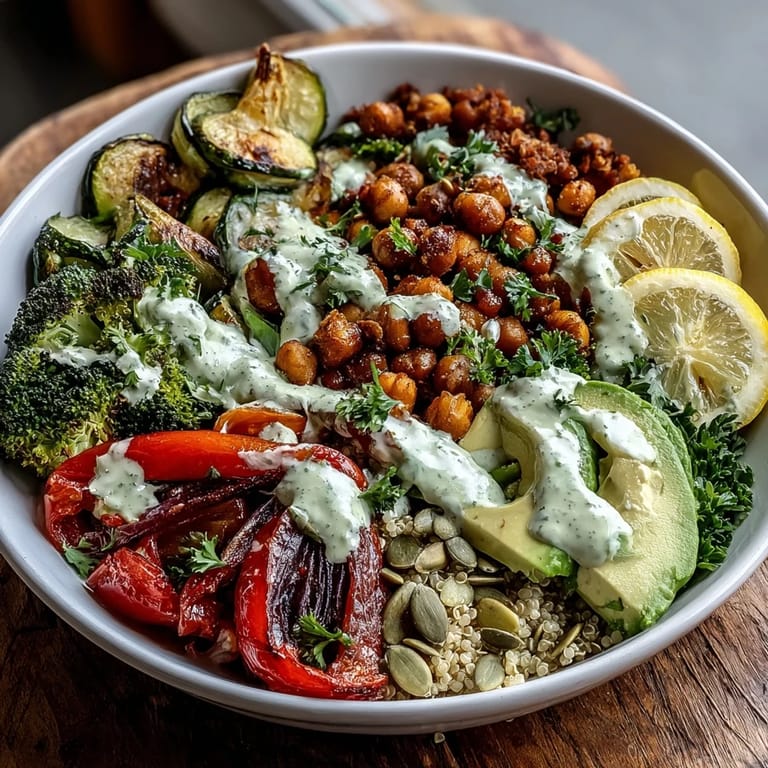
- Divide the cooked grain among bowls, then top with roasted vegetables and warm legumes. Drizzle generously with tahini dressing—don't be shy about this.
- Finish with grace:
- Scatter parsley and pumpkin seeds across the top, add avocado slices, and serve with lemon wedges so people can add brightness to taste.
 Save to Pinterest
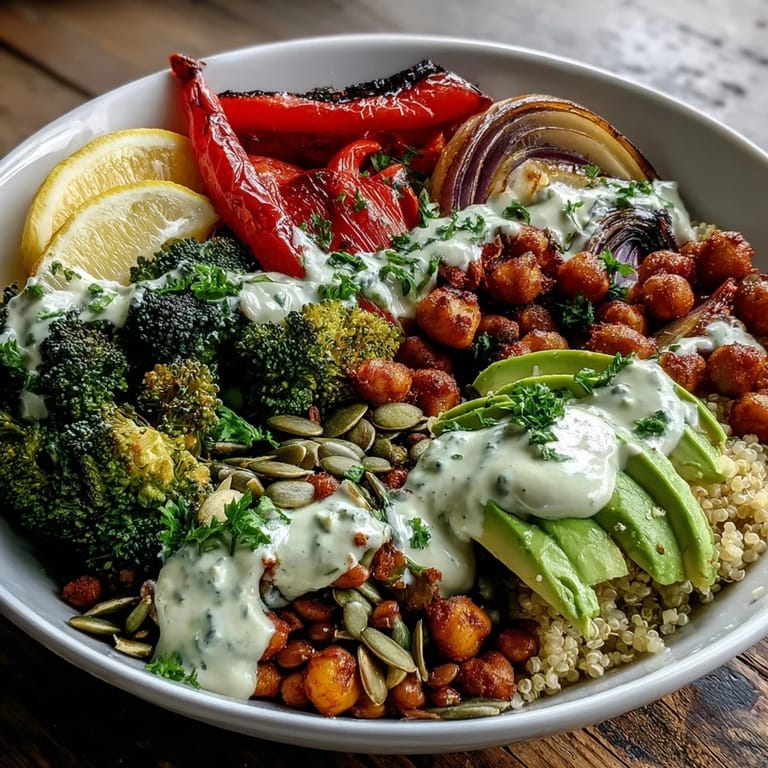
 There's something deeply satisfying about a meal where you can see every color and taste every ingredient clearly. This bowl manages to feel both simple and generous at the same time.
Swapping Vegetables Without Losing Your Way
The beauty of this bowl is that it adapts to whatever your farmers market or grocery store is offering. Sweet potato chunks, cauliflower florets, or sliced carrots roast just as beautifully as what I've listed, and the spice blend works with all of them. I've found that roasting works for almost any vegetable except leafy greens, which you'd be better off tossing with the dressing fresh.
Playing With Grains and Proteins
The grain-to-legume ratio is what keeps this bowl from feeling incomplete. If you prefer a lighter touch, you can swap in couscous or barley, or even cook farro ahead of time and keep it in the fridge. For non-vegan versions, crumbled feta or goat cheese adds a tangy richness that makes people stop mid-bite to ask what you did differently.
The Tahini Dressing and Why It Matters
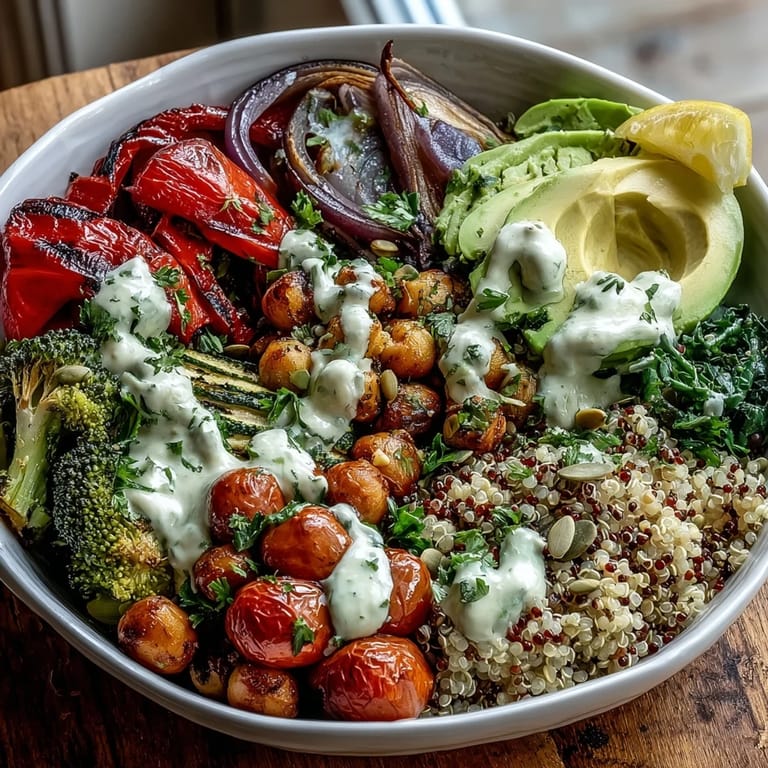
This creamy, garlicky dressing is honestly what elevates the entire dish from 'healthy bowl' to something people genuinely want to eat. The tahini brings an earthy richness, the lemon keeps it bright, and the garlic gives it confidence. Make it while the vegetables are still roasting so it has a moment to sit and let the flavors settle.
- If tahini isn't your thing, swap it for Greek yogurt thinned with lemon juice and garlic for a tangier version.
- The dressing keeps in the fridge for several days, so make extra if you're meal-prepping bowls for the week ahead.
- A pinch of cayenne or a drizzle of hot sauce transforms this into something spicy if that's calling to you.
 Save to Pinterest
 This bowl has become my answer to 'what should we make for dinner?' because it's honest food that tastes good and doesn't apologize. Make it once, and you'll find yourself reaching for it again and again.
Questions & Answers
- → Can I make this bowl ahead of time?
Yes, this bowl is perfect for meal prep. Cook the grains and roast the vegetables in advance, then store them separately in airtight containers for up to 4 days. Add the fresh garnishes and dressing just before serving.
- → What other grains work well in this bowl?
Beyond quinoa and brown rice, try farro, barley, bulgur, or millet. For a gluten-free option, stick with quinoa, rice, or certified gluten-free grains. Each grain brings its unique texture and nutty flavor.
- → How can I add more protein?
This bowl already provides 16g of protein per serving from legumes and grains. To boost protein further, add grilled tofu, tempeh, or a serving of your favorite protein. Hemp seeds or nutritional yeast also make excellent protein-rich toppings.
- → Can I use frozen vegetables?
Frozen vegetables work in a pinch, though fresh yields better texture. If using frozen, thaw and pat them dry before roasting to prevent sogginess. Adjust roasting time as needed since frozen vegetables may cook faster.
- → Is the tahini dressing necessary?
The tahini dressing adds rich, creamy contrast to the roasted vegetables. If you don't like tahini, try a lemon-herb vinaigrette, avocado dressing, or even a dollop of hummus thinned with water and lemon juice.
- → What vegetables can I substitute?
Feel free to swap in sweet potatoes, cauliflower, carrots, Brussels sprouts, or eggplant. The key is choosing vegetables that roast well at similar temperatures. Root vegetables may need a few extra minutes in the oven.