 Save to Pinterest
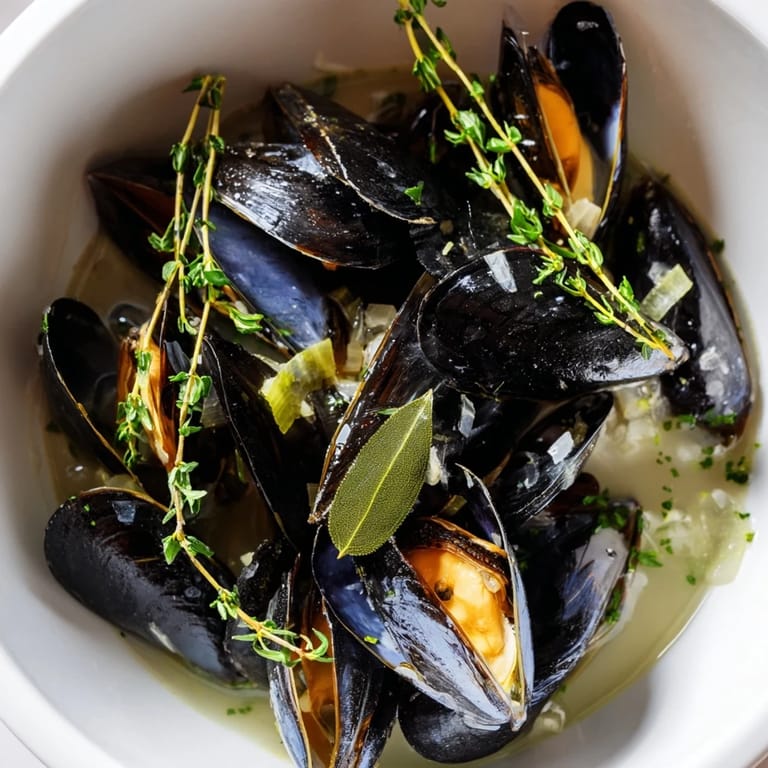
 There's something almost magical about the sound of mussels opening in a pot—that gentle clinking and hissing that tells you everything is working. I first fell in love with moules marinière on a grey Brussels afternoon, sitting at a small bistro near the Grand Place, watching the chef work with such ease and confidence. What struck me wasn't just the briny sweetness of the mussels or the silky wine sauce, but how something so elegantly simple could feel like a celebration on a plate.
I remember cooking this for my partner on a Tuesday night after work, hands still cold from the market where I'd carefully selected the mussels that morning. We sat at the kitchen counter with bowls cradled in our laps, the steam rising up, and somewhere between the second and third mussel, we stopped talking and just listened to the quiet comfort of eating something real. That's when I understood that moules marinière isn't fancy—it's honest.
Ingredients
- Fresh live mussels, 2 kg (4.4 lbs): Buy them the day you'll cook them, and choose ones that feel heavy for their size and smell like ocean air, not fishy funk.
- Dry white wine, 300 ml (1 1/4 cups): Don't use cooking wine; use something you'd actually drink, as it becomes the soul of this dish.
- Shallots, 2 medium, finely chopped: Their gentle sweetness layers beautifully beneath the garlic and wine.
- Garlic, 2 cloves, minced: Mince it fine so it dissolves into the broth rather than sitting in chunks.
- Leek, white part only, 1 small, finely sliced: The white part is tender and mild; it adds subtle depth without overpowering.
- Celery, 2 stalks, finely chopped: A kitchen secret—it rounds out the aromatics and makes the broth taste fuller.
- Fresh flat-leaf parsley, 1 small bunch, chopped: Add this at the very end to keep it bright and fresh-tasting.
- Fresh thyme, 2 sprigs: Thyme is woody and warm; it bridges the wine and seafood beautifully.
- Bay leaf, 1: Just one—it's there to guide the flavor, not dominate it.
- Olive oil, 2 tbsp: Good quality oil matters here since it's one of the few fats in this dish.
- Freshly ground black pepper and sea salt, to taste: Taste as you go; mussels are salty, so you may not need much.
- Lemon wedges, to serve: A squeeze of fresh lemon is the finishing touch that wakes everything up.
Tired of Takeout? 🥡
Get 10 meals you can make faster than delivery arrives. Seriously.
One email. No spam. Unsubscribe anytime.
Instructions
- Clean your mussels with care:
- Rinse them under cold running water, scrubbing gently with your fingers to remove sand and debris. Any mussels that feel hollow, are cracked, or don't close when you tap them should go straight into the compost—they're not going to open.
- Build a fragrant bed:
- Heat your olive oil over medium heat and add the shallots, garlic, leek, and celery. Let them soften and become golden for 3 to 4 minutes, filling your kitchen with one of the best smells in cooking. You're not trying to brown them; you're coaxing out their sweetness.
- Wake up the herbs:
- Stir in the thyme and bay leaf, then pour in your white wine. Let it come to a gentle simmer—you'll notice the raw alcohol smell fade as the wine begins to mellow and marry with the aromatics.
- Welcome the mussels:
- Add all your cleaned mussels to the pot and cover tightly with a lid. Crank the heat up to high—this is the moment where steam does all the work. Shake the pot occasionally over 5 to 7 minutes, and listen for the sound of shells opening.
- Finish with green and citrus:
- Once the mussels have opened, remove the pot from heat and stir in your chopped parsley. Taste the broth, season with black pepper, and add salt only if it needs it. The mussels themselves are briny enough that you might be surprised at how little salt you need.
- Serve without hesitation:
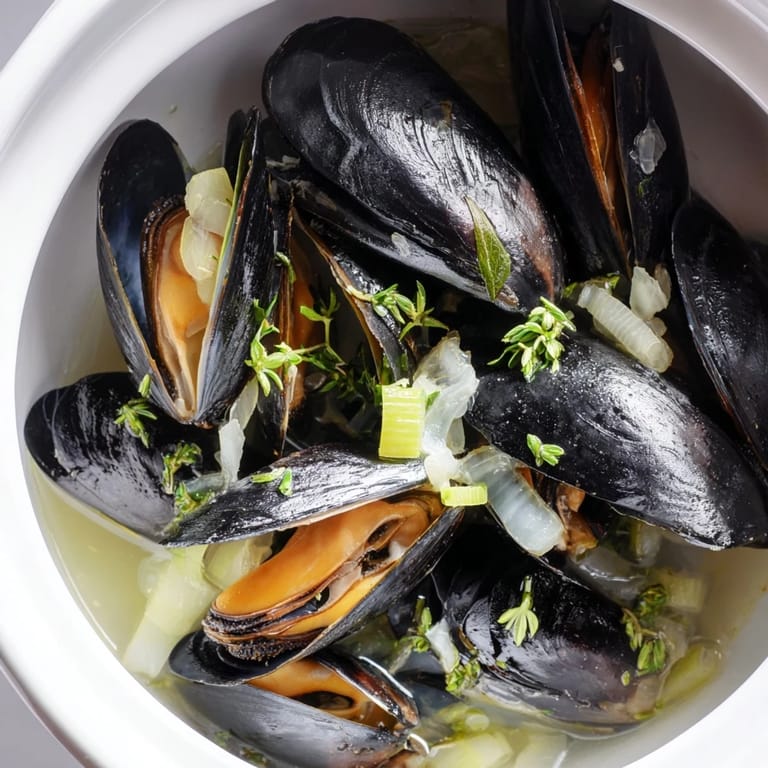
- Divide the mussels and broth into deep bowls immediately while everything is hot, and pass around lemon wedges. Fresh bread or crispy fries are not optional here—they're part of the experience.
 Save to Pinterest
 I think the reason moules marinière became my go-to dish for impromptu dinners is because it trusts you. There's no fussing or complicated technique, just fresh ingredients and the patience to let them speak for themselves. Every time I make it, I'm reminded that sometimes the most memorable meals are the simplest ones.
The Ritual of Mussels
Cooking mussels feels less like following a recipe and more like performing a small ritual. There's something meditative about scrubbing them clean, about listening to them open, about that moment when you realize you've created something restaurant-worthy in your own kitchen. It's the kind of dish that doesn't demand your attention in a stressful way; it just asks you to be present.
Wine Matters Here
The wine is not a supporting player in this dish—it's the main event. I learned this the hard way by using a cheap bottle once, and the broth tasted thin and one-dimensional. Now I use a crisp Sauvignon Blanc or Muscadet, something with enough acidity to cut through the richness of the mussels and enough character to stand on its own. The quality of the wine transforms the entire experience.
Serving and Pairings
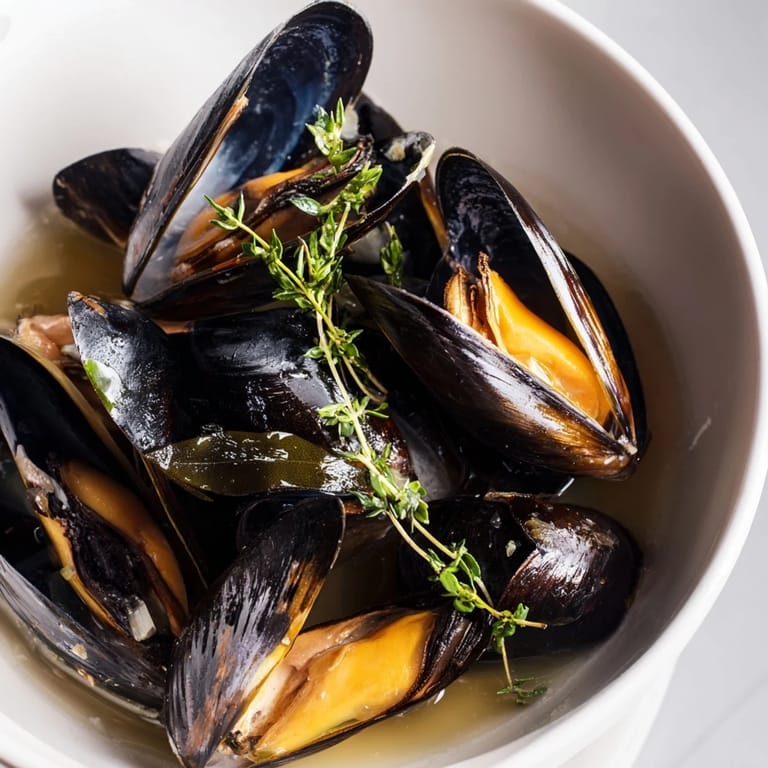
Moules marinière deserves an audience and a good crusty bread to soak up every drop of that liquid gold. Some nights I serve them with Belgian fries and a dollop of mayo on the side, turning it into something casual and fun. Other times I keep it austere, just mussels and bread, letting the broth be the star.
- Serve immediately in wide, shallow bowls so every mussel sits in the broth where it belongs.
- A chilled glass of the same wine you cooked with is the only beverage this dish truly needs.
- Don't be shy about encouraging people to use their hands and slurp the broth—there's no elegance in leaving it behind.
 Save to Pinterest
 Moules marinière reminds me that the best meals often come from respecting your ingredients rather than overcomplicating them. Make this whenever you need something that feels both celebratory and grounded, impressive and approachable, all at once.
Questions & Answers
- → How do I select fresh mussels for this dish?
Choose mussels that are tightly closed or close when tapped. Avoid any with broken shells or that remain open, as these may be unsafe to eat.
- → Can I substitute white wine in the cooking broth?
Dry white wine adds acidity and depth, but you can substitute with seafood stock or a non-alcoholic white grape juice mixed with a splash of lemon for a similar effect.
- → What is the best way to clean mussels before cooking?
Rinse thoroughly under cold running water, scrub the shells to remove dirt, and remove the beard by pulling it firmly toward the hinge.
- → How long should mussels be cooked to ensure they open properly?
Steam mussels for 5–7 minutes, shaking the pot occasionally. Discard any mussels that do not open after cooking.
- → What sides pair well with steamed mussels?
Classic sides include crusty bread to soak up broth or Belgian fries for a traditional accompaniment. A light green salad also complements the dish well.