 Save to Pinterest
 Last summer, my neighbor showed up at a garden party with a wooden board of these skewers, and they disappeared faster than any dish I'd brought. The way the bright red tomatoes caught the light, how people just grabbed them with their fingers without hesitation—it felt like eating straight from an Italian garden. I made them that night and realized they weren't really cooking at all, just assembling moments of freshness. Now whenever I want something that feels both effortless and impressive, these are what I reach for.
I made these for my daughter's end-of-school celebration, and watching her friends pass them around like little treasures while sitting on the back porch told me everything I needed to know. One kid asked if they were "fancy," and I loved that he couldn't figure out if they took hours to make. That's when I realized these skewers have a quiet magic—they taste like you tried really hard, even though your hands barely left the cutting board.
Ingredients
- Cherry tomatoes: Grab ones that feel heavy and give slightly to pressure; they'll be sweeter and less watery than the lighter ones sitting nearby.
- Mini mozzarella balls (bocconcini): Keep them in the coldest part of your fridge until the last moment—they taste creamier when they're chilled.
- Fresh basil leaves: Use your fingers to tear them gently rather than cutting with a knife, which bruises them and turns them dark.
- Wooden or bamboo skewers: Soak them in water for 30 minutes beforehand so they don't char if you're grilling, though these stay at room temperature.
- Fresh basil leaves (for pesto), packed: The packing matters more than you'd think—it means you're getting enough volume of actual basil, not air.
- Pine nuts: Toast them lightly in a dry pan first; it wakes up their flavor and makes the pesto taste like someone who knows what they're doing made it.
- Small garlic clove: One clove is generous here—pesto should taste like basil first, garlic second.
- Grated Parmesan cheese: Use the stuff you grate yourself if you can; the pre-grated kind is coated in anti-caking agent that makes pesto weirdly chalky.
- Extra virgin olive oil: This is where quality actually matters because you're tasting it directly, not cooking it into oblivion.
- Salt and freshly ground black pepper: Black pepper ground fresh has a brightness that pre-ground has completely lost by the time it reaches your cabinet.
Tired of Takeout? 🥡
Get 10 meals you can make faster than delivery arrives. Seriously.
One email. No spam. Unsubscribe anytime.
Instructions
- Toast your pine nuts first:
- Warm them in a dry skillet over medium heat for just a few minutes, stirring constantly until they smell nutty and golden. This one small step changes everything about how the pesto tastes.
- Make the pesto:
- Pulse your basil, toasted pine nuts, garlic, and Parmesan in a food processor until everything is finely chopped but still has a little texture. Then, with the processor running, drizzle in your olive oil slowly—rushing this turns it into a paste instead of a silky sauce.
- Taste and season:
- Add salt and pepper carefully, remembering that Parmesan is already salty. Sometimes a squeeze of fresh lemon juice here makes it sing.
- Thread your skewers:
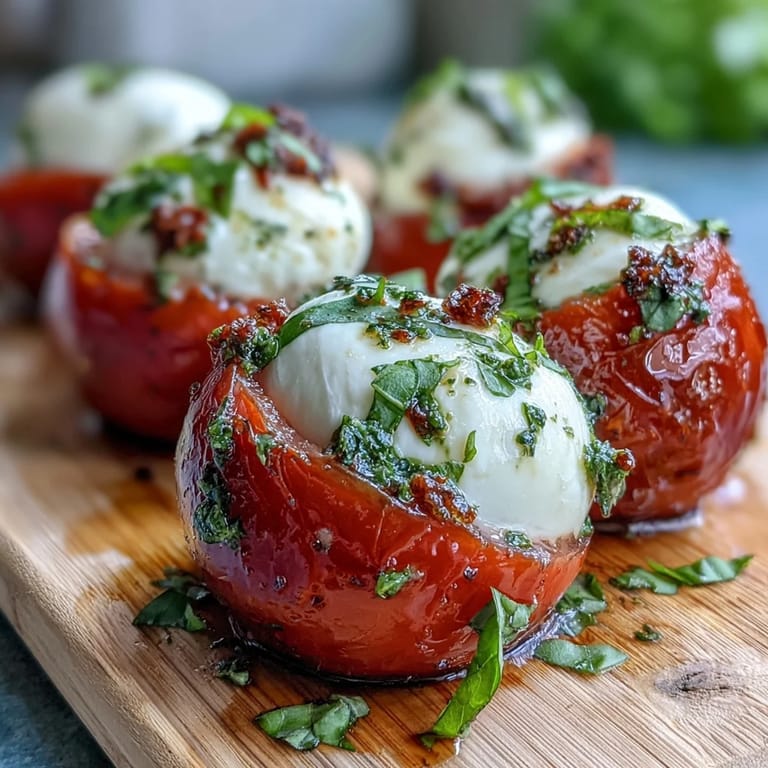
- Slide one cherry tomato onto each skewer, then a mozzarella ball, then tuck a basil leaf alongside them. The order doesn't matter as much as the balance—you want each bite to hit all three flavors.
- Arrange and drizzle:
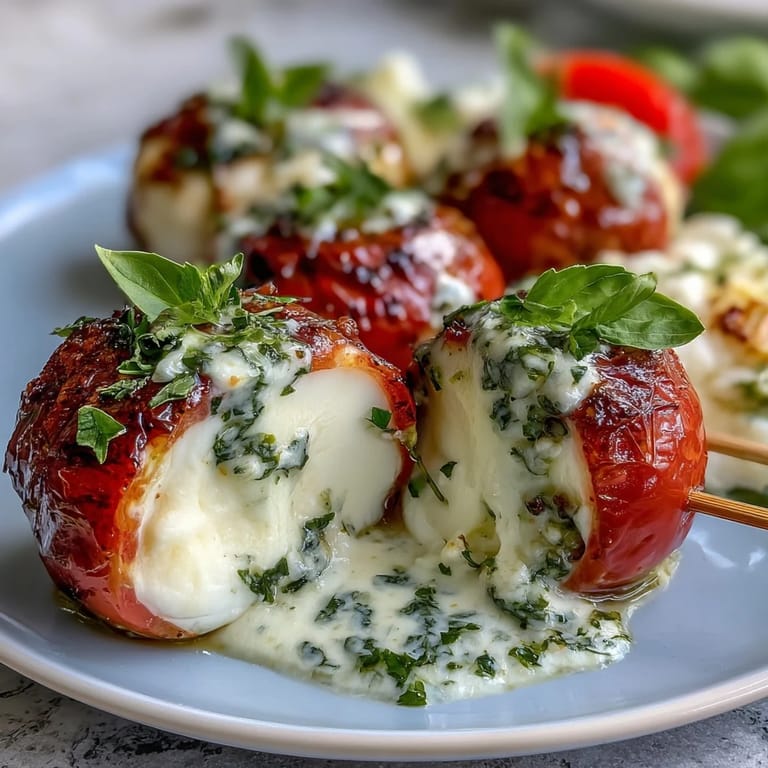
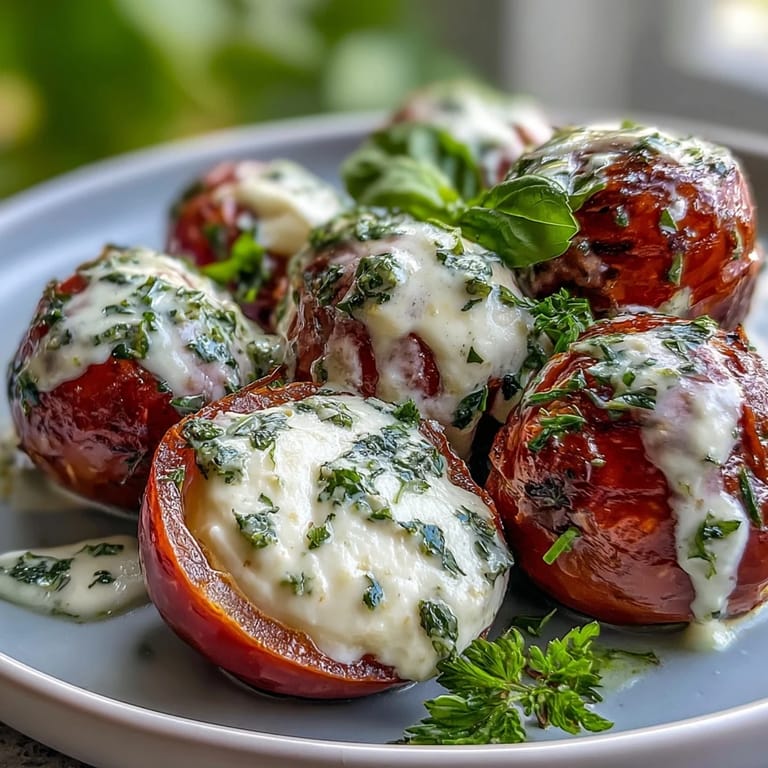
- Lay your skewers on a serving platter and add the pesto just before people arrive, so it stays glossy and hasn't soaked into the tomatoes. A light drizzle is all you need—these are meant to taste fresh, not heavy.
 Save to Pinterest
 My mother-in-law tasted one of these at a dinner party and actually closed her eyes, and that small moment meant more to me than any compliment about my cooking ever has. It wasn't about technique or effort—it was about the pure taste of things done simply.
Why These Taste So Good
There's something about combining three whole ingredients—tomato, mozzarella, basil—without fussing with them that lets each flavor stay honest. The mozzarella's mild creaminess balances the tomato's slight acidity, and the basil ties them together like they were always meant to meet on a skewer. Cold, fresh, nothing hidden—that's what makes these craveable.
Making This Work for Any Occasion
I've brought these to picnics where they stayed the crispest thing on the table, to small dinner parties where they disappeared before the main course arrived, and to my kids' school events where they were the only thing that got eaten. They're equally at home on a white tablecloth or a paper napkin because they don't pretend to be fancier than they are.
Variations That Keep Things Interesting
Once you understand how these work, you can play with them endlessly without losing the magic. Swap the basil pesto for a red pepper version, or drizzle aged balsamic over the top for a deeper sweetness that makes people ask what you did differently. You can add a tiny slice of fresh peach between the tomato and mozzarella in late summer, or even a thin prosciutto ribbon for a salty contrast.
- Nut-free pesto works beautifully with toasted sunflower seeds or even hemp seeds for the same nutty depth without the allergen worry.
- A tiny drizzle of aged balsamic vinegar added after the pesto gives this an unexpectedly sophisticated edge that tastes almost restaurant-quality.
- If you're making these in advance, keep the pesto in a separate small bowl and let guests drizzle their own—it stays fresher that way and people love having control over how much they want.
 Save to Pinterest
 These skewers taught me that the best food doesn't always come from complexity—sometimes it comes from knowing what's worth fussing over and what's worth leaving alone. Make these when you want something that tastes like summer feels.
Questions & Answers
- → What ingredients are in the pesto drizzle?
The pesto combines fresh basil, pine nuts, garlic, grated Parmesan, olive oil, salt, and pepper for a bright, flavorful topping.
- → Can pine nuts be substituted in the pesto?
Yes, sunflower seeds can replace pine nuts for a nut-free version while retaining texture and taste.
- → How far in advance can the skewers be assembled?
Skewers can be prepared up to four hours ahead and refrigerated; add the pesto drizzle just before serving for freshness.
- → What is the best way to serve these skewers?
Arrange skewers on a platter and drizzle with pesto just before serving. Add aged balsamic vinegar for extra flavor if desired.
- → Are these skewers suitable for special diets?
They cater to vegetarian and gluten-free diets but contain dairy and tree nuts; substitutions can be made for allergens.