 Save to Pinterest
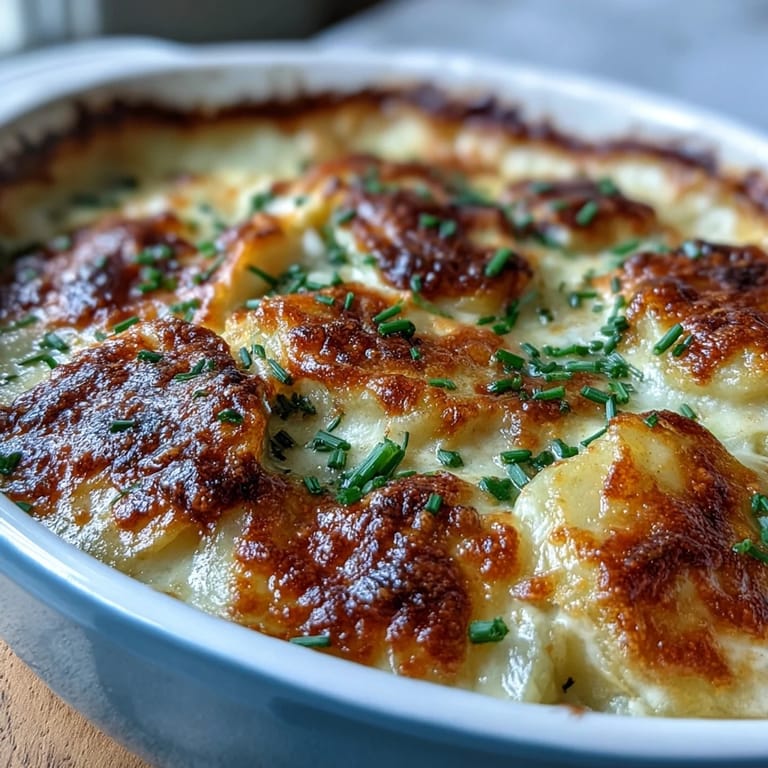
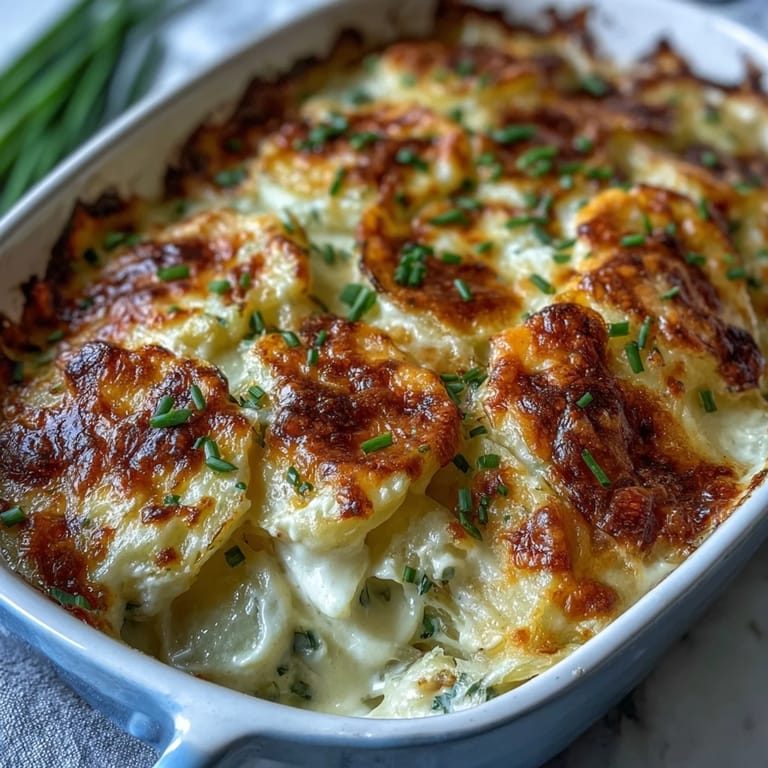
 My neighbor Sarah showed up one Christmas Eve with a steaming dish of au gratin potatoes, and I watched my entire family go silent mid-conversation just to focus on eating. That golden, bubbling top gave way to creamy layers underneath, and suddenly I understood why French cooks treat this dish with such reverence. I've made it dozens of times since, and it never fails to turn a simple holiday dinner into something that feels genuinely celebratory.
I made this for my in-laws on Easter Sunday, and my mother-in-law asked for the recipe before she'd even finished her first bite. That moment of validation—when someone stops mid-meal to compliment your cooking—is exactly why I keep coming back to this dish.
Ingredients
- Yukon Gold or Russet potatoes (2 lbs, peeled and thinly sliced): Yukon Golds stay buttery and don't break apart as easily, but Russets are sturdier if you're nervous about layering. Slice them thin enough that they'll actually cook through in an hour—a mandoline makes this effortless and gives you uniform thickness that bakes evenly.
- Heavy cream (2 cups) and whole milk (1 cup): The combination of both gives you richness without overwhelming heaviness. Whole milk is essential; don't use skim or 2 percent, because you'll lose the silky texture that makes this special.
- Garlic cloves (2, minced): Mince these finely so they dissolve into the cream sauce rather than leaving harsh little chunks. The garlic should whisper in the background, not announce itself.
- Salt (1/2 teaspoon), freshly ground black pepper (1/4 teaspoon), and nutmeg (1/4 teaspoon): That nutmeg is the secret handshake of classic French cooking—it sounds odd until you taste it, then you understand everything. Always grate it fresh; ground nutmeg from a tin tastes like sadness.
- Gruyère cheese (1 1/2 cups, grated) and Parmesan (1/2 cup, grated): Gruyère melts beautifully and adds this toasty, complex flavor that cheddar simply cannot match. Parmesan brings sharpness and helps create that gorgeous golden crust on top.
- Fresh chives or parsley (2 tablespoons, chopped, optional): This is your final flourish—a bit of green against the golden top and a fresh note that cuts through all that richness.
Tired of Takeout? 🥡
Get 10 meals you can make faster than delivery arrives. Seriously.
One email. No spam. Unsubscribe anytime.
Instructions
- Set the stage:
- Preheat your oven to 375°F and lightly butter a 9x13-inch baking dish. This is a good moment to grab a 9x13 dish that you know sits flat in your oven, because an uneven dish means uneven cooking. If you're feeling fancy, rub the buttered dish with a cut garlic clove before layering—it adds a subtle depth that makes people wonder what your secret is.
- Make the cream sauce:
- In a medium saucepan, combine the heavy cream, whole milk, minced garlic, salt, pepper, and nutmeg. Heat this over medium-low heat, stirring occasionally, until it just barely steams—you're looking for that moment when tiny bubbles form around the edges but it's not actually boiling. Remove it from heat and let it sit for a minute; the garlic will continue to gently infuse into the cream.
- Layer the first potato tier:
- Arrange half your thinly sliced potatoes in an even layer on the bottom of the prepared dish, slightly overlapping them like roof shingles. Don't worry if there are small gaps; the cream will find its way.
- Add the first cheese layer:
- Sprinkle half of your grated Gruyère and Parmesan over these potatoes, distributing it fairly evenly. This cheese will melt down and create pockets of flavor throughout the bottom layer.
- Stack the final potatoes:
- Layer the remaining potato slices on top in that same shingle pattern, creating a second tier. You want this to look organized and intentional, not haphazard.
- Pour the cream and add the top cheese:
- Slowly pour the warm cream mixture over all the potatoes, letting it settle and distribute evenly. Then sprinkle the remaining Gruyère and Parmesan over the top in an even layer—this will become your beautiful, golden crust.
- First bake (covered):
- Cover the dish loosely with foil and place it in your preheated oven for 40 minutes. The foil traps steam and ensures the potatoes soften without the top browning too quickly. You can peek under the foil if you want, but resist the urge to stir or mess with it.
- Final bake (uncovered):
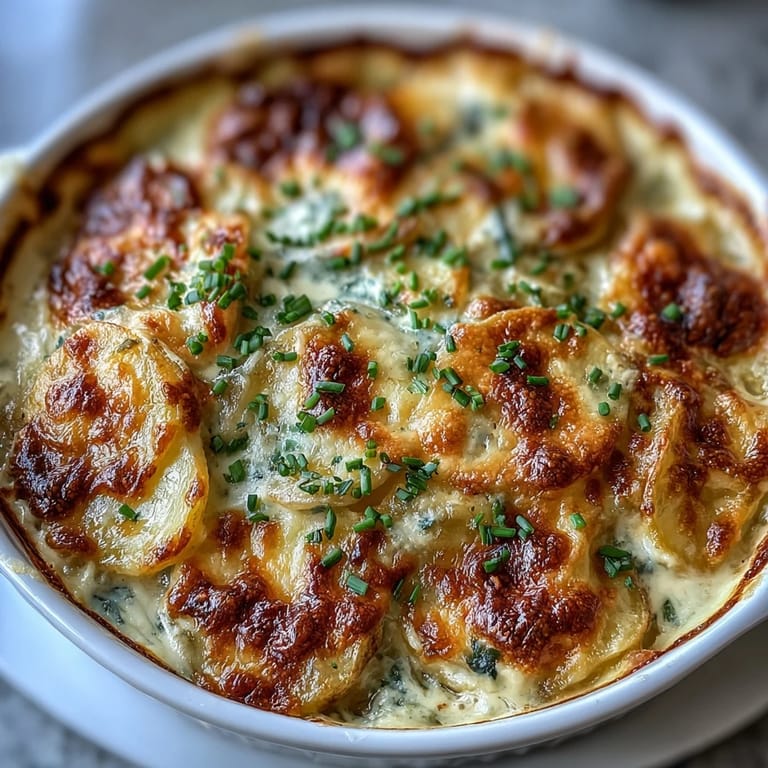
- Remove the foil and bake for another 20 to 25 minutes, until the top is golden brown and bubbly at the edges, and a knife pierces the potatoes with just a whisper of resistance. The timing varies slightly depending on your oven, so start checking around the 20-minute mark by poking a fork into the center potatoes—they should be tender but not falling apart.
- Rest and garnish:
- Let the dish sit for 10 minutes out of the oven before serving. This resting period allows everything to set slightly and makes it much easier to serve neat portions. Scatter fresh chives or parsley over the top right before bringing it to the table for that final pop of color and freshness.
 Save to Pinterest
 My daughter once asked why this dish tasted like a hug, and I realized that's exactly what au gratin potatoes are—comfort in a baking dish. It's the kind of food that bridges generations and turns ordinary weeknight dinners into something people actually want to remember.
Why Slice Potatoes Thin
Thin slices mean the potatoes cook through in the time it takes the cream to reduce and the cheese to brown on top. If you slice them thickly, you'll end up with a golden crust and raw potatoes hiding underneath—a situation I learned the hard way on a Tuesday night that taught me humility. A mandoline slicer is genuinely worth the counter space; it takes five minutes flat to slice two pounds of potatoes into perfect, uniform pieces.
The Gruyère and Parmesan Partnership
Gruyère alone would be rich and lovely, but adding Parmesan is what transforms this from a nice side dish into something that demands attention. Parmesan brings sharpness and helps create those crispy, browned bits on top while Gruyère provides creamy, toasty undertones that feel almost sweet. It's a combination born in French kitchens for a reason, and once you taste it, you'll understand why cooks have stuck with this pairing for centuries.
Storage and Make-Ahead Magic
You can assemble this dish up to 12 hours ahead of time, cover it tightly with plastic wrap, and refrigerate it. When you're ready to bake, add 10 to 15 minutes to the covered baking time since you're starting from cold. Leftovers actually reheat beautifully in a 325°F oven covered with foil until warmed through, maintaining that creamy texture better than most gratins do.
- If you're cooking for a crowd, this recipe doubles easily in a larger 9x13 baking dish or two standard ones—just increase the baking time slightly and check for doneness by piercing with a knife.
- Sweet caramelized onions added between the potato layers are a game-changer if you want to experiment, though keep them thin so they don't interfere with cooking time.
- Leftovers also work beautifully layered cold between thick bread slices with a bit of ham for a next-day sandwich that's honestly better than the original meal.
 Save to Pinterest
 This dish has a quiet magic—the kind that makes people come back for more and ask to take leftovers home. Serve it warm alongside roasted ham or a simple green salad, and watch how quickly it disappears from the table.
Questions & Answers
- → What type of potatoes work best?
Yukon Gold or Russet potatoes are ideal for their tenderness and ability to absorb flavors well.
- → Can I substitute the cheeses?
Gruyère can be replaced with sharp white cheddar for a different flavor profile, while Parmesan adds a savory depth.
- → How do I achieve a golden crust?
Bake uncovered after initial covered baking to allow the cheese to brown and crisp on top.
- → What spices enhance the flavor?
Garlic, freshly ground black pepper, salt, and a touch of grated nutmeg complement the creamy sauce nicely.
- → Is it okay to add herbs?
Fresh chives or parsley sprinkled before serving add freshness and a mild herbal note.
- → Can onions be added to the layers?
Thinly sliced sweet onions between potato layers add subtle sweetness and extra texture.