 Save to Pinterest
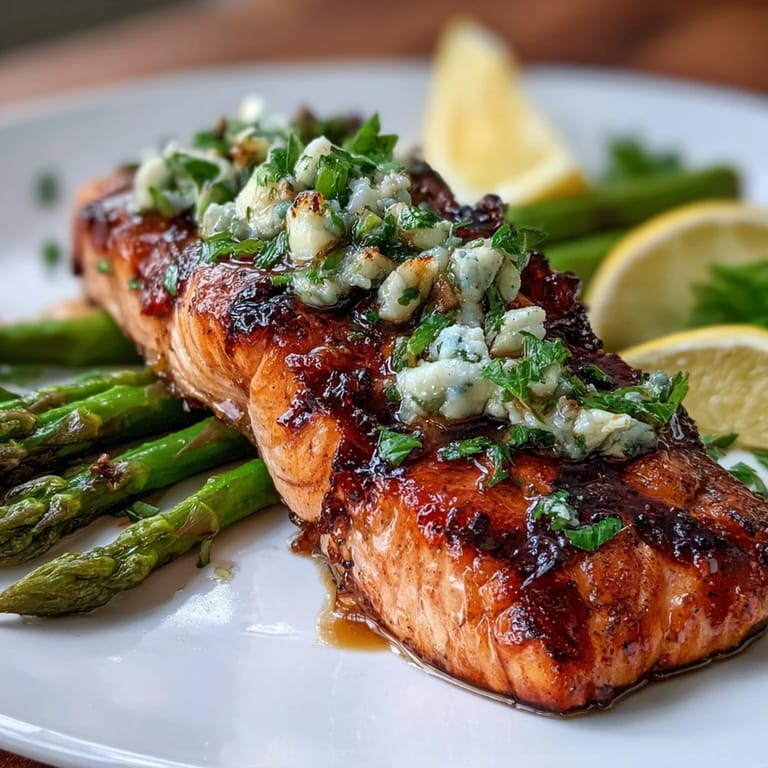
 My sister called me at work asking what to make for her dinner party, and I found myself describing this salmon dish without hesitation—the kind of recipe you reach for when you want to look effortlessly elegant but don't have hours to spend cooking. She made it that night, and texted me a photo of the golden, glistening fillets surrounded by perfectly roasted asparagus spears. What struck me was how the kitchen must have smelled: that intoxicating blend of garlic turning nutty in butter, salmon releasing its sweetness, and lemon cutting through everything with bright citrus clarity. It's one of those meals that feels special without demanding much from you.
I made this for my partner on the first truly warm evening of spring, when we both agreed we were tired of heavy winter food. We opened the windows, and while it roasted, the smell that drifted through the apartment was so inviting that neither of us could wait the full eighteen minutes. We snuck bites straight from the pan, laughing at ourselves for not being patient enough to plate it properly. Those unscripted moments—the ones where food tastes better because of the setting and the mood—that's what this dish has given me more than once.
Ingredients
- Salmon fillets (4, about 6 oz each), skin-on or skinless: This is your star, so choose fillets that feel firm to the touch and smell like the ocean, not fishy—a good fishmonger will help you pick ones that'll stay moist during roasting.
- Fresh asparagus (1 lb), woody ends trimmed: Hold each spear and bend gently until it snaps naturally; discard the woody bottom and you'll have the tender part that actually tastes good.
- Unsalted butter (4 tbsp), melted: Using unsalted lets you control the salt level, and melting it first means the garlic won't burn before everything goes in the oven.
- Garlic (3 cloves), minced: Fresh garlic is non-negotiable here; it's what transforms plain butter into something that feels almost luxurious.
- Fresh lemon juice (1 tbsp): Squeeze it yourself if you can—bottled lemon juice tastes oddly metallic next to something this delicate.
- Dijon mustard (1 tsp): Just a teaspoon, but it adds an understated depth that makes people ask what that subtle flavor is.
- Salt (1/2 tsp), black pepper (1/4 tsp), red pepper flakes (1/4 tsp, optional): Start conservative; you can always taste and adjust, but you can't take salt back out.
- Lemon slices (1 lemon): These aren't just for looks—they soften during roasting and release subtle flavor throughout the dish.
- Fresh parsley (2 tbsp), chopped: A handful of bright green at the end wakes everything up and makes it look like you tried harder than you actually did.
Tired of Takeout? 🥡
Get 10 meals you can make faster than delivery arrives. Seriously.
One email. No spam. Unsubscribe anytime.
Instructions
- Get your oven ready:
- Preheat to 400°F and line a large baking sheet with parchment paper or foil—this makes cleanup effortless and keeps everything from sticking.
- Arrange your ingredients:
- Place salmon fillets in the center of the baking sheet, then distribute trimmed asparagus around them in a single layer. Nestle lemon slices between the salmon and asparagus; they'll add flavor and keep things from drying out.
- Mix your magic sauce:
- In a small bowl, whisk together melted butter, minced garlic, lemon juice, Dijon mustard, salt, pepper, and red pepper flakes if using. The mixture should smell fragrant and look glossy.
- Coat everything:
- Drizzle the garlic butter sauce evenly over the salmon and asparagus, making sure nothing gets overlooked. Some sauce will pool on the sheet, which is perfect—it'll create a pan sauce for drizzling over rice or bread.
- Roast until perfect:
- Slide into the oven for 15 to 18 minutes, watching until the salmon flakes easily with a fork and asparagus is tender but still has a slight snap. Overcooked salmon turns dry, so err on the side of slightly underdone if you're unsure.
- Finish and serve:
- Pull from the oven and scatter fresh parsley over everything while it's still hot. Serve immediately with extra lemon wedges on the side.
 Save to Pinterest
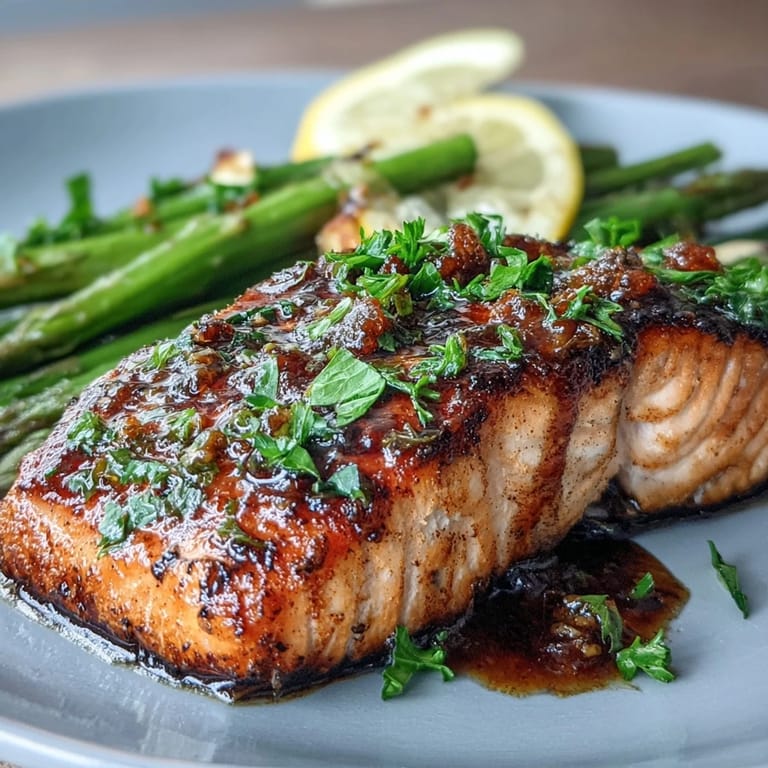
 There's something about cooking fish that makes you feel more accomplished than you probably should—like you've crossed into actual cooking rather than just assembling dinner. This dish does that for you, and when you pull it from the oven and see those golden edges, the asparagus blistered just slightly, and that glossy sauce pooling around everything, you'll understand why your friends will ask for the recipe.
The Roasting Magic
High heat and a short roast time are the secrets here; the oven gets hot enough that the salmon develops a gentle golden crust while the inside stays buttery and tender. The asparagus, meanwhile, goes from raw to perfectly caramelized on the edges, and that's where the actual flavor happens. I learned this the hard way by once trying to cook everything at 375 degrees to be safe, and everything took twice as long and came out less interesting. Temperature matters, and in this case, respecting that 400-degree heat makes all the difference.
Why Lemon Isn't Optional
Lemon does something almost magical with salmon—it brightens the richness and makes the whole thing taste lighter and more elegant. The juice in the butter sauce and the sliced rounds roasting on the sheet create different kinds of lemon flavor, and together they're what elevate this from simple to something you'd order at a restaurant. I once made this without fresh lemon, using a squeeze bottle of juice instead, and it just tasted flat. Fresh citrus isn't extra; it's essential.
What Comes on the Side
You could serve this with rice, crusty bread for soaking up the sauce, or even on a bed of greens if you're keeping things light. A crisp white wine—Sauvignon Blanc or Pinot Grigio—sits beside this meal like it was made for it, the acidity cutting through the butter perfectly. One night I served it with nothing but the salmon and asparagus and a green salad, and honestly, it was elegant enough that way. The meal stays flexible because the roasted salmon and butter sauce are impressive enough to carry anything you pair with them.
- Have crusty bread ready if you're the type who can't resist sauce-soaking.
- A simple green salad on the side adds freshness and color to the plate.
- If you want something more substantial, roasted potatoes or grain of your choice work perfectly alongside.
 Save to Pinterest
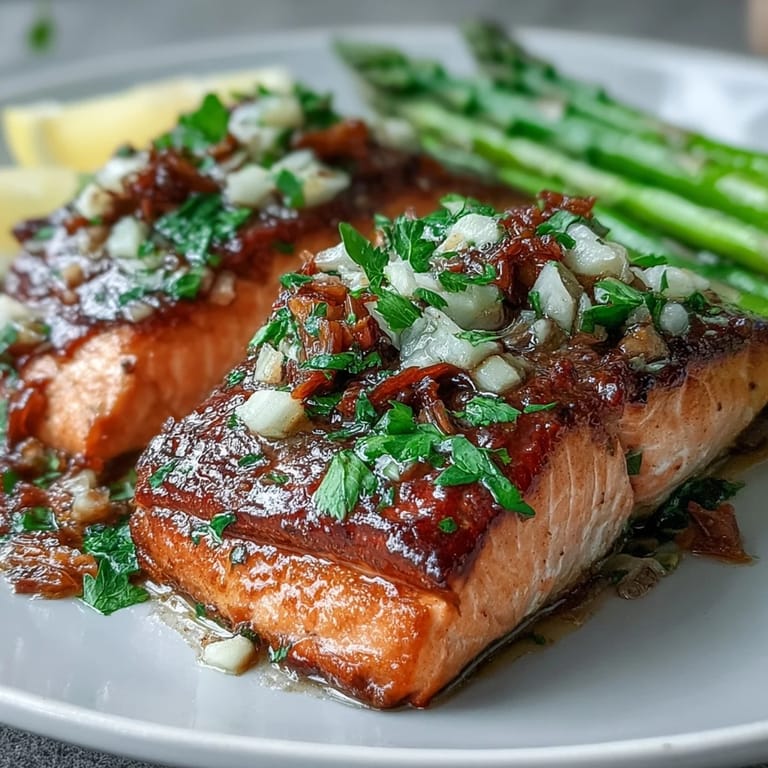
 This recipe has become my go-to for when I want to cook something that tastes like I put in real effort without actually spending my whole evening in the kitchen. It's the kind of meal that makes people feel special without making you stressed, which is really all any of us want from cooking.
Questions & Answers
- → How do I prevent salmon from drying out when cooking?
Roasting salmon with a garlic butter sauce helps retain moisture. Avoid overcooking by baking until it flakes easily with a fork, usually about 15-18 minutes at 400°F.
- → Can I substitute asparagus with other vegetables?
Yes, green beans or broccolini make excellent alternatives, providing similar texture and flavor when roasted.
- → What type of salmon is best for this dish?
Fresh salmon fillets, either skin-on or skinless, work well. Skin-on can help keep the fish moist during roasting.
- → How can I enhance the garlic butter sauce flavor?
Adding Dijon mustard and a touch of lemon juice brightens the sauce while red pepper flakes offer subtle heat.
- → Is this dish suitable for gluten-free diets?
Yes, all ingredients used are naturally gluten-free, making it a safe and tasty option.