 Save to Pinterest
 My neighbor Priya taught me this chutney on a humid Tuesday morning when I stopped by her kitchen looking for something to pair with the idlis I'd made and somehow botched. She grabbed three semi-ripe guavas from her counter, shredded coconut with her bare hands, and had the whole thing blended and tempered in under twenty minutes, all while humming and telling me why mustard seeds had to splutter, not just sit there. That afternoon, I understood why this simple relish had become her answer to everything—it's sharp, it's bright, and it makes whatever you're eating taste intentional.
When I finally made it for my family, my dad—who usually ignores condiments—went back for seconds and asked if I'd added tamarind. There was no tamarind, just the natural tartness of semi-ripe guavas and a squeeze of lemon, but somehow the tempering made it taste deeper, more complex than the sum of its parts. That moment, watching someone taste something you'd made and actually light up, reminded me why cooking for others matters more than any perfect technique.
Ingredients
- Semi-ripe guavas (2, chopped): The unripe ones are tart and firm, holding their shape during blending without turning into mush—avoid the fully yellow ones, which lean too sweet and lose their bite.
- Fresh grated coconut (¼ cup): This adds body and a gentle creaminess that balances the chutney's sharpness; frozen works if fresh isn't available, but thaw it first.
- Green chilies (1–2, chopped): These carry heat and freshness—start with one if you're cautious, always remembering heat compounds as the chutney sits.
- Ginger (1-inch piece, peeled and chopped): The warm spice here prevents the chutney from tasting flat or one-dimensional, grounding everything with a gentle warmth.
- Fresh coriander leaves (2 tablespoons, chopped): Don't skip this—cilantro lifts the whole dish and adds an herbal brightness that makes people ask what's in it.
- Salt (½ teaspoon): Taste as you blend and adjust; the guavas' natural tartness means you often need less salt than you'd expect.
- Jaggery or brown sugar (1 teaspoon): A tiny amount of sweetness quiets the sourness without making this a dessert chutney—this is the lever you pull if it tastes too sharp.
- Lemon juice (1 tablespoon): Fresh is essential here; bottled juice loses its brightness after a few minutes, so squeeze it just before blending.
- Coconut oil (1 tablespoon): The tempering relies on this for its rich, almost toasted flavor that ties everything together.
- Mustard seeds (½ teaspoon): These must splutter in hot oil—they release a nutty fragrance that's the whole point of the tempering step.
- Urad dal (½ teaspoon, split black gram): This adds texture and a subtle earthiness; lentils darken quickly, so watch carefully to catch them at golden, not burned.
- Dried red chili (1): One piece is all you need for a whisper of smoke; it's optional if you're already heat-sensitive from the green chilies.
- Curry leaves (6–8): These crisp up in the tempering and release an aromatic oils that transforms the chutney from simple to sophisticated.
- Asafoetida (a pinch, optional): A tiny pinch adds an almost savory depth—skip it if you're unfamiliar with hing, but once you taste it, you'll understand its value.
Tired of Takeout? 🥡
Get 10 meals you can make faster than delivery arrives. Seriously.
One email. No spam. Unsubscribe anytime.
Instructions
- Gather and prep your produce:
- Chop your guavas into roughly thumb-sized pieces, peel and mince the ginger, and get your coconut, coriander, and green chilies ready. Having everything prepped before you blend makes the next steps feel less rushed.
- Build the base in the blender:
- Combine guavas, coconut, green chilies, ginger, coriander, salt, jaggery, and lemon juice in your blender. Add 2–3 tablespoons of water and blend until you reach a texture that's smooth but still holds a whisper of texture—completely silky can feel bland.
- Taste and adjust:
- Pour it into a bowl and taste before the tempering goes in; this is your moment to add more lemon if it's too sweet, more salt if it needs grounding, or more green chili if you want heat. Once you temper it, these flavors set in place.
- Heat your oil for tempering:
- Pour coconut oil into a small pan and let it get hot enough that a mustard seed dropped in will splutter immediately—you're looking for that popping sound, not a gentle sizzle. Timing matters here because you want each ingredient to toast in sequence.
- Splutter the mustard seeds:
- Once the oil is hot, add mustard seeds and let them pop and crackle for a few seconds until the majority have burst open. The sound is your signal that they're releasing their oils and flavor.
- Add the dal and spices:
- Quickly follow with urad dal, dried red chili, and curry leaves, stirring constantly so nothing sticks or burns. Watch for the dal to turn a warm golden color—this takes maybe 30 seconds and happens fast.
- Finish with asafoetida if using:
- Add just a pinch of hing at the end, letting it bloom in the hot oil for 5 seconds. It smells pungent, but it mellows and adds a savory richness nothing else can replicate.
- Pour and marry the flavors:
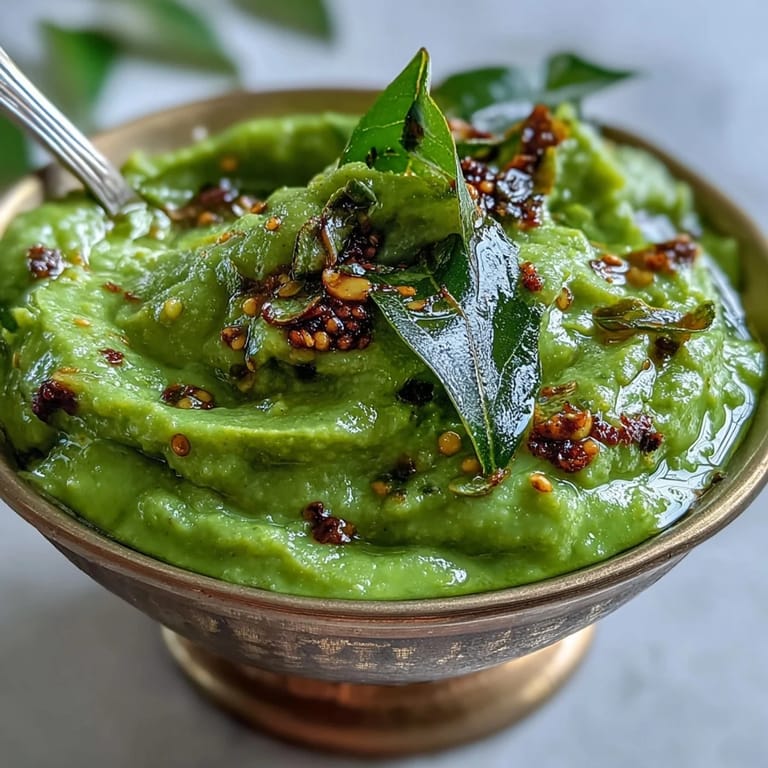
- Carefully pour the hot tempering oil and all its seeds directly over your chutney in the bowl. The sizzle and steam that rises up carries the flavors into the chutney, transforming it instantly.
- Mix and rest briefly:
- Stir everything together so the seeds and leaves distribute evenly throughout. Let it sit for two minutes before serving so the flavors have a moment to meld.
 Save to Pinterest
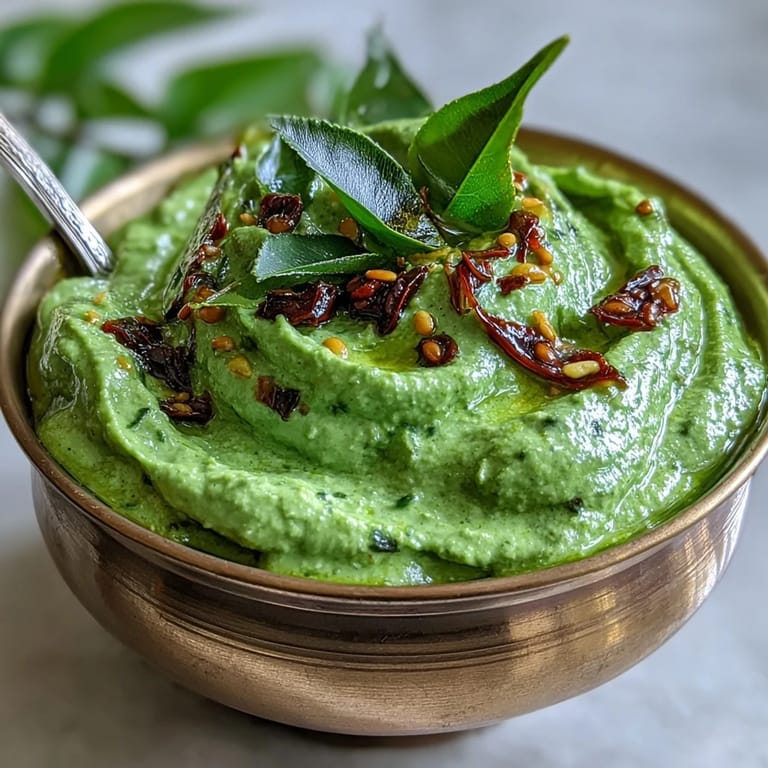
 There's a moment while the chutney sits in a bowl waiting for its tempering when it looks humble, almost apologetic—just pale green paste. Then you pour the sizzling oil over it and watch the whole thing come alive, curry leaves crisping up, seeds settling into the paste like treasures surfacing. It's magic made from patience and coconut oil, and I never get tired of it.
Choosing Your Guavas
The key to great guava chutney lives entirely in this choice. Semi-ripe guavas have that pale yellow-green color and a slight give when you press them gently—not rock hard, not soft. I learned this the hard way by buying fully ripe ones from a well-intentioned vendor, and the chutney turned sweet and cloying instead of tart. Now I squeeze the guava gently in my palm before buying; if it feels close to ripe, I ask for the ones that still have a little resistance.
The Tempering Moment
Tempering isn't just adding hot oil to a dish—it's a technique that changes the entire personality of what you're eating. In Indian cooking, this step is sacred. The heat transforms whole spices, releasing compounds and aromas that ground dried ingredients into something cohesive and warm. When I first made this chutney without tempering, I had something edible but incomplete. Once I learned to let those mustard seeds splutter, the whole dish shifted from tasting like blended fruit into something with depth and intention.
Serving and Storage
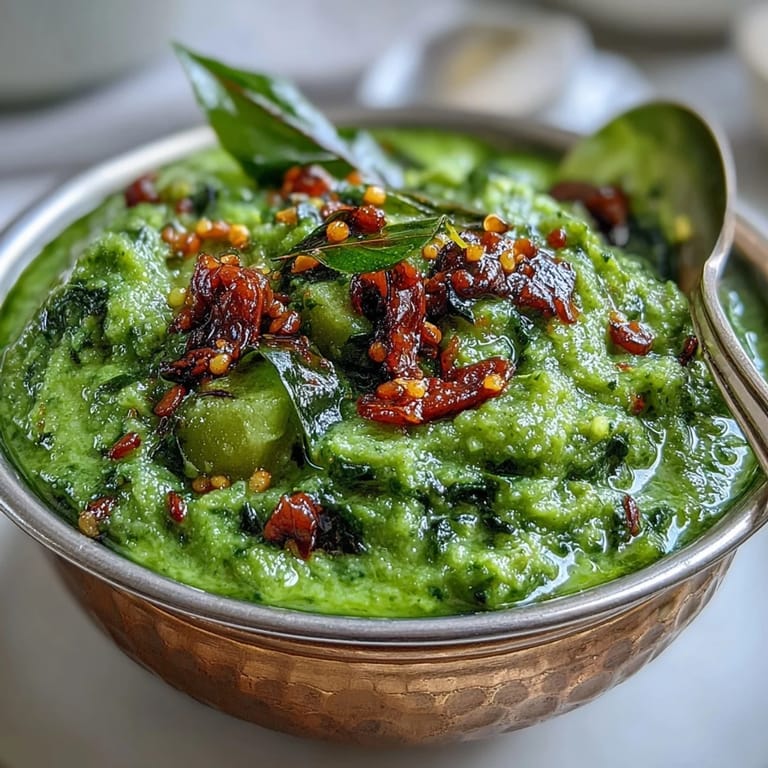
This chutney lives best the moment it's made, while the tempering is still warm and the curry leaves are still crisp. It keeps in an airtight container in the refrigerator for about three days, though it's honestly at its peak within the first day. If you find yourself with leftovers, it works beautifully stirred into plain yogurt for a quick raita, mixed into a grain bowl, or spread thinly on toast.
- Serve cold or at room temperature alongside hot idlis or dosas for the best contrast of textures and temperatures.
- If you make it ahead, store the chutney base separate from the tempering and combine them just before serving to keep the seeds crispy.
- This chutney pairs with almost any South Indian breakfast, but it also works as a condiment for sandwiches, rice plates, or even as a dip for crispy vegetables.
 Save to Pinterest
 This chutney taught me that the best dishes are often the simplest ones, the ones that rely on good ingredients and proper technique rather than a long list of steps. Every time I make it now, I think of Priya's kitchen and that morning when she showed me that cooking for someone else is its own kind of language.
Questions & Answers
- → What is the best guava variety to use?
Semi-ripe guavas work best as they offer the perfect balance of sweetness and tanginess for this chutney.
- → Can I adjust the spiciness level?
Yes, varying the number of green chilies allows you to customize the heat to your preference.
- → Is there an alternative sweetener to jaggery?
Brown sugar or honey can be used as substitutes, depending on dietary preferences.
- → Why is tempering important in this preparation?
Tempering spices in coconut oil releases essential flavors and adds a crunchy texture, enhancing the overall taste.
- → What dishes pair well with this chutney?
It complements South Indian staples like idli, dosa, and vada, and can also be used as a spread for sandwiches.