 Save to Pinterest
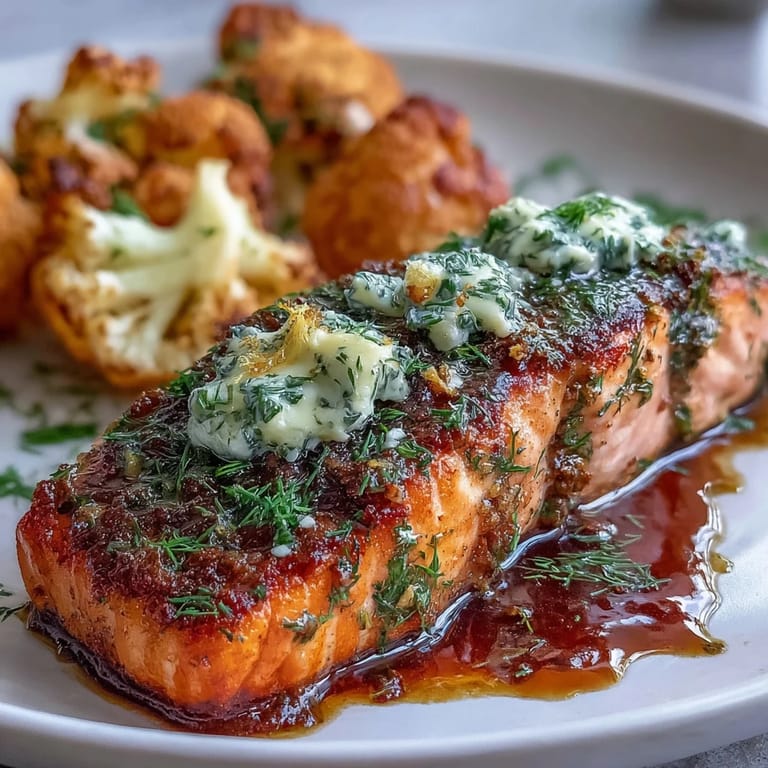
 There's something about cooking salmon on a weeknight that feels like you're treating yourself without the fuss. I'd been stuck in a rut of the same proteins until a friend casually mentioned how she tops her fillets with herb butter and roasts everything together, and somehow that simple shift made me feel like I'd discovered a restaurant secret. The kitchen fills with this buttery, herbaceous aroma that's almost too good to be true, especially when you realize the whole thing takes less time than ordering takeout. What drew me in most was realizing this could be elegant enough for guests but easy enough for a Tuesday night when energy is low.
I made this for my parents last month when they were visiting, and watching my dad actually pause mid-conversation to comment on how juicy the salmon was felt like a small victory. My mom, who's usually skeptical about keto meals, went back for seconds and asked if I'd somehow found a shortcut or if it was always this simple. Those moments remind me that good food isn't complicated, it's just about choosing ingredients you actually care about and letting them shine without overthinking it.
Ingredients
- Salmon fillets (4 pieces, about 150 g each): Choose fillets that feel firm and smell briny, not fishy, which signals freshness; skin-on keeps the flesh moist during roasting.
- Unsalted butter (60 g): Softened butter is non-negotiable here because you want it to blend smoothly with herbs without breaking; let it sit on the counter for 10 minutes before mixing.
- Fresh parsley (1 tbsp): The gentle backbone of the herb mixture, adding brightness without overpowering the delicate salmon.
- Fresh dill (1 tbsp): Dill and salmon are a time-tested pairing that elevates even basic fillets into something memorable.
- Fresh chives (1 tsp): These add a subtle onion note that brings depth without sharpness.
- Garlic clove (1, minced): Raw garlic in the butter infuses it with savory complexity that melts beautifully as it cooks.
- Lemon zest (from 1 lemon): This is where the magic happens—zest gives you all the brightness of lemon without the wetness that would make the butter greasy.
- Sea salt and black pepper (1/2 tsp and 1/4 tsp): These aren't just seasoning; they're the glue that helps all the flavors cohere.
- Cauliflower florets (1 medium head): Cut them to roughly the same size so they roast evenly; aim for pieces about 5 cm across.
- Olive oil (2 tbsp): Good olive oil won't burn at this temperature and adds fruity richness to the vegetables.
- Smoked paprika (1/2 tsp): Optional but worth adding for a subtle smokiness that makes roasted cauliflower feel less boring.
Tired of Takeout? 🥡
Get 10 meals you can make faster than delivery arrives. Seriously.
One email. No spam. Unsubscribe anytime.
Instructions
- Heat your oven and prep the workspace:
- Preheat to 220°C (425°F) and line a baking sheet with parchment paper so nothing sticks and cleanup is effortless. Think of this as setting the stage—everything moves faster once heat is ready.
- Mix the herb butter until it's silky:
- Combine softened butter with parsley, dill, chives, minced garlic, lemon zest, salt, and pepper in a small bowl, stirring until the herbs are evenly distributed and the mixture looks like herby paste. Don't overmix or the butter gets oily, but do make sure every herb is folded in.
- Prepare the cauliflower for roasting:
- Toss your florets with olive oil, salt, pepper, and smoked paprika on the baking sheet, spreading them in a single layer where each piece touches the hot pan. This creates those golden, crispy edges that make roasted cauliflower genuinely crave-worthy.
- Get the cauliflower into the oven:
- Roast for 25 minutes total, flipping halfway through around the 12-minute mark to ensure even browning on all sides. You'll know it's done when the florets are tender inside and the tips are caramelized.
- Pat the salmon dry and set up for cooking:
- Use paper towels to gently dry each fillet—moisture is the enemy of crispy skin and even cooking. Place them skin-side down in a separate baking dish lined with parchment, leaving a little space between fillets so heat circulates.
- Top each fillet with herb butter:
- Spread about 1 tablespoon of your herb butter mixture over the top of each salmon fillet, letting it settle into any crevices. This is your flavor insurance, melting into the fish as it cooks.
- Roast the salmon during the final minutes:
- When the cauliflower has been roasting for about 13 minutes, place the salmon in the oven alongside it. The salmon needs 10 to 12 minutes, just enough time for the flesh to turn opaque and flake easily when tested with a fork.
- Finish and serve with intention:
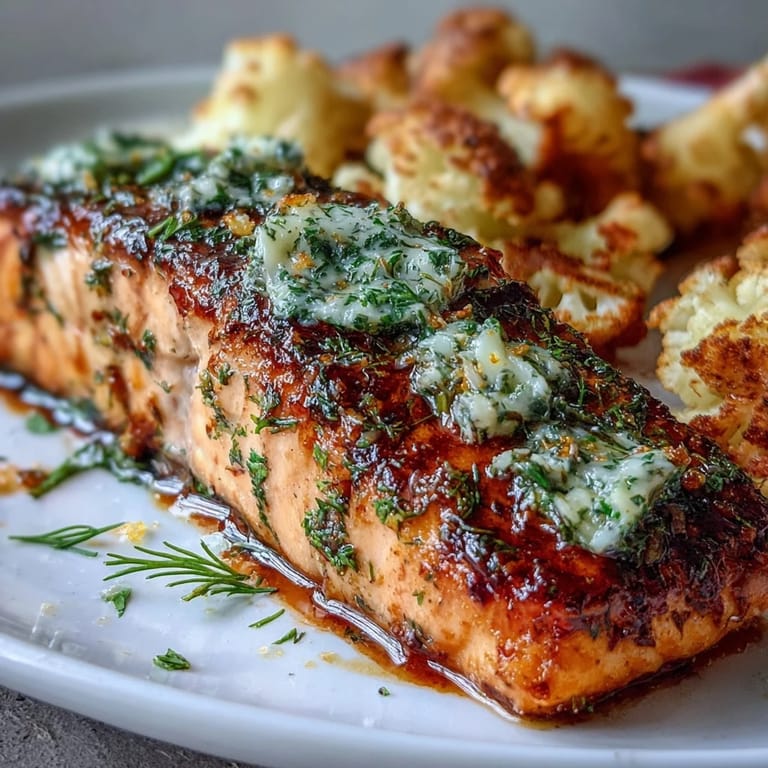
- Plate the salmon and cauliflower while everything is still warm, garnish with a few extra herb sprigs and a wedge of lemon, then invite everyone to squeeze bright citrus over their plate. This final touch makes it taste even fresher than it already is.
 Save to Pinterest
 What strikes me most about this dish is how it proved that eating keto doesn't mean sacrificing the kind of food that feels indulgent. My partner, who wasn't particularly interested in changing how we eat, ended up requesting this weekly, which says everything about whether something truly works in a real kitchen.
Timing Your Roasting for Perfect Results
The overlap between cooking times is intentional—you want the cauliflower to have a head start so it develops those crispy, caramelized edges while the salmon cooks gently in the background. I learned this the hard way one night when I roasted everything at once and ended up with undercooked cauliflower and salmon that was slightly overdone. Now I think of it as a rhythm: 13 minutes of cauliflower alone, then add the salmon for the final 12 minutes together. This staggering keeps both elements at their peak simultaneously.
Why Fresh Herbs Make All the Difference
Dried herbs will work in a pinch, but fresh herbs in this butter are non-negotiable if you want the dish to taste like something special rather than something functional. Fresh dill has an almost delicate, grassy quality that dried dill loses entirely, and fresh parsley adds brightness instead of muted herbiness. I keep a small herb garden on my kitchen windowsill now because of recipes like this—being able to snip exactly what you need feels luxurious and changes how often you reach for fresh herbs instead of accepting dried alternatives.
Variations and Personal Tweaks
This recipe is genuinely flexible if you want to make it your own, which I appreciate about dishes that feel solid but not rigid. Some nights I add a pinch of chili flakes to the herb butter for warmth, other times I swap the dill for tarragon or fresh basil depending on what's available. The roasted cauliflower takes paprika beautifully, but I've also tried it with cumin or just left it simple with salt and pepper when I want the vegetable to be quiet.
- A splash of white wine drizzled over the salmon before roasting adds acidity and richness without breaking the keto guidelines.
- If you love garlic more than life, double the minced garlic in the butter without guilt.
- Asparagus roasted the same way is a worthy substitute for cauliflower when you want variety.
 Save to Pinterest
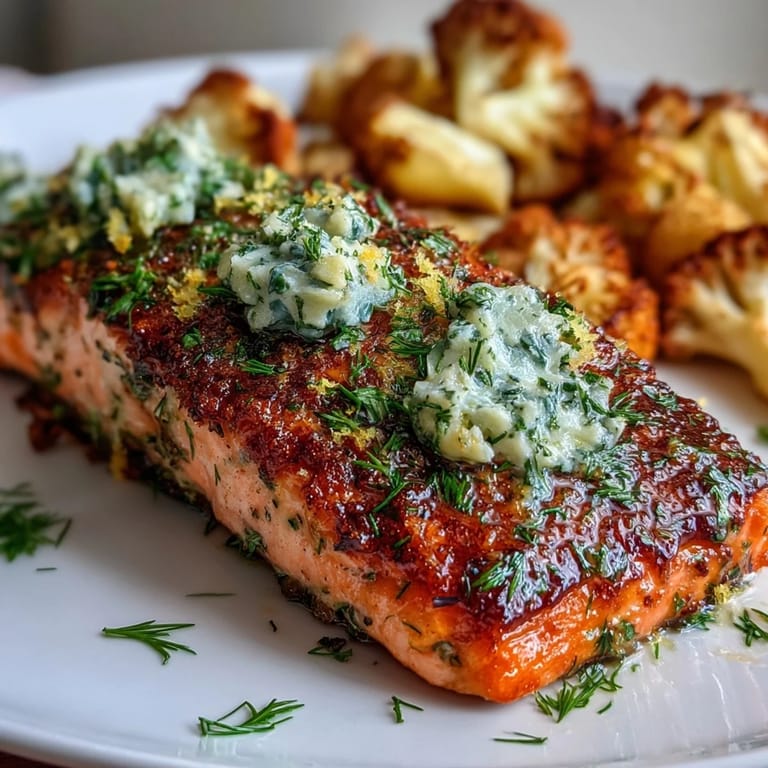
 This meal has become my go-to when I want to feel like I'm eating well without the cooking anxiety that can accompany weeknight dinner. It's the kind of recipe that reminds you that simple ingredients treated with care are often all you need.
Questions & Answers
- → How do I make the herb butter for the salmon?
Combine softened unsalted butter with freshly chopped parsley, dill, chives, minced garlic, lemon zest, sea salt, and black pepper. Mix until smooth and well blended before spreading over the salmon.
- → What temperature should I roast the cauliflower at?
Roast the cauliflower florets at 220°C (425°F) until golden and tender, which usually takes about 25 minutes, turning halfway for even cooking.
- → Can I prepare the salmon skinless or with skin on?
Yes, the salmon fillets can be cooked either skin-on or skinless according to your preference. Skin-on helps retain moisture during baking.
- → Is smoked paprika necessary for the cauliflower?
Smoked paprika adds a subtle smoky flavor but is optional if you prefer a milder taste. The roasted cauliflower will still be delicious without it.
- → How do I know when the salmon is fully cooked?
The salmon is done when it flakes easily with a fork and reaches an internal temperature of about 63°C (145°F). It should be opaque and tender.
- → Can I substitute the herbs in the butter?
Yes, fresh dill can be swapped for tarragon or basil to vary the flavor profile while keeping the herbaceous freshness.