 Save to Pinterest
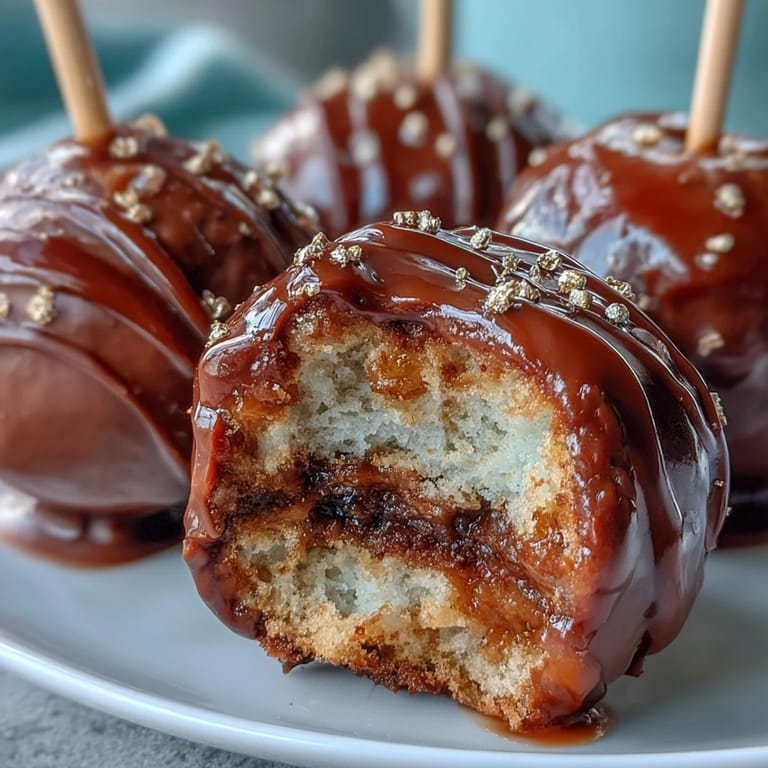
 My kitchen smelled like chocolate and possibility the afternoon I first made these pot of gold cake pops for a St. Patrick's Day party I was terrified about hosting. I'd never decorated anything that small before, and the idea of dipping tiny balls into melted candy felt impossibly fussy. But halfway through the first batch, something clicked—watching those little chocolate pots emerge from the black coating, then sprinkling them with gold, I realized I was making edible treasure. My daughter wandered in, took one look, and asked if they were actually magic. They weren't, but they felt close enough.
I brought a batch to work once, and the silence when people bit into them—realizing there was actual cake inside the chocolate shell—was worth every minute of dipping and decorating. One coworker said they felt too fancy to eat, so she saved hers in a box for two days before finally caving in. That's when I knew these weren't just treats; they were little moments of joy wrapped in chocolate.
Ingredients
- Chocolate cake mix: Box mix is your friend here because it bakes up dense enough to hold together when crumbled, and it already has that rich cocoa flavor that pairs perfectly with the black coating.
- Chocolate frosting: This is the glue that binds everything together; use a thick consistency so your cake balls hold their shape in the fridge.
- Black candy melts: They're smoother to work with than regular chocolate and set faster, which means less dripping and less frustration.
- Gold sprinkles or edible gold pearls: These make the magic happen—use the pearls if you want height and texture, sprinkles if you prefer a delicate shimmer.
- Lollipop sticks: They give you something to hold onto while dipping and they make the final presentation look intentional and elegant.
- White candy melts: Optional but worth having for a delicate rim detail that catches the light and makes each pot look finished.
- Green fondant or sprinkles: A tiny shamrock or sprinkle of green adds that final St. Patrick's Day wink without overwhelming the design.
Tired of Takeout? 🥡
Get 10 meals you can make faster than delivery arrives. Seriously.
One email. No spam. Unsubscribe anytime.
Instructions
- Bake your foundation:
- Follow the box directions for your chocolate cake—don't skip cooling it completely, or your crumbs will be gummy instead of workable. A fully cooled cake will crumble like you're breaking apart a chocolate cloud.
- Create the cake mixture:
- Crumble that cake into fine pieces (use your hands, it's actually satisfying), then fold in the frosting slowly until it looks like wet sand that holds together when you squeeze it. This usually takes about three minutes of mixing.
- Shape your little pots:
- Scoop the mixture with a cookie scoop or your hands, roll into balls, then gently flatten the tops so they look less like spheres and more like actual pots. This detail is what makes people stop and stare.
- Give them time to set:
- Refrigerate for a full thirty minutes—this step prevents them from sliding off the stick or breaking apart when you dip them. Cold cake pops are forgiving cake pops.
- Prepare for dipping:
- Melt your black candy melts according to the package, which usually means thirty-second bursts in the microwave, stirring between each one. The consistency should be smooth enough to flow but thick enough to coat.
- Stick them:
- Dip the stick tip into melted candy first—this acts like glue—then push it gently about halfway into each cake pop. Wait ten minutes in the fridge before moving forward or you'll have sticks spinning loose in your hands.
- The full dip:
- Lower each cake pop into the melted black candy in one smooth motion, twirl gently to coat, then lift it out and let the excess drip off for a few seconds. The goal is an even coat, not a thick candy shell.
- Gold moment:
- While the coating is still wet, sprinkle the gold generously over the top of each pot—this is where it goes from nice to magical. Do this immediately or the candy will set and your gold won't stick.
- Finishing details:
- If you're adding a rim, work with white candy melts in a small bag with the corner snipped off, piping a thin line around where the pot mouth would be. A tiny green fondant shamrock on one side brings the whole St. Patrick's Day moment together.
- Let them rest:
- Set them upright in a styrofoam block or cake pop stand and let them harden completely before touching or stacking. Patience here prevents chocolate smudges and ruined decorations.
 Save to Pinterest
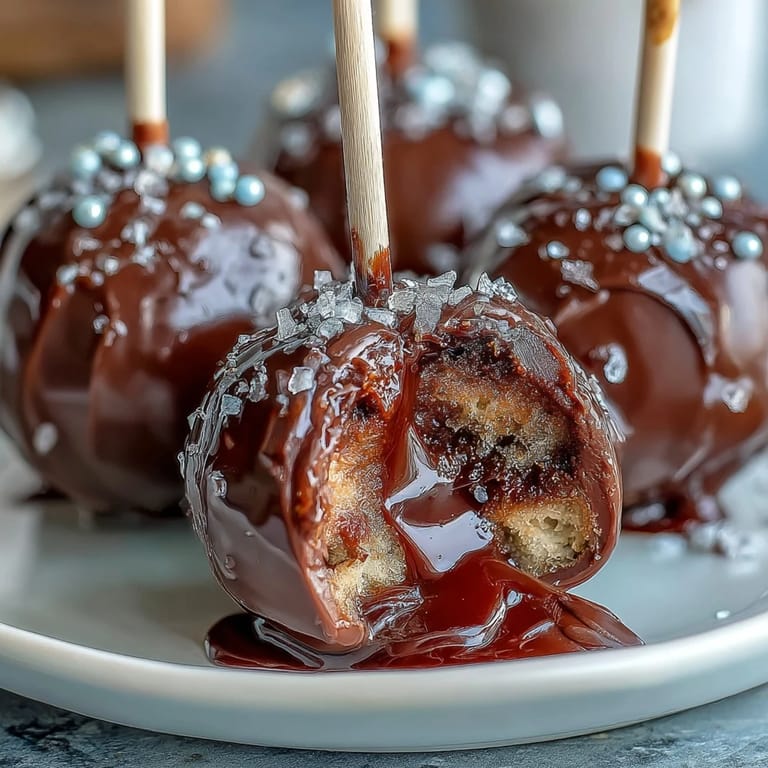
 My nephew bit into one at the party and declared it was the best thing he'd ever eaten, which maybe was just the sugar talking, but the way he carefully saved one for later told me something real had happened. These little cake pops stopped being just dessert and became the thing people remembered about that St. Patrick's Day—not the food, but the feeling of celebration in every bite.
The Art of Styling Tiny Cake Pops
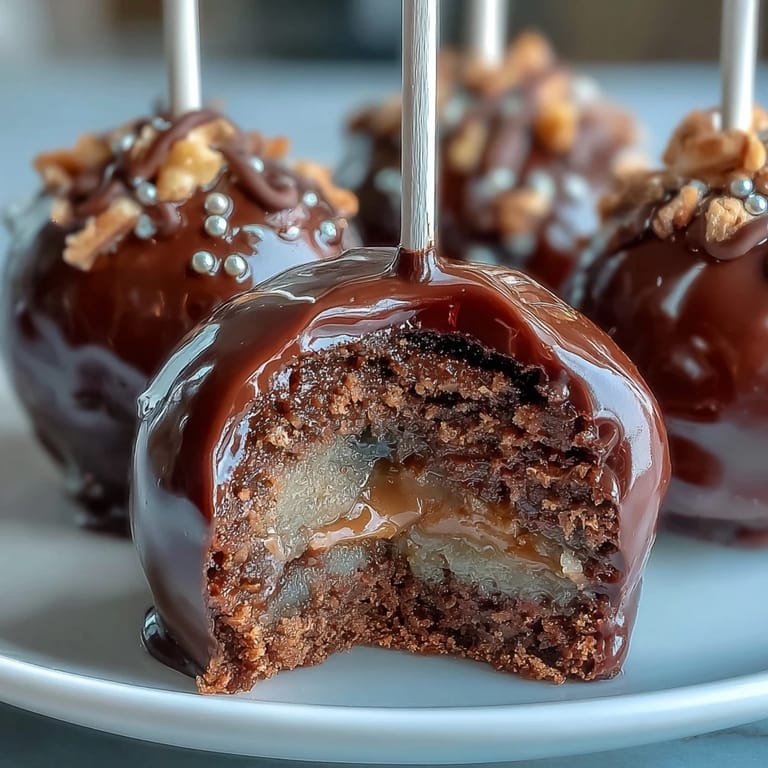
The beauty of these cake pops is that they're small enough to arrange on a platter in a way that looks deliberately curated. I've clustered them in groups of three, scattered some edible gold leaf around them on parchment paper, and suddenly people think you're a pastry chef. The stick becomes part of the presentation too—stand them at slightly different heights in your styrofoam display and it looks like a garden of chocolate treasure.
Scaling and Timing for Crowds
One batch makes twenty-four pops, which sounds like plenty until you realize one person will eat three and suddenly you're doing math on St. Patrick's Day morning. Plan to make at least a day or two ahead because the dipping and decorating takes longer once you hit cake pop number fifteen—your hand gets a little tired. The good news is they keep perfectly fine in an airtight container at room temperature for three days, so you can build your supply as the party gets closer.
Making Them Your Own
The base recipe is forgiving enough that you can experiment with different cake flavors—vanilla cake with chocolate frosting works just as well as chocolate on chocolate, and I've even done a red velvet version with cream cheese frosting for Valentine's Day using the same technique. The real magic is in the decorating, where you can lean into the St. Patrick's Day theme or dial it back to just elegant black and gold.
- Try swapping the chocolate frosting for any flavor that complements your cake choice and creates that dough-like texture when mixed.
- If gold sprinkles feel too much, use pearl dust mixed with a tiny bit of vodka to paint the tops for a more subtle shimmer.
- Green fondant shamrocks can be made ahead and stored in an airtight container for a full week, so you can prep that detail way in advance.
 Save to Pinterest
 These cake pops are proof that sometimes the fanciest desserts are just dressed-up simplicity with intention and a little sparkle. Once you make them once, you'll find yourself reaching for the recipe every time there's a reason to celebrate.
Questions & Answers
- → How do I achieve the pot shape for each cake ball?
After rolling the cake mixture into balls, slightly flatten the tops to mimic the shape of a pot before chilling.
- → What type of coating is used for the cake balls?
Black candy melts are melted and used to fully coat each cake ball, providing a smooth and firm outer shell.
- → Can I prepare these cake balls ahead of time?
Yes, the cake balls can be assembled and refrigerated for up to 3 days when stored in an airtight container.
- → What decorating options enhance the festive look?
Gold sprinkles or edible gold pearls on top create the appearance of coins, and green fondant or sprinkles add shamrock details.
- → Are there gluten-free options available?
Using gluten-free cake mix and ensuring decorations are gluten-free allows for creating a gluten-free version.