 Save to Pinterest
 My first encounter with seaweed tempura happened on a rainy afternoon at a small izakaya tucked behind a Tokyo train station. The chef handed me a piping hot piece, still crackling, and the moment it hit my tongue I understood why Japanese home cooks treat this as comfort food rather than just appetizer fare. What fascinated me most was how something so simple—just nori, batter, and hot oil—could deliver such a satisfying contrast of textures and that unmistakable umami whisper. I spent the next hour trying to recreate it in my own kitchen, learning through small mistakes and happy accidents.
There's a quiet magic to standing at the stove watching these little squares transform in hot oil, their edges crisping up in seconds like they're waking up. I made a batch for friends who claimed they didn't eat much fried food, and three of them came back for seconds before the first plate even cleared. That night taught me that food people thought they didn't want often just needed the right moment and the right preparation to become irresistible.
Ingredients
- Nori sheets (8 large): Buy the roasted kind from the sushi section; unroasted nori won't give you that crispy, snappy texture that makes this dish special, and trust me, the flavor difference is night and day.
- All-purpose flour (100 g or 3/4 cup): This is your base for structure; don't sift it unless your flour has been sitting in the pantry for months and clumped up.
- Cornstarch (30 g or 1/4 cup): This is the secret to extra crispiness—it creates those delicate, shattered edges that everyone comments on.
- Baking powder (1/2 tsp): A tiny amount creates lift and airiness in the batter, making the coating light rather than dense and heavy.
- Fine sea salt (1/2 tsp): Use fine sea salt, not kosher, because the crystals dissolve evenly into the batter instead of creating salty pockets.
- Ice-cold sparkling water (200 ml or 3/4 cup plus 1 tbsp): The cold temperature and carbonation are non-negotiable; they keep the batter light and crispy, so chill your water in the freezer for ten minutes before using it.
- Egg yolk (1 large, chilled): Keep this cold too; a warm egg yolk will make the batter heavy and the nori won't fry as crisply.
- Neutral oil for frying (500 ml or 2 cups): Canola or sunflower oil works beautifully; avoid olive oil because its lower smoke point means it breaks down faster and leaves a burnt taste.
- Soy sauce (3 tbsp): Use good quality soy sauce here—it's the backbone of your dipping sauce and deserves respect.
- Mirin (2 tbsp): This adds natural sweetness and gloss to the sauce; don't skip it thinking regular sugar is the same, because mirin brings a depth that sugar can't replicate.
- Rice vinegar (1 tbsp): This brightens the sauce and keeps it from being one-dimensional; the acidity is crucial.
- Sugar (1 tsp): A small amount rounds out the flavor profile without making the sauce sweet.
- Toasted sesame oil (1/2 tsp): A little goes a long way; this ingredient announces itself and makes people wonder what they're tasting.
- Spring onion (1, finely sliced): Add this just before serving so it stays fresh and retains its slight bite.
- Sesame seeds (1/2 tsp, optional): If you use them, toast them lightly in a dry pan first to intensify their nutty flavor.
Tired of Takeout? 🥡
Get 10 meals you can make faster than delivery arrives. Seriously.
One email. No spam. Unsubscribe anytime.
Instructions
- Make the dipping sauce first:
- Whisk soy sauce, mirin, rice vinegar, and sugar together in a small bowl until the sugar completely dissolves, then stir in the sesame oil. The flavors meld better if you let this sit while you prep everything else, so don't rush this step.
- Prepare your nori:
- Stack all eight sheets and use a sharp knife or clean kitchen scissors to cut them into quarters, giving you thirty-two pieces that are manageable to hold and fry. Keep them on a plate nearby so they're ready when your oil hits temperature.
- Combine your dry ingredients:
- Whisk flour, cornstarch, baking powder, and salt together in a mixing bowl until evenly distributed. This ensures the baking powder distributes evenly and prevents pockets of bitterness.
- Build the batter:
- In a separate bowl, gently beat the chilled egg yolk, then add your ice-cold sparkling water and stir just until combined. Pour this into your dry ingredients and mix with chopsticks or a fork using a folding motion—you want the batter to stay lumpy and cloud-like, never smooth.
- Heat your oil:
- Place a heavy-bottomed pan or deep pot on medium-high heat and add the neutral oil, letting it reach 180°C (350°F) on a thermometer. If you don't have a thermometer, test the temperature by dropping a tiny piece of nori in; it should sizzle immediately and float to the surface in about thirty seconds.
- Fry the nori:
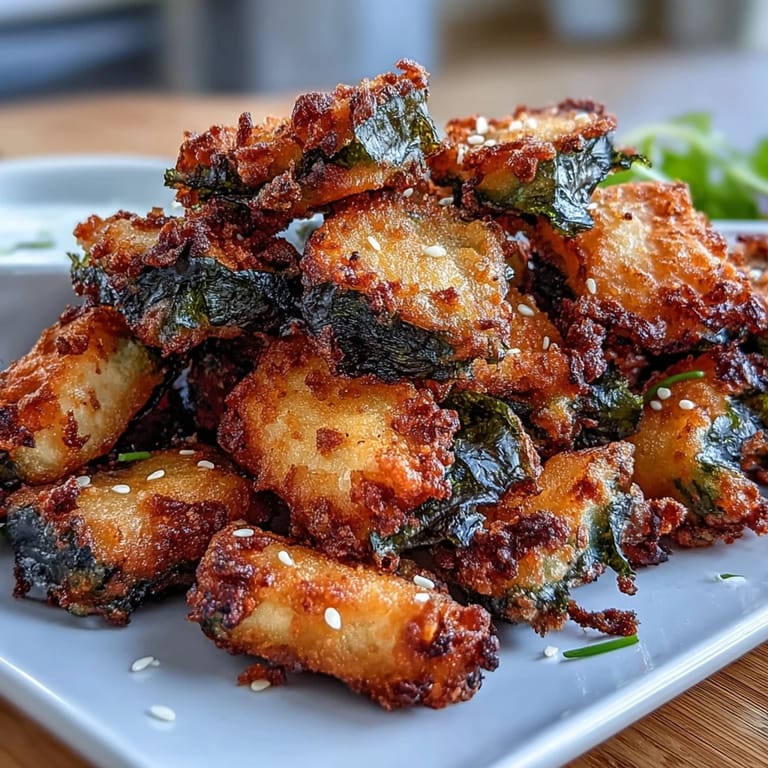
- Working in small batches so the oil stays hot, dip each nori piece into the batter for a quick second, let excess drip off for just a moment, then slide it into the hot oil. Fry for thirty to forty-five seconds until the edges turn golden and the whole piece sounds crispy when you tap it with the spoon.
- Drain and rest:
- Remove each piece with a slotted spoon and lay it on paper towels to cool slightly and shed excess oil. This is when they develop their final crunch, so don't skip this step even though you'll be eager to eat them.
- Finish and serve:
- Just before serving, sprinkle the spring onion and sesame seeds over the dipping sauce and place your warm nori tempura on a plate alongside it. The contrast between warm, crispy seaweed and cool, flavorful sauce is part of the whole experience.
 Save to Pinterest
 The moment that changed everything came when my neighbor smelled the seaweed frying and stopped by asking what was burning in the best way possible. She stayed for three pieces and a cup of tea, and we ended up talking for an hour about food and memory and how certain tastes transport you somewhere completely different. That's when I realized this wasn't just a snack recipe—it was an invitation to slowness and presence at the stove.
The Oil Temperature Matters More Than You Think
I learned this the hard way by watching a batch emerge from oil that was just slightly too cool, and they came out soggy instead of crispy. The magic happens at 180°C because the exterior sets immediately while the nori inside stays tender, creating that satisfying contrast. If your oil is too hot, the batter browns faster than the nori can cook through, and you're left with a charred coating over half-cooked seaweed.
Why Sparkling Water Makes This Work
Still water makes a decent tempura batter, but sparkling water creates something special—the bubbles don't just add lightness to the batter itself, they stay suspended in the oil as it cooks, creating tiny pockets that shatter when you bite down. Someone once told me that Japanese tempura masters swear by this trick, and after years of making both versions, I can confirm they're right. The difference is subtle but unmistakable once you know what to listen for.
Variations That Work and Why
Once you master the basic version, the variations practically suggest themselves based on what's in your pantry and what you're in the mood for. The batter formula is forgiving enough that you can experiment without breaking the whole technique. Here are some directions that genuinely improve this dish rather than just changing it:
- Add a pinch of chili flakes to the batter if you want a subtle heat that builds as you eat, though start with less than you think you need.
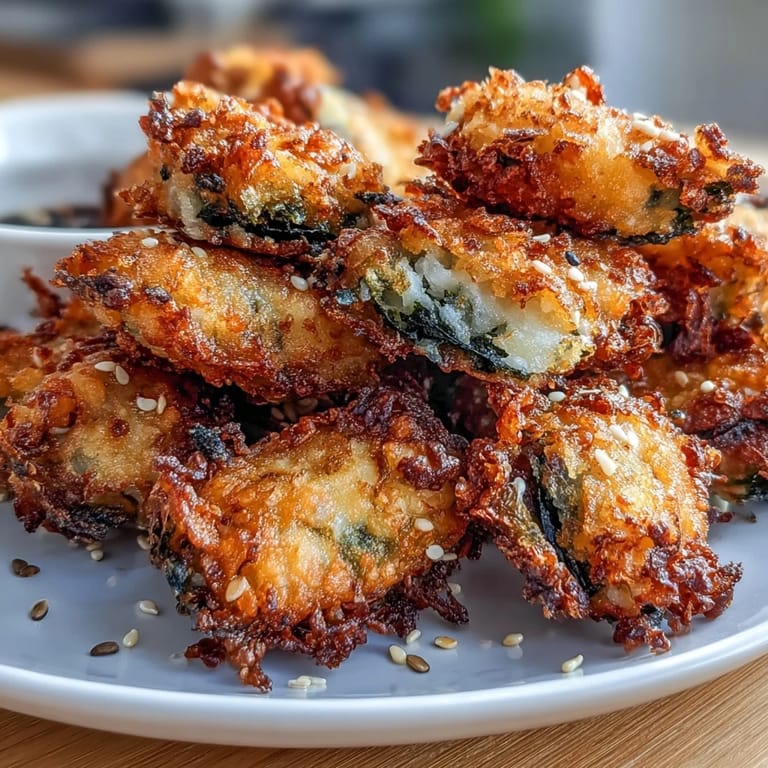
- Double-coat a few pieces by dipping them twice in the batter for extra crunch, and watch them become everyone's favorite on the plate.
- Try thinly slicing some green onion into the batter itself for specks of color and fresh flavor throughout.
 Save to Pinterest
 These little golden squares remind me that the best recipes often ask for just a few good ingredients treated with respect and care. Whether you're making them for yourself on a quiet evening or for people you want to impress, they deliver in a way that feels both effortless and special.
Questions & Answers
- → How do I get a light, crispy batter for seaweed tempura?
Use ice-cold sparkling water and avoid overmixing the batter; it should remain slightly lumpy for optimal crispness.
- → What oil is best for frying tempura seaweed?
Neutral oils with high smoke points like canola or sunflower oil work well for frying without overpowering flavors.
- → Can I prepare the dipping sauce ahead of time?
Yes, the sauce can be mixed in advance and refrigerated to allow flavors to meld before serving.
- → How do I prevent the seaweed from becoming soggy after frying?
Drain fried pieces on paper towels immediately and serve warm to retain their crispy texture.
- → Are there variations to enhance the flavor or texture?
For extra crunch, double-coat the seaweed with batter, or add chili flakes for a spicy kick.