 Save to Pinterest
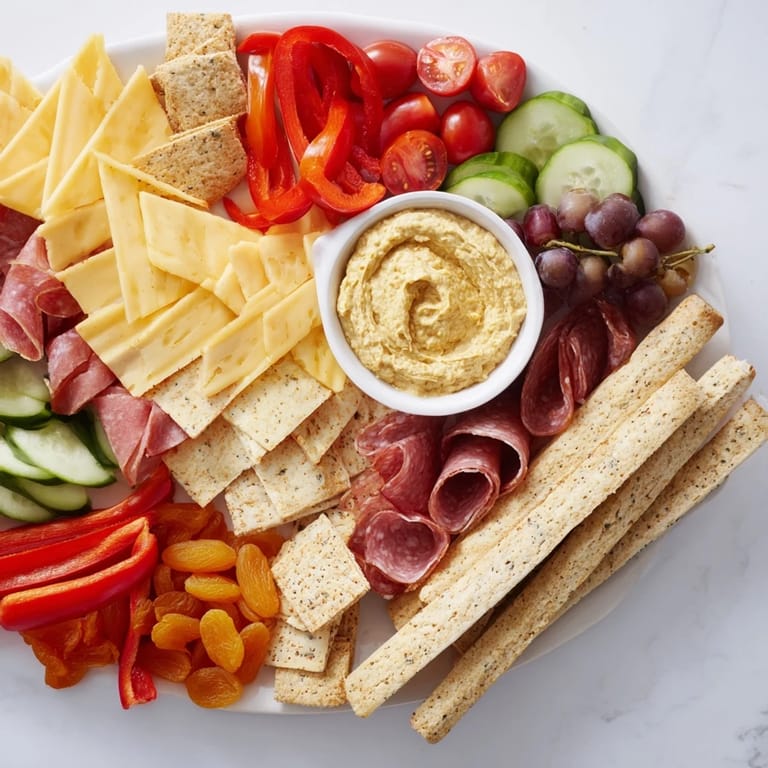
 I'll never forget the first time I arranged a charcuterie board that actually made people stop and stare. It was at a dinner party about three years ago, and I was nervous about impressing my partner's colleagues. Instead of the usual scattered approach, I had this sudden inspiration to point everything toward the center dip bowl—like an edible compass guiding everyone to the heart of the board. The moment guests arrived and saw those angles and lines all flowing in one direction, the whole board came alive. It wasn't just food anymore; it was art with purpose. That night, I learned that arrangement matters as much as what you're arranging.
I still remember my friend Sarah walking into the kitchen while I was mid-arrangement on a Saturday afternoon. She watched me position each cheese wedge and couldn't stop laughing at how seriously I was treating the angles. By the time our guests arrived that evening, she was the one pointing out how the grapes clustered perfectly in the flow and how even the crackers seemed to be directing people toward that center bowl of hummus. That's when I realized this wasn't pretentious—it was fun, and it made people feel welcomed and considered.
Ingredients
- Aged cheddar (100 g, cut into triangles): The sharpness cuts through the richness of the board and those triangular cuts are perfect for pointing toward your focal point—they're naturally directional
- Brie (100 g, sliced into wedges): Soft, creamy, and elegant; wedges are easier to work with than blocks and they catch light beautifully
- Gouda (100 g, cut into strips): The strips echo your directional theme and their nutty flavor balances the sharper cheeses
- Prosciutto (100 g, folded): Fold it loosely so it has movement and dimension—thin, graceful folds guide the eye naturally
- Salami (100 g, sliced and folded): The slight curl when folded adds texture and those folds naturally angle forward
- Seedless grapes (1 cup, small clusters): Keep them in small clusters rather than individual grapes—they stay grouped and reinforce your lines
- Cherry tomatoes (1 cup, halved): Halving them shows off the bright interior and makes them easier to position in your arrangement
- Cucumber (1 small, sliced diagonally): Diagonal slices already suggest movement and direction—this cut was made for this board
- Red bell pepper (1 small, sliced into strips): Strips are your friends here; they're naturally linear and guide the eye
- Artisan crackers (1 cup): Choose ones with interesting shapes; varied textures fill gaps while maintaining visual interest
- Baguette (1 small, sliced on the bias): The bias cut is essential—it echoes your diagonal theme throughout the board
- Marcona almonds (½ cup): These are rounder and more elegant than regular almonds; they act as visual connectors between larger components
- Dried apricots (¼ cup): Their warm color adds another layer, and they're small enough to fill spaces while staying directional
- Olives (¼ cup): Keep a few grouped; they're rich enough in color to anchor sections of your arrangement
- Herbed hummus or whipped feta dip (100 ml): This is your arrow's point, your board's destination—choose whichever feels right for your crowd, but keep it in a small bowl that makes it easy to dip
Tired of Takeout? 🥡
Get 10 meals you can make faster than delivery arrives. Seriously.
One email. No spam. Unsubscribe anytime.
Instructions
- Set your focal point:
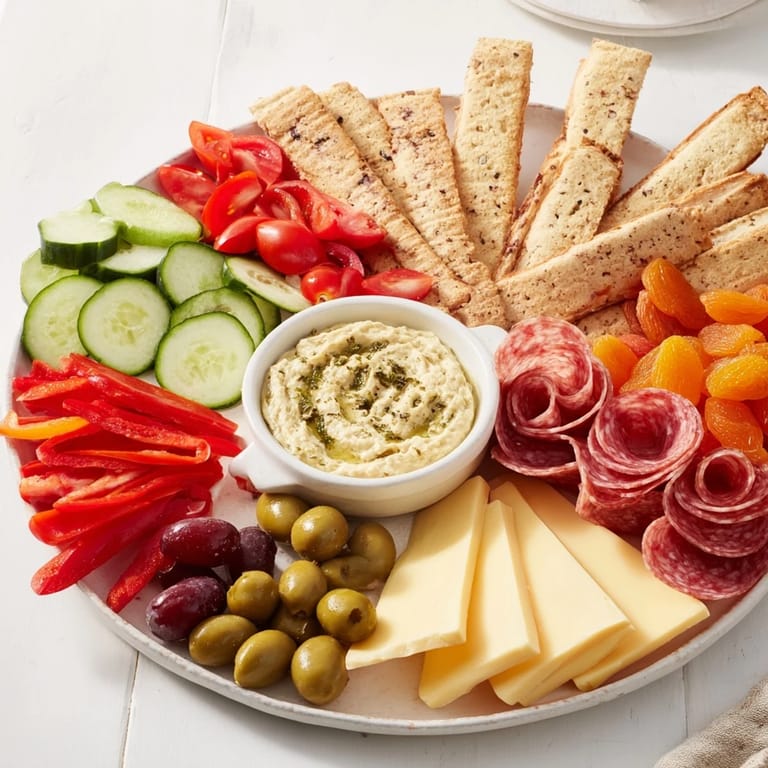
- Place your dip bowl at one corner or end of the board—this is where all roads lead. I usually put mine in a corner slightly off-center; it feels more dynamic than dead center. Take a breath. Everything you do next spirals out from here.
- Map out your cheese direction:
- Start with your cheese wedges and triangles on the opposite side of the board from your dip. Arrange them like they're being pulled toward the center, each point aimed inward. Let them fan slightly as they spread, mimicking an arrow's fletching. This is the backbone of your board.
- Layer in the meats with flow:
- Position your prosciutto and salami folds in loose lines that also point toward the dip. Don't make them rigid—let them fold naturally and catch a little light. They should feel like they're gently sliding toward the center, not marching in formation.
- Weave in vegetables and fruit:
- Now place your tomato halves, cucumber slices, and pepper strips in diagonal lines. This is where the board really starts singing because these colors create visual pathways. Arrange them so clusters naturally flow inward. Your grape clusters should follow these same lines, acting as color breaks.
- Position crackers and bread as guides:
- Lay your crackers and bias-cut baguette slices in radiating lines, all facing toward the dip bowl. They're your largest components by volume, so use them to fill the space between your other elements while maintaining the directional flow. Stagger them slightly for dimension.
- Fill with finishing touches:
- Scatter your almonds, apricots, and olives along the lines between main components. These small pieces reinforce the directional pattern and fill any gaps. They're like tiny arrows themselves, subtle but part of the bigger picture.
- Step back and adjust:
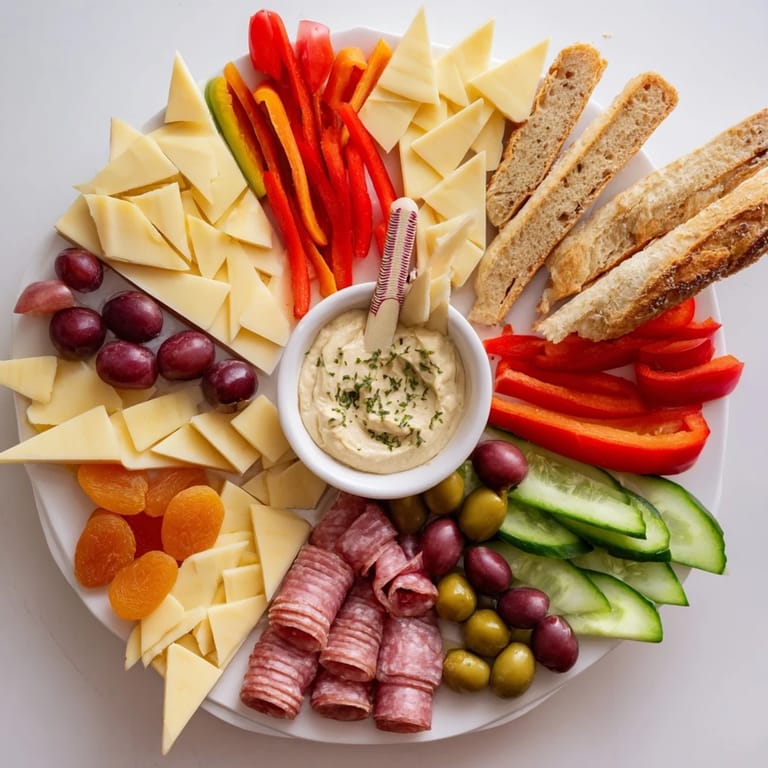
- Look at your board from across the room. Does your eye travel naturally to the dip? Are there color gaps? Bare patches? Make small adjustments—shift a grape cluster here, rotate a cracker there. Balance is about both visual weight and color distribution. Trust your instinct.
 Save to Pinterest
 There was a moment during last year's holiday party when someone I'd just met stood in front of the board for almost a full minute, just taking it in. They weren't deciding what to eat—they were appreciating it. That's the moment I realized this board had become more than just an appetizer. It was a small gesture that said, 'You're worth the effort. You're worth something beautiful.' That's the power of feeding people with intention.
The Magic of Direction in Presentation
I've learned that human eyes are drawn to movement and purpose. When you give every element on a board a direction—a reason to point somewhere—suddenly it's not just a collection of food. It's a story unfolding from the edges inward. The directional board works because it respects how people actually experience food presentations: they follow the lines, the colors, the shapes. They arrive at the dip as if they were meant to be there all along. This is why people find it so satisfying.
Cheese Selection and Cutting Techniques
The way you cut your cheese changes everything. Triangles and wedges work better than chunks because they naturally suggest direction. When I started being intentional about my cheese cuts, my boards transformed. A triangle points. A wedge curves gracefully. A haphazard chunk just sits there. I also learned to let cheese come to room temperature for about 15 minutes before serving—it tastes better, and it's easier for guests to actually bite through. Cold cheese from the fridge becomes rubbery and loses its nuance. That small detail matters more than people realize.
Color, Texture, and the Art of Visual Balance
Every time I arrange this board, I think about color zones. The red of the tomatoes shouldn't cluster only on one side, or the whole thing feels unbalanced. The warm tones of the cheeses need cold accents nearby. The creamy whites of the brie need contrast from the darker salami. What I've discovered through trial and error is that you can guide people through a board with color just as much as with directional arrangement. Your eye should travel smoothly across different colors as it spirals toward the center.
- Place warm colors (reds, oranges from apricots) opposite cool colors (greens from cucumber) to create natural visual movement
- Use white elements like brie or crackers to separate bold colors and prevent them from competing
- Vary heights by layering—let some items rest slightly on top of others rather than laying everything flat on the board itself
 Save to Pinterest
 Every time I arrange this board, I'm reminded that food is about more than nourishment. It's about intention, creativity, and the small ways we show people they matter. This board will feed your guests well, but it will also make them feel seen.
Questions & Answers
- → How do I create the arrowhead effect on the board?
Place the dip bowl at one corner, then angle cheeses, meats, produce, and crackers so their points and lines all face toward it, creating a directional flow.
- → Can this board be made vegetarian?
Yes, simply omit the meats and add extra vegetable or cheese varieties while maintaining the angled arrangement for visual flow.
- → What dips pair well with this arrangement?
Herbed hummus or whipped feta work well, but you can also try beet hummus, tzatziki, or whipped ricotta for variety.
- → What tools are recommended for assembling this board?
Use a large wooden or slate board, paring knife for slicing, small bowls for dips and olives, and cheese knives for prepping cheeses.
- → How can I add visual interest and balance to the board?
Use contrasting colors and textures, arrange nuts and dried fruit along lines between main components, and adjust spacing to fill gaps evenly.