 Save to Pinterest
 The first time I truly understood what made a Wiener Schnitzel special, I wasn't in Vienna at all—I was in my small kitchen watching my grandmother's hands move with absolute precision as she pounded those veal cutlets paper-thin. She didn't measure or fuss; she just knew when each piece was ready by the feel and sound of the mallet striking the meat. That afternoon, I learned that this dish isn't about following rules—it's about respecting the simplicity of three things: tender veal, crispy bread, and golden fat.
Years later, I made this for a friend who'd just moved to the city, and as she bit into that first piece, her eyes went wide—she actually gasped. That's when I realized a Wiener Schnitzel isn't just dinner; it's a small moment of transformation, something that tastes expensive and impressive but belongs on ordinary tables.
Ingredients
- Veal cutlets (4, about 150 g each): The heart of this dish—look for pale pink meat that's been trimmed of any thick edges, and ask the butcher to pound them slightly if you like.
- All-purpose flour (100 g): The first layer that helps everything stick; don't skip it even though it seems simple.
- Eggs (2 large) and milk (4 tbsp): Mixed together, this creates a thin, clingy wash that helps the breadcrumbs adhere without creating clumpy layers.
- Fine dry breadcrumbs (150 g): Use panko or Japanese breadcrumbs if you want extra crispiness, or finer ones for a more delicate crust.
- Clarified butter or neutral oil (250 ml): This is where the magic happens—enough fat to let the schnitzel swim and develop that legendary golden color.
- Lemon wedges and fresh parsley: Not optional; the brightness cuts through the richness and makes every bite feel lighter.
Tired of Takeout? 🥡
Get 10 meals you can make faster than delivery arrives. Seriously.
One email. No spam. Unsubscribe anytime.
Instructions
- Pound the veal with care:
- Lay each cutlet between two sheets of plastic wrap and use a meat mallet with steady, gentle strokes—not aggressive pounding. You'll feel when it reaches that thin, tender thickness, and you'll hear the sound change. Pat the meat dry with paper towels afterward, then season lightly with salt and pepper on both sides.
- Create your breading station:
- Set up three shallow dishes in a row: flour, beaten egg mixed with milk, and breadcrumbs. This assembly-line approach keeps your hands less messy and ensures every cutlet goes through in the same order.
- Bread with a light hand:
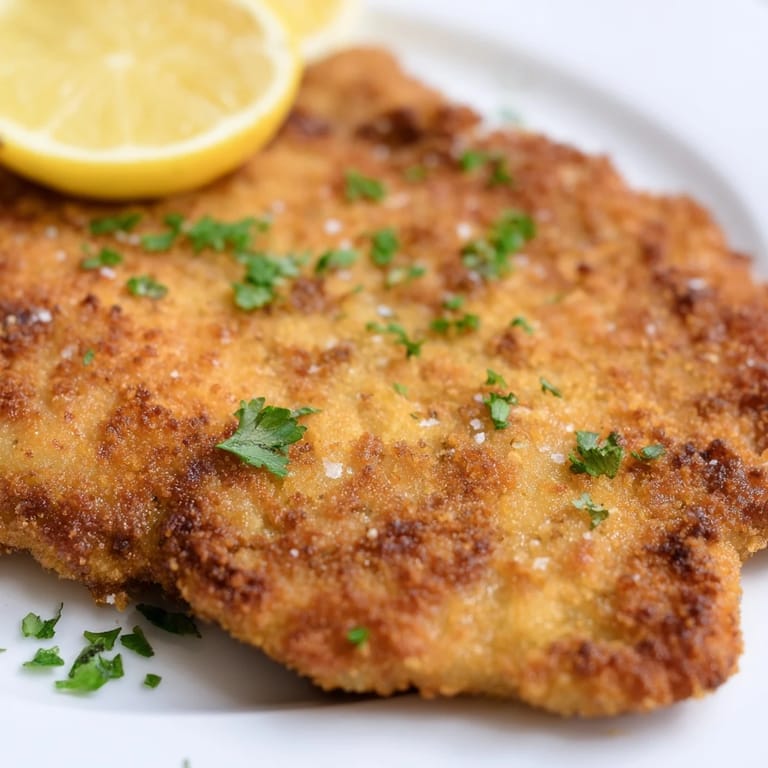
- Dredge the cutlet in flour, shake off the excess until only a whisper remains, then dip into the egg wash and let the excess drip away. Finally, lay it in the breadcrumbs and gently press—don't crust it like armor, just coat it like a blanket. A loose coating is what gives you that shattered, crispy texture.
- Heat the fat properly:
- Pour your clarified butter or oil into a large skillet and let it heat over medium-high until it shimmers and moves easily around the pan—this usually takes about 3 minutes. A drop of water should sizzle immediately when it hits the surface.
- Fry until golden brown:
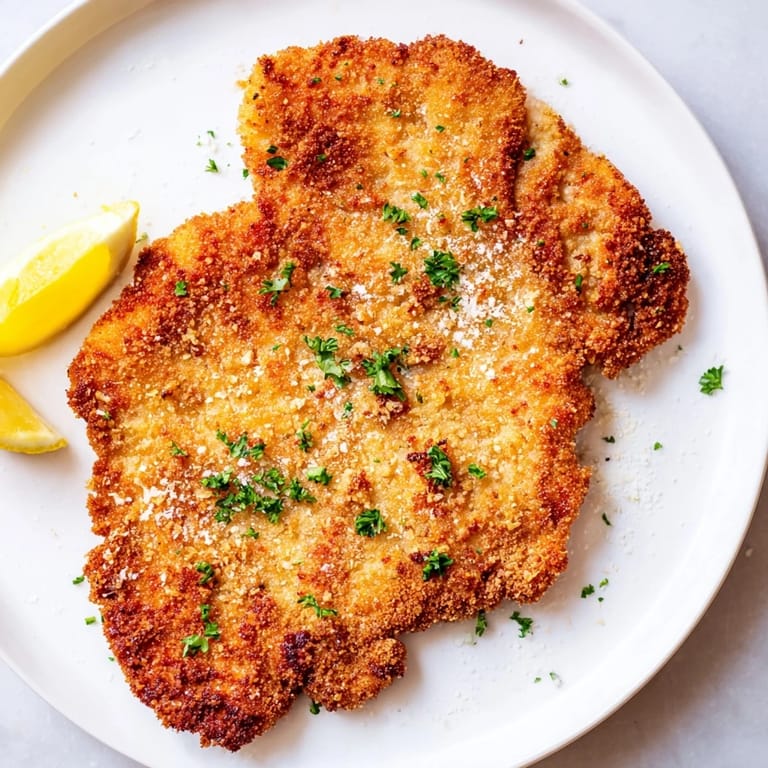
- Gently lay one or two schnitzels into the hot fat (don't overcrowd) and fry for about 2 to 3 minutes per side until they're a deep golden brown. Tilt the pan and spoon the hot fat over the top of each cutlet as it cooks to ensure even browning and help the underside stay crispy.
- Drain and serve immediately:
- Lift each schnitzel out with a slotted spatula and lay it briefly on paper towels to shed excess fat. Transfer to a warm plate right away and squeeze fresh lemon over the top, then sprinkle with parsley if you like.
 Save to Pinterest
 I once made this for my partner after a long day, and we sat at the kitchen counter eating straight from the pan, laughing and passing lemon wedges back and forth. That's when food stopped being a task and became a conversation.
The Magic of Proper Pounding
The difference between a tough schnitzel and a tender one comes down to that first step—and not just thickness, but method. When you pound the meat gently and evenly, you're breaking down the fibers in a way that allows heat and fat to penetrate beautifully during frying. A meat mallet with a flat side is your best friend here; the sound changes as the meat becomes ready, almost like a conversation between your hands and the meat.
Choosing Your Sides
Traditionally, a Wiener Schnitzel comes with potato salad, cucumber salad, or lingonberry jam—each one serves a purpose. Potato salad adds warmth and body to the plate; cool cucumber salad cuts through the richness of the fried coating; and lingonberry jam (or lemon alone) provides a bright, almost sweet counterpoint. The best part is that these sides taste just as good made a few hours ahead, so you can fry your schnitzels at the last minute without stress.
Frying Secrets and Fat Choices
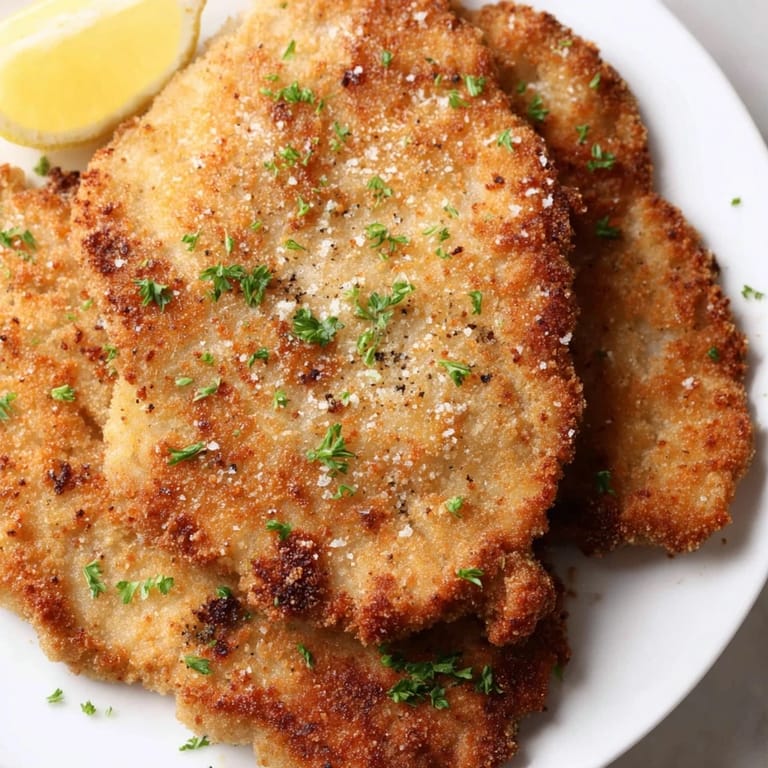
Clarified butter is traditional because it has a high smoke point and contributes a delicate, almost sweet flavor that finished oil can't quite match—but if you can't find it, a neutral oil with a high smoke point like grapeseed or refined coconut oil works beautifully. The key isn't the choice of fat alone; it's the amount and temperature. Your schnitzel should practically swim in the oil, creating that characteristic golden crust through something close to shallow frying rather than sautéing.
- If you make clarified butter at home, save the milk solids for other cooking—they add wonderful depth to sauces.
- Let your oil cool slightly between batches if you're making schnitzels for a crowd, so the heat stays consistent.
- Leftover schnitzel actually tastes wonderful cold the next day with a squeeze of fresh lemon—a secret afternoon snack.
 Save to Pinterest
 This dish has a way of turning an ordinary evening into something worth remembering—not because it's complicated, but because it tastes like someone cared. Make it, and you'll understand why.
Questions & Answers
- → What type of meat is used for this dish?
Veal cutlets are used, pounded thin to ensure tenderness and even cooking.
- → How is the breading process done?
Each cutlet is dredged in flour, dipped in an egg and milk mixture, then coated lightly with fine dry breadcrumbs.
- → What type of fat is recommended for frying?
Clarified butter is traditional for a rich flavor, but a neutral oil with a high smoke point can also be used.
- → How can I ensure the cutlets get crispy?
Avoid pressing breadcrumbs into the meat and do not overcrowd the pan. Fry in hot fat, spooning over the cutlets for even browning.
- → What is a classic accompaniment for this dish?
Lemon wedges enhance flavor, and traditional sides include potato or cucumber salad and lingonberry jam.
- → Can other meats be used instead of veal?
Pork or chicken can be alternatives, but veal preserves the authentic taste and texture of this dish.