 Save to Pinterest
 My first real bouillabaisse wasn't in Provence—it was in my tiny apartment kitchen on a Tuesday night when I decided to stop playing it safe with seafood. A friend had brought back saffron from a market trip, and I found myself drawn to this legendary fish stew, imagining golden broth and the smell of fennel filling the room. What struck me wasn't the complexity of ingredients but how they seemed to tell a story together, each one quietly building toward something greater than itself. That night, I learned that bouillabaisse isn't about showing off—it's about letting the sea speak through humble vegetables and good technique.
The moment I served it, my partner closed his eyes after the first spoonful, and I knew I'd cracked something real. The rouille—that silky, garlicky golden dollop—made people smile in a way restaurant meals rarely do. There's something about a bowl that warm, that fragrant, that pulls everyone to the table at exactly the same moment.
Ingredients
- Firm white fish fillets (400 g): Monkfish or sea bass hold their shape beautifully during the simmer and won't dissolve into the broth like delicate white fish can.
- Oily fish fillets (300 g): Red mullet brings richness and a subtle sweetness that balances the saffron without overpowering it.
- Mussels and shrimp: These add briny sweetness and texture—add them at the very end so they stay tender.
- Olive oil: Use your best quality; it's not hidden in a reduction but carries the entire flavor profile.
- Onion, leek, fennel, and carrot: The fennel is non-negotiable—its anise notes are the backbone of authentic bouillabaisse.
- Tomatoes: Fresh ripe ones make the biggest difference; they soften into the broth and add subtle sweetness and acidity.
- Orange zest: A whisper of citrus that no one will identify but everyone will taste—it lifts everything.
- Saffron threads: Don't skip this or substitute it; saffron gives bouillabaisse its golden signature and floral depth.
- Fennel seeds and bay leaf: Toast the fennel seeds lightly if you have a moment—their warmth deepens the entire stew.
- Fish stock or water: Stock is richer, but water lets the vegetables and saffron shine if your stock isn't pristine.
- Dry white wine: Choose something you'd drink; it balances the richness and adds brightness.
Tired of Takeout? 🥡
Get 10 meals you can make faster than delivery arrives. Seriously.
One email. No spam. Unsubscribe anytime.
Instructions
- Sauté the foundations:
- Heat olive oil over medium heat and add onion, leek, fennel, carrot, and garlic. Let them soften for 8–10 minutes, stirring occasionally—you're building a fragrant base, not browning anything. When a wooden spoon glides through easily, you're ready for the next step.
- Layer in the aromatics:
- Add tomatoes, orange zest, bay leaf, thyme, parsley, saffron threads, fennel seeds, and peppercorns. Stir gently and cook for 5 minutes so the spices warm and release their oils into the vegetables. The kitchen should smell alive at this point.
- Deglaze and simmer:
- Pour in white wine and let it bubble for 2 minutes, then add fish stock or water. Bring to a gentle boil, then lower the heat and simmer uncovered for 25 minutes. This isn't rushing—it's letting the vegetables break down and give everything they have to the broth.
- Strain for clarity:
- Pour the broth through a fine sieve, pressing gently on the vegetables to coax out every bit of flavor. Discard the solids and return the golden broth to your cleaned pot. This step transforms the stew from good to restaurant-quality.
- Cook the seafood:
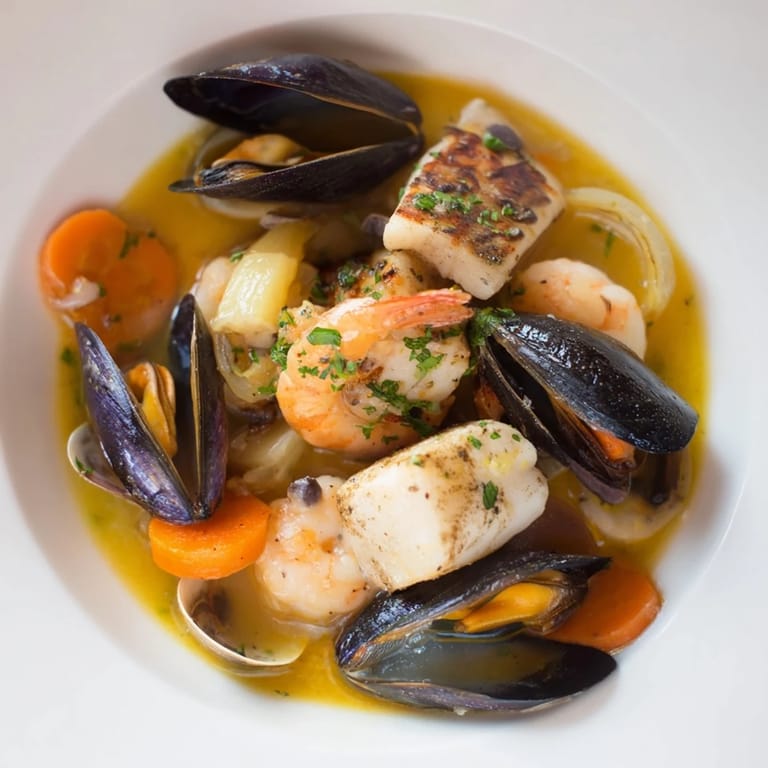
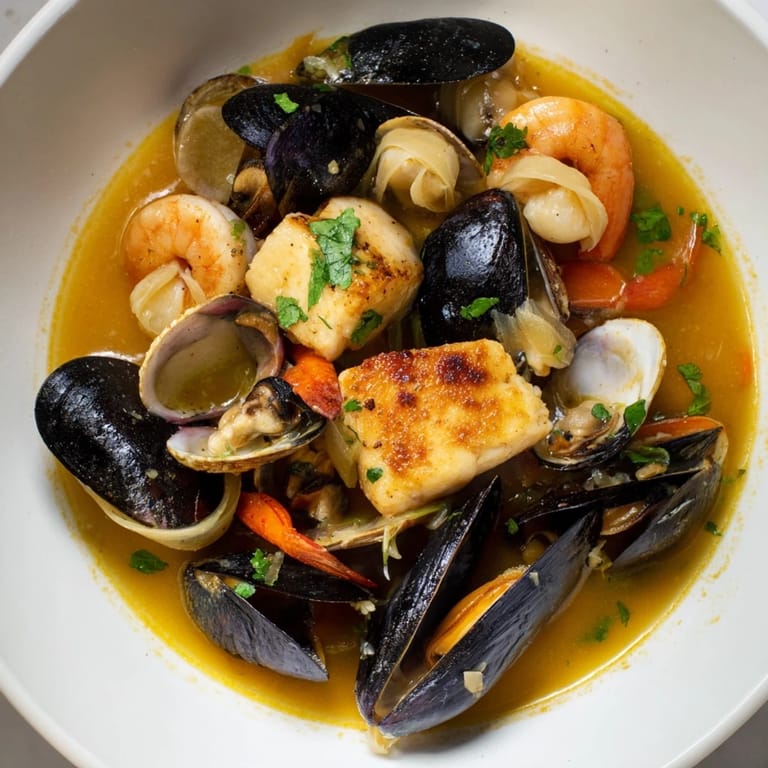
- Bring the broth back to a gentle simmer. Add firm white fish first and cook for 5 minutes, then add oily fish, mussels, shrimp, and scallops if using. Simmer for another 5–6 minutes until everything is just cooked through and mussels have opened. Watch it carefully—overcooked seafood becomes rubber.
- Make the rouille:
- Combine egg yolk, minced garlic, chopped chili, soaked saffron with its water, and mustard in a bowl. Whisk until smooth, then add olive oil drop by drop at first, whisking constantly like you're making mayonnaise. Once it emulsifies, you can add oil in a thin stream. Season with salt.
- Finish and serve:
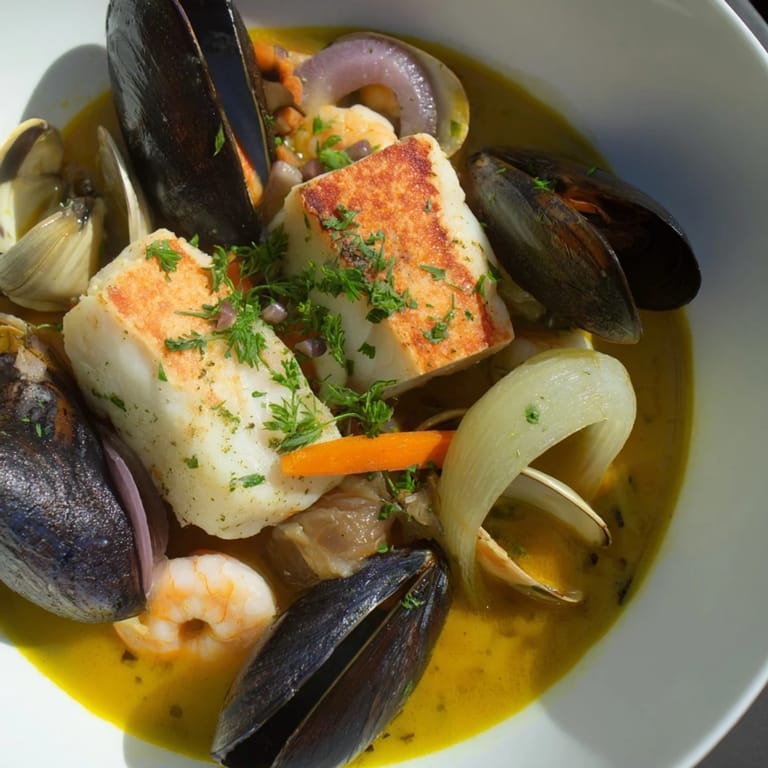
- Ladle bouillabaisse into warm bowls, garnish with fresh parsley, and serve with toasted baguette slices and a generous spoonful of rouille on the side. Let people stir the rouille into their bowl—it's part of the ritual.
 Save to Pinterest
 Years later, I made it on Christmas Eve for my family, and my mother asked for the recipe before dessert even arrived. That's when I realized bouillabaisse isn't fussy restaurant food—it's a hug in a bowl that happens to be French.
On Sourcing Your Seafood
The soul of bouillabaisse lives in the seafood. Visit a fish counter where people know names, where fish smell like ocean not ammonia, where the seller can tell you what came in today. If monkfish looks pale, ask for sea bass instead. If mussels feel too heavy with water, choose smaller ones. This isn't being picky—it's respecting the dish. I learned this the hard way after my first attempt with supermarket seafood tasted dull and watery. Now I call ahead and ask my fishmonger what's freshest, and I build the menu around that conversation.
The Rouille: Why It Matters More Than You Think
Rouille is the punctuation mark that makes bouillabaisse complete. That saffron-spiked, garlicky, chili-warm paste melting into each spoonful transforms the stew from delicious to transcendent. The first time I made it, I whisked too fast and broke the emulsion into sad, grainy disappointment. The second time, I went slower, added oil more patiently, and understood—rouille is just fancy mayonnaise with attitude. Make it ahead if you want; it keeps beautifully and actually tastes better the next day when flavors have had time to settle.
Timing, Temperature, and Small Victories
Bouillabaisse rewards patience over speed. The vegetables need those 25 minutes to break down and sweeten. The straining can't be rushed or you'll muddy the broth. The seafood cooking is a ballet of timing—watch it like you mean it, because 30 seconds makes the difference between tender and tough. I've learned that having everything prepped and ready before you start cooking makes the final steps feel calm instead of chaotic. The day you nail the timing is the day you stop following the recipe and start cooking it by instinct.
- Prep all vegetables and seafood before you start—mise en place transforms chaos into flow.
- Keep your broth at a gentle simmer, never a rolling boil, so fish stays delicate.
- Toast fennel seeds in a dry pan for 30 seconds before adding them to deepen their warmth.
 Save to Pinterest
 Every time I make bouillabaisse, I'm reminded that the best dishes are the ones that gather people, the ones worth a little effort and patience. This stew has a way of doing that.
Questions & Answers
- → What types of fish work best for this stew?
Firm white fish like monkfish or sea bass and oily varieties such as red mullet provide the ideal texture and flavor balance.
- → How is the saffron flavor incorporated?
Saffron threads are soaked in warm water before being added to the broth and the rouille, infusing the stew with a delicate aroma and golden hue.
- → Can the seafood be substituted or omitted?
While a mix of firm fish, oily fish, mussels, shrimp, and scallops is traditional, seafood selection can be adjusted based on availability or preference, keeping a balance of textures.
- → What is the purpose of rouille in this dish?
Rouille adds a creamy, garlicky kick with a hint of heat, complementing the rich, savory stew and enhancing each bite.
- → How should the stew be served for best results?
Serve hot, garnished with fresh parsley, alongside toasted baguette slices brushed with olive oil to soak up the flavorful broth and rouille.