 Save to Pinterest
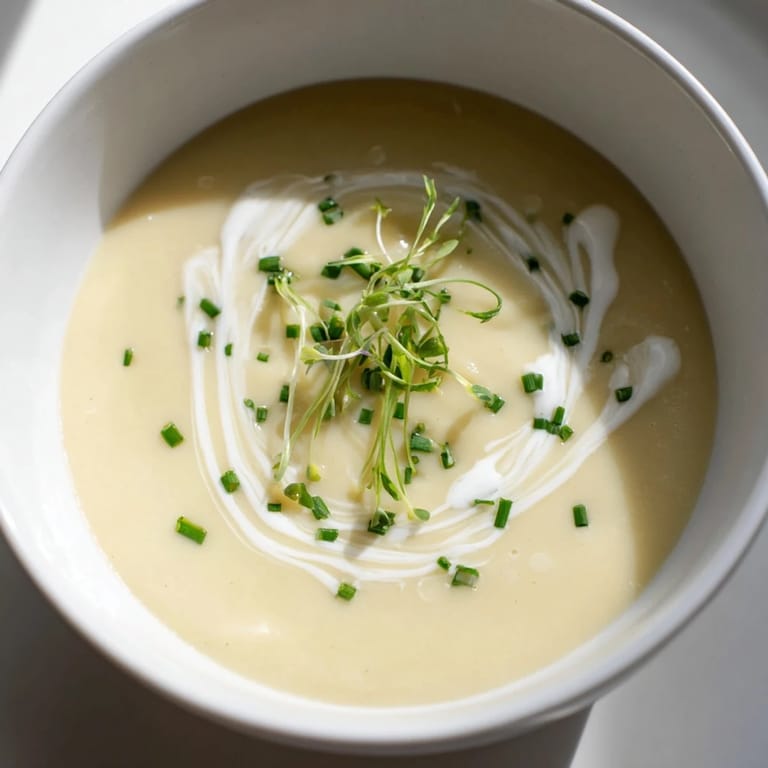
 This Celery Root Bisque is an elegant, velvety soup showcasing the delicate flavor of celery root, perfect for special occasions or refined gatherings. With its smooth texture and sophisticated French influence, it provides a warm and inviting start to any dinner.
Save to Pinterest The base of the soup is built by gently sautéing aromatics like leeks and garlic, followed by a slow simmer with diced celery root and potato. Finishing with a touch of nutmeg and heavy cream ensures a rich, well-rounded flavor profile that is both comforting and upscale.
Ingredients
Tired of Takeout? 🥡
Get 10 meals you can make faster than delivery arrives. Seriously.
One email. No spam. Unsubscribe anytime.
- 2 large celery roots (about 900 g), peeled and diced
- 1 medium leek, white and light green parts only, sliced
- 1 medium onion, chopped
- 1 medium Yukon Gold potato, peeled and diced
- 2 cloves garlic, minced
- 4 cups (1 liter) vegetable stock
- 1 cup (240 ml) whole milk (or unsweetened non-dairy milk)
- 1/2 cup (120 ml) heavy cream
- 2 tbsp unsalted butter
- 1 tbsp olive oil
- 1 bay leaf
- 1/4 tsp freshly grated nutmeg
- Salt and white pepper, to taste
- Chopped chives or microgreens (for garnish)
- Drizzle of extra cream or truffle oil (optional garnish)
Instructions
- Step 1
- In a large pot, heat butter and olive oil over medium heat. Add leek, onion, and garlic. Sauté for 3–4 minutes until softened but not browned.
- Step 2
- Add celery root and potato. Stir to coat with the aromatics and fat. Cook for 3–4 minutes.
- Step 3
- Pour in vegetable stock and add bay leaf. Bring to a simmer, cover, and cook for 25–30 minutes until vegetables are very tender.
- Step 4
- Remove the bay leaf. Add milk and nutmeg.
- Step 5
- Purée the soup using an immersion blender (or carefully transfer to a blender in batches) until completely smooth.
- Step 6
- Stir in heavy cream. Reheat gently (do not boil). Season with salt and white pepper to taste.
- Step 7
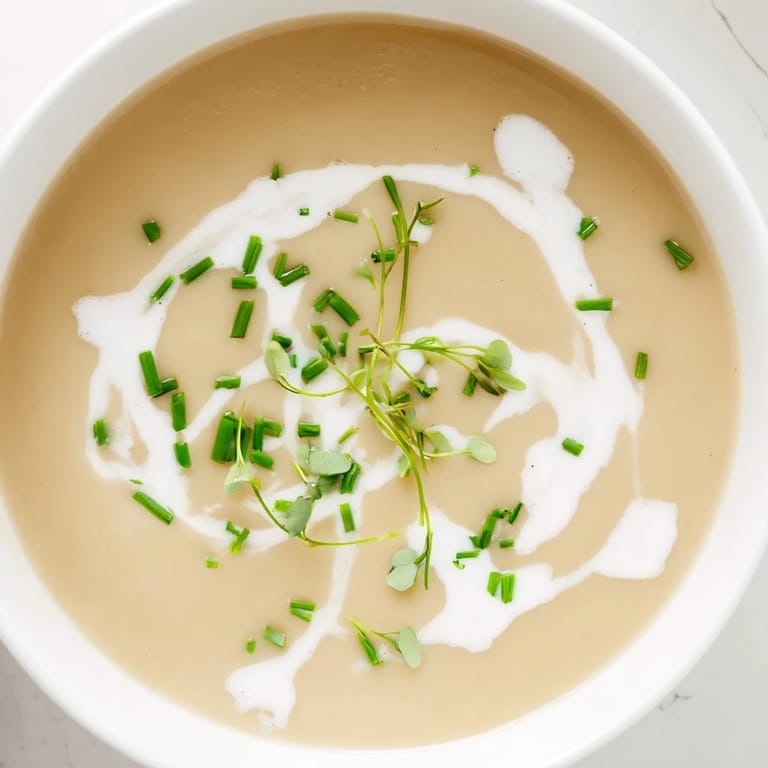
- Ladle into warmed bowls. Garnish with chives or microgreens and an optional drizzle of cream or truffle oil.
Zusatztipps für die Zubereitung
To achieve the best results, use a sharp chef's knife and cutting board to prep the vegetables. A large soup pot is necessary for simmering, and you can choose between an immersion blender for convenience or a countertop blender for an even finer, smoother consistency.
Varianten und Anpassungen
For a vegan version, substitute the heavy cream and milk with full-fat coconut milk or a rich cashew cream. If you are following a gluten-free diet, ensure that your chosen vegetable stock is certified gluten-free.
Serviervorschläge
This bisque pairs beautifully with a crisp white wine such as Sauvignon Blanc or Chardonnay. Serve each bowl with crusty artisan bread or herbed croutons to add a satisfying crunch to the velvety texture.
 Save to Pinterest
 Each serving of this soup contains approximately 210 calories, 11g of fat, 24g of carbohydrates, and 4g of protein. Note that the recipe contains dairy (milk and cream), so be sure to use non-dairy alternatives if needed to accommodate allergens.
Questions & Answers
- → What does celery root taste like?
Celery root has a delicate, slightly sweet flavor with subtle celery undertones and earthy notes. It's milder than stalk celery and becomes wonderfully creamy when cooked and puréed.
- → Can I make this bisque ahead of time?
Yes, prepare up to 2 days in advance and refrigerate. Reheat gently over low heat, stirring occasionally. Add a splash of milk or cream if it thickens too much upon standing.
- → What's the purpose of the potato?
The Yukon Gold potato adds natural starchiness that helps create the velvety smooth texture and provides body to the bisque without needing excessive cream.
- → How do I achieve the smoothest texture?
Use a high-powered blender or immersion blender and purée for 2-3 minutes until completely silky. For extra refinement, pass through a fine-mesh sieve before adding the final cream.
- → What can I substitute for the dairy?
Full-fat coconut milk or homemade cashew cream work beautifully for a vegan version. They provide similar richness and velvety texture while maintaining the elegant character.
- → Why white pepper instead of black?
White pepper provides the same heat without visible specks in the finished bisque, maintaining the pristine, elegant appearance that defines this refined soup.