 Save to Pinterest
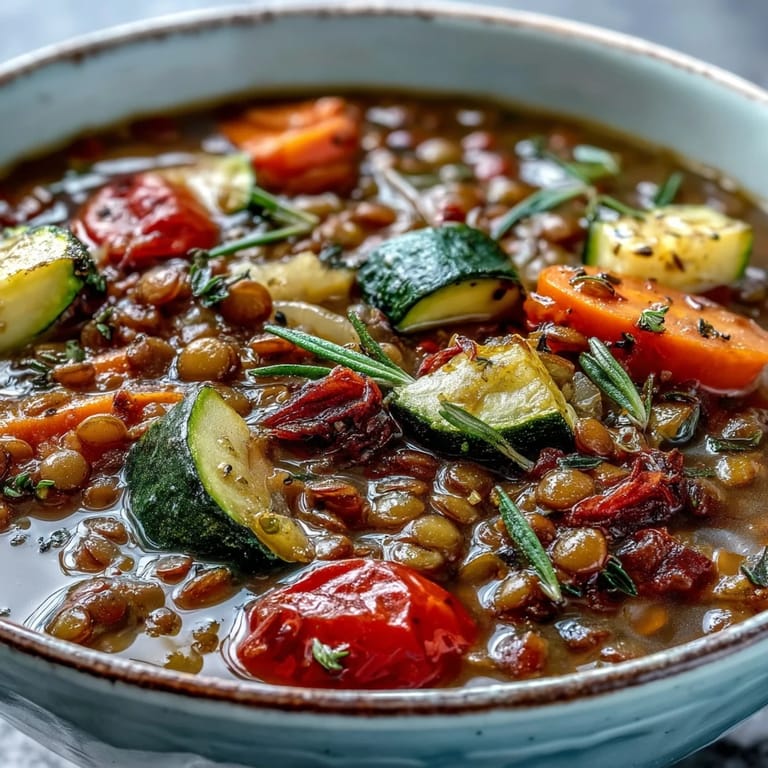
 Last autumn, I found myself staring at a neglected bag of lentils in my pantry during a sudden downpour. The rhythm of rain against the windows practically begged for something warm and nourishing, so I gathered vegetables that needed using and improvised this soup. The kitchen filled with earthy aromas as the lentils simmered and the roasted vegetables added their caramelized sweetness to the broth. That rainy afternoon experiment has evolved into one of my most treasured recipes.
I remember bringing a thermos of this soup to my friends house when she was recovering from surgery. We sat in her sunroom, steam rising from our bowls, as she took her first spoonful and closed her eyes in appreciation. Sometimes the simplest foods carry the most comfort, and watching her enjoyment of something I had made with such care reminded me why I love cooking for others. That evening, I left her with a container of leftovers that she later told me tasted even better the next day.
Ingredients
- Dried green or brown lentils: These tiny powerhouses add heartiness and protein without overwhelming the vegetables, and I've learned they hold their shape better than red lentils which would turn mushy.
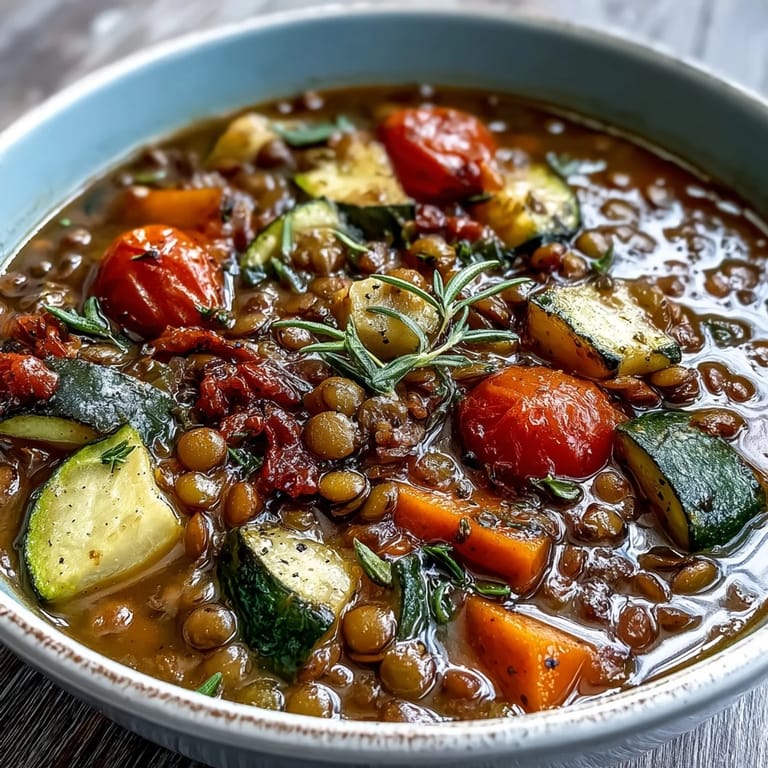
- Roasted vegetables: Taking the extra time to roast rather than just simmer the vegetables concentrates their flavors and adds a subtle smoky sweetness that transforms the entire soup.
- Smoked paprika: This became my secret weapon after a Hungarian friend suggested it, bringing a whisper of campfire essence that makes everyone ask what the mystery ingredient might be.
- Fresh lemon juice: A last-minute squeeze brightens all the flavors and cuts through the richness, something I discovered by accident when a half-lemon was sitting on my cutting board.
Tired of Takeout? 🥡
Get 10 meals you can make faster than delivery arrives. Seriously.
One email. No spam. Unsubscribe anytime.
Instructions
- Roast the vegetables first:
- Spread your chopped carrots, celery, zucchini, bell pepper and cherry tomatoes on a baking sheet, drizzling with olive oil and a generous pinch of salt. The oven's heat will concentrate their sweetness, creating little caramelized edges that add depth to our soup.
- Build the aromatic base:
- While the vegetables roast, sauté your onions until they become translucent and slightly golden at the edges. Add the garlic just briefly until fragrant, being careful not to let it brown and become bitter.
- Combine and simmer:
- Once you add the lentils and broth to your aromatic base, keep the simmer gentle rather than rolling. This allows the lentils to cook through evenly without breaking apart or becoming mushy.
- Season and finish:
- Always taste before serving, as lentils often need more salt than you might expect to bring out their earthy flavor. The fresh lemon juice added at the end isn't just for brightness but actually helps your body absorb the iron from the lentils.
 Save to Pinterest
 During the early days of the pandemic, this soup became something of a weekly ritual in our household. My partner and I would take turns chopping vegetables while sharing stories from our day, the repetitive motion of knife against cutting board somehow making it easier to talk about difficult things. We started calling it our 'worry soup' because it seemed no problem was too big to discuss while preparing it, and by the time we sat down to eat, our concerns felt more manageable, much like the vegetables that had been transformed into something nourishing.
Storage and Leftovers
This soup actually improves overnight as the flavors meld and deepen, a happy discovery I made when running late for lunch with leftover soup that tasted remarkably better than the night before. I now deliberately make extra, storing portions in glass containers that dont stain from the broth, and find it keeps beautifully for up to four days in the refrigerator or a month in the freezer without the texture suffering.
Serving Suggestions
The simplicity of a crusty bread alongside this soup shouldnt be underestimated, especially when theres a hunk of salted butter melting into its warm crumb. For dinner parties, Ive elevated this humble dish by serving it in shallow bowls with a small dollop of Greek yogurt, a drizzle of good olive oil, and a sprinkle of za'atar or sumac that adds visual appeal and an unexpected flavor note that guests always comment on.
Making It Your Own
The beauty of this recipe lies in its adaptability, something I embraced when making it during different seasons or with whatever vegetables were threatening to wilt in my crisper drawer. Winter versions with butternut squash and kale have a different character than summer iterations with zucchini and fresh tomatoes, yet the backbone of lentils and aromatics creates a familiar foundation.
- Try adding a parmesan rind to the simmering soup for an umami boost that doesnt compromise the vegetarian status.
- A handful of baby spinach stirred in just before serving adds color, nutrition, and a fresh counterpoint to the earthiness of the lentils.
- For a heartier version, add cooked farro or barley in the last five minutes of cooking for textural contrast and additional fiber.
 Save to Pinterest
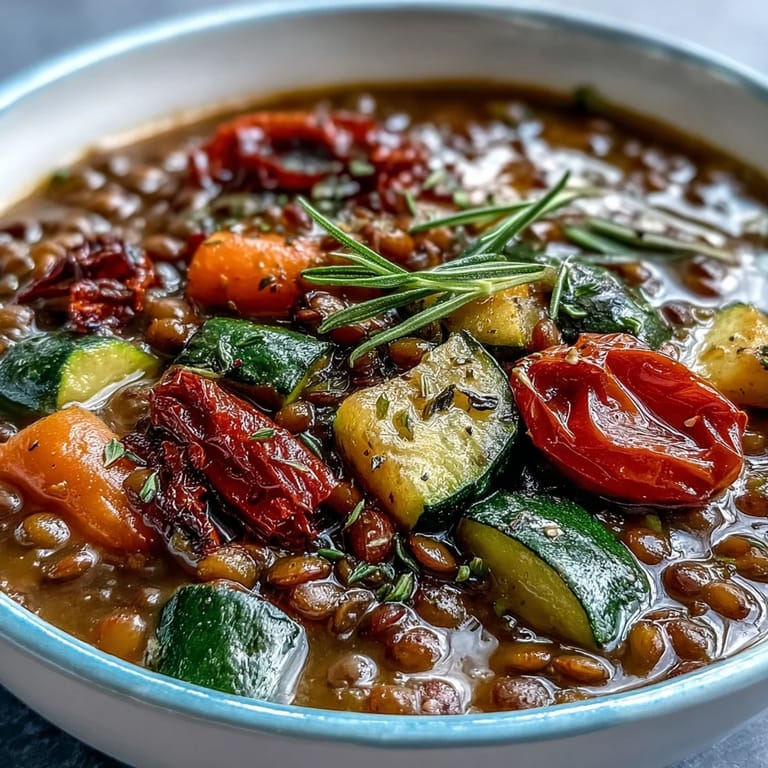
 This lentil and vegetable soup has taught me that true comfort food isnt about decadence but about nourishment that satisfies on multiple levels. I hope it brings as much warmth to your kitchen as it has to mine.
Questions & Answers
- → Can I use different types of lentils?
Red lentils work well but cook faster, becoming softer. Black lentils hold their shape beautifully. Adjust cooking time accordingly based on your chosen variety.
- → Is freezing possible?
Yes, this soup freezes exceptionally well for up to three months. Cool completely before transferring to airtight containers. Thaw overnight in the refrigerator before reheating.
- → What vegetables can I substitute?
Sweet potatoes, butternut squash, or parsnips make excellent additions. Leafy greens like spinach or kale can be stirred in during the last five minutes of cooking.
- → How can I make it creamier?
Blend a portion of the soup using an immersion blender for partial creaminess while maintaining texture. Alternatively, stir in a splash of coconut milk before serving.
- → Can I cook this on the stovetop only?
Absolutely. Sauté all vegetables in the pot instead of roasting. This method creates a different but equally delicious flavor profile with slightly less depth.