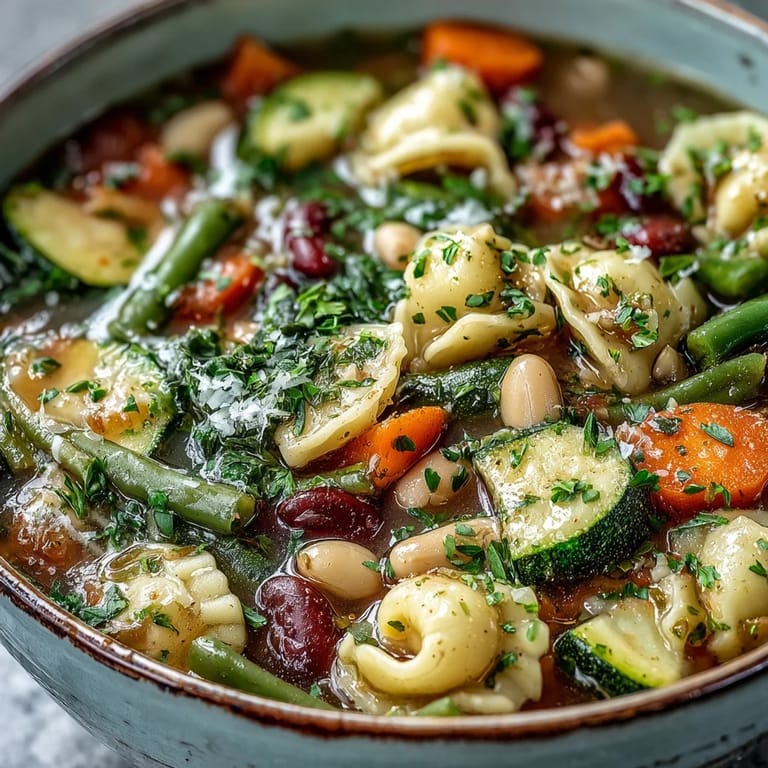
 Save to Pinterest
 The pitter-patter of rain against my kitchen window always puts me in the mood for minestrone. Last autumn, when the first real cold snap hit, I found myself instinctively reaching for my big soup pot, chopping vegetables to the rhythm of the falling rain. There's something almost meditative about preparing this colorful Italian soup, each ingredient adding its own layer to the symphony of flavors. The steam rising from the pot gradually fogged up my windows, creating a cozy barrier between my kitchen and the chilly world outside.
I once made this minestrone for my neighbor who had just returned from surgery. I remember balancing the container carefully as I walked across our shared driveway, worried about spilling. When I returned for the empty container a few days later, she didn't just thank me for the soup but asked specifically for the recipe. Her 7-year-old, apparently a notorious vegetable avoider, had asked for seconds and then thirds. Sometimes the most meaningful kitchen victories are the ones that happen in someone else's home.
Ingredients
- Olive oil: Use a good quality extra virgin here, as its flavor forms the foundation of everything to follow, and I've learned that skimping here means skimping on the entire soup's character.
- Diced tomatoes: The canned variety actually works better than fresh in this soup, providing consistent acidity and sweetness that balances the earthiness of the beans.
- Small pasta: Tiny shapes like ditalini or elbows are perfect because they nestle between vegetables in each spoonful rather than dominating the texture.
- Cannellini beans: These creamy white beans practically melt into the broth, creating little pockets of protein-rich comfort that make this soup satisfying enough to be a meal.
- Fresh spinach: Added just at the end, it brings a bright pop of color and nutrition without becoming soggy or losing its vibrant green hue.
Tired of Takeout? 🥡
Get 10 meals you can make faster than delivery arrives. Seriously.
One email. No spam. Unsubscribe anytime.
Instructions
- Build your flavor base:
- Heat olive oil in a large pot and add onion, carrots, and celery, letting them soften and release their aromas. You'll know you're on the right track when your kitchen starts to smell like an Italian grandmother just walked in.
- Layer in the vegetables:
- Add garlic, zucchini, potato, and green beans, giving them just enough time to absorb the oil and seasonings. The brief sautéing before adding liquid helps each vegetable maintain its individual character.
- Create your broth foundation:
- Pour in diced tomatoes, cannellini beans, vegetable broth, herbs, and the bay leaf, then bring everything to a gentle boil. This is when magic starts happening, as all those different flavors begin their conversation.
- Let time work its magic:
- Reduce heat and simmer covered for about 20 minutes, allowing the vegetables to soften and release their flavors into the broth. Your patience here will be rewarded with depth and richness.
- Introduce the pasta:
- Add your small pasta shapes and simmer uncovered until they're tender but still have some bite to them. The starch from the pasta will naturally thicken your soup slightly.
- Finish with greens:
- Remove the bay leaf, then stir in spinach or kale just until wilted. Their bright color and fresh flavor will lift the whole dish.
- Season to perfection:
- Taste and adjust with salt and pepper, remembering that seasoning at the end gives you perfect control. Each spoonful should taste complete but leave you wanting another.
- Serve with flourish:
- Ladle into bowls and top with fresh parsley and Parmesan if using. These final touches aren't just garnish, they're the exclamation point at the end of your soup statement.
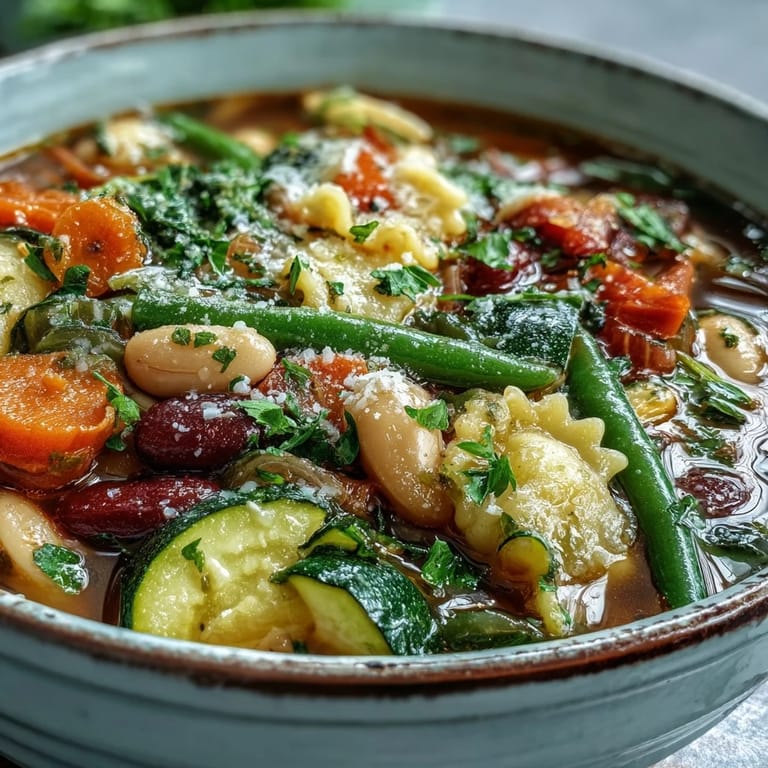 Save to Pinterest
 The first time I served this minestrone at a casual dinner gathering, conversation around the table actually stopped for a moment. Six spoons simultaneously dipping into steaming bowls created a peculiar silence broken only by appreciative murmurs. My friend Marco, whose Italian grandmother had apparently made legendary minestrone, looked up with wide eyes and said quietly, Your soup tastes like memories. I cant think of a higher compliment for such a simple dish.
Seasonal Adaptations
Winter calls for heartier versions with more root vegetables like turnips or parsnips, while summer minestrone welcomes fresh corn, bell peppers, and even a handful of fresh basil stirred in at the end. I've made this soup dozens of times, never exactly the same way twice, and that adaptability is precisely what makes it reliable. The recipe isn't a strict formula but a framework that forgives substitutions and welcomes creativity.
Make-Ahead Magic
During particularly busy weeks, I often make a double batch on Sunday, portioning it into containers that line my refrigerator like soldiers ready for lunchtime duty. The flavors only improve as the soup sits, with day three often being the pinnacle of deliciousness. Just a quick reheat brings it back to steaming perfection, though you might need to add a splash of broth if the pasta has absorbed too much liquid.
Serving Suggestions
While perfectly satisfying on its own, minestrone reaches new heights when paired with the right accompaniments. A crusty piece of garlic bread for dipping transforms eating it into an interactive experience, while a simple green salad with a sharp vinaigrette provides welcome contrast to the soup's mellow warmth.
- For a complete Italian-inspired meal, serve smaller portions as a first course before a simple pasta dish.
- A glass of medium-bodied red wine like Chianti complements the tomato acidity beautifully.
- For lunch portions, a half sandwich alongside the soup strikes the perfect balance between satisfaction and afternoon energy.
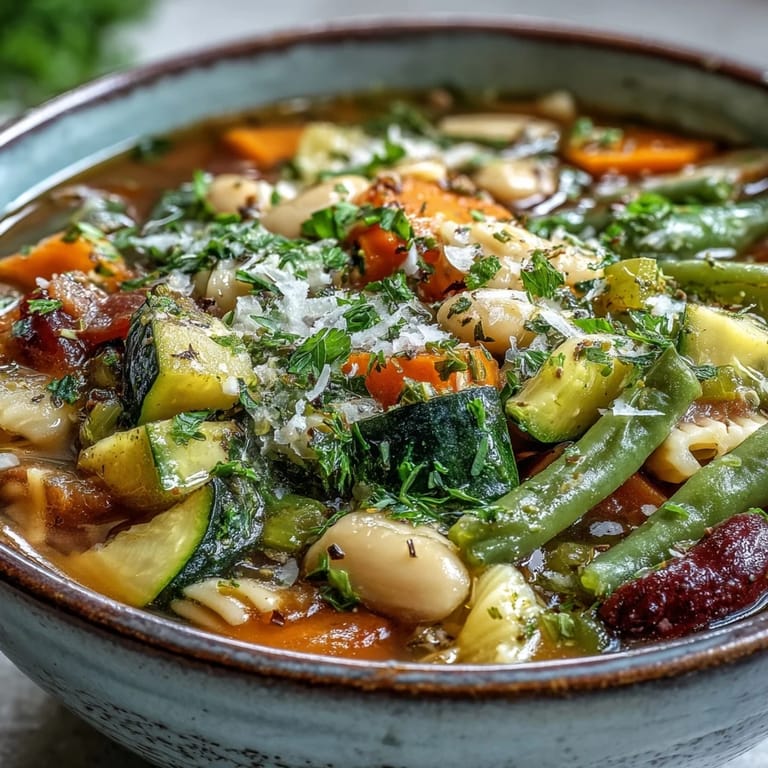 Save to Pinterest
 This minestrone isn't just a recipe, it's a template for creating comfort that adapts to your pantry, your season, and your mood. Every time you make it, you're continuing a tradition that stretches back through generations of practical cooks who knew that beautiful food comes from simple ingredients treated with care.
Questions & Answers
- → What vegetables go in minestrone?
Traditional minestrone includes onions, carrots, celery, zucchini, potatoes, and green beans. You can also add seasonal vegetables like cabbage, peas, or spinach based on preference and availability.
- → Can I make minestrone soup gluten-free?
Yes, simply substitute regular pasta with gluten-free pasta varieties like rice-based corn pasta. Ensure all other ingredients, including canned goods and broth, are certified gluten-free.
- → How long does minestrone soup last in the refrigerator?
Minestrone stores well in an airtight container for 4-5 days. The flavors often improve overnight as the vegetables and herbs continue to meld together.
- → Can I freeze minestrone soup?
Yes, minestrone freezes beautifully for up to 3 months. For best results, freeze without the pasta and add freshly cooked pasta when reheating to prevent it from becoming mushy.
- → What pasta works best in minestrone?
Small pasta shapes like ditalini, elbow macaroni, shells, or tubetti are ideal because they spoon easily and hold up well in the broth. Choose high-quality durum wheat pasta for the best texture.
- → Is minestrone soup vegan?
This version can be made vegan by omitting the Parmesan cheese garnish. The soup base is naturally plant-based, relying on vegetables, beans, and herbs for its rich flavor profile.