 Save to Pinterest
 There's something about the smell of bacon sizzling in a Dutch oven that makes you understand why the French have built an entire cuisine around slow cooking. I discovered coq au vin during a particularly grey winter when a friend's mother invited me over and spent the afternoon transforming a whole chicken and a bottle of wine into something that tasted like pure comfort. The kitchen filled with this deep, savory steam that made everything else fade away. That first spoonful changed how I thought about cooking—not as following instructions, but as participating in something timeless.
I made this for my partner on our first anniversary, honestly just wanting to prove I could do something more ambitious than pasta. The apartment smelled incredible by hour one, and watching his face when he realized I'd been planning this the whole time—that's when I knew this wasn't just a recipe, it was my way of saying something I wasn't quite ready to speak out loud.
Ingredients
- 1 whole chicken, cut into 8 pieces (about 1.5 kg): Thighs and drumsticks have more forgiving fat, so if you're nervous, ask your butcher to break it down or just use thighs only.
- 150 g smoked bacon or pancetta, diced: The smoky fat is the backbone of this entire dish; don't skip it or substitute with regular bacon if you can help it.
- 200 g pearl onions, peeled: Yes, peeling these is tedious, but blanch them first in boiling water and the skins slip off like they never wanted to stay.
- 250 g cremini or button mushrooms, cleaned and quartered: Creminis have more flavor, but honestly, use what your market has—the browning matters more than the type.
- 2 medium carrots, sliced: Cut them thick enough that they don't disappear into the sauce after two hours.
- 2 garlic cloves, minced: Fresh garlic only, and mince it by hand if you can—a press sometimes makes it bitter.
- 750 ml dry red wine: This is where people panic, but use something you'd actually drink; the cheap stuff tastes cheap after two hours of cooking.
- 250 ml chicken stock: Homemade is best, but good store-bought works—just taste it first because saltiness varies wildly.
- 2 tbsp tomato paste: This deepens everything without making it taste tomatoey.
- 2 tbsp all-purpose flour: The thickening agent that makes the sauce silky instead of thin.
- 4 tbsp olive oil and butter combined: Use real butter, not substitutes, because the flavor actually matters here.
- 2 bay leaves and 4 sprigs fresh thyme: Fresh thyme makes a world of difference; dried works in a pinch but tastes dusty by comparison.
Tired of Takeout? 🥡
Get 10 meals you can make faster than delivery arrives. Seriously.
One email. No spam. Unsubscribe anytime.
Instructions
- Dry and season the chicken:
- Pat each piece thoroughly with paper towels—moisture is the enemy of browning. Season generously with salt and pepper, and let the pieces sit for a few minutes while you get your pot ready.
- Render the bacon:
- Heat a tablespoon of olive oil in your Dutch oven over medium heat and add the diced bacon. Let it cook until the edges curl and crisp up, which takes about 5 minutes. Remove it with a slotted spoon and set it aside on a paper towel.
- Brown the chicken in batches:
- Don't crowd the pot—work in two batches if needed. The heat should be medium to medium-high, and you're looking for a deep golden crust on each piece, about 4 minutes per side. This is where flavor happens.
- Sauté the vegetables:
- Pour off most of the fat, leaving just enough to coat the bottom. Add the carrots, pearl onions, and garlic, stirring occasionally until everything softens and the onions take on a light golden color, around 5 minutes.
- Create the flavor base:
- Stir in the tomato paste and flour, coating everything evenly. Cook for just 1 minute, stirring constantly, so the flour doesn't clump and the tomato paste loses its raw edge.
- Bring it together:
- Return the chicken and bacon to the pot, then pour in the wine and stock. Use a wooden spoon to scrape up all those caramelized bits stuck to the bottom—that's pure flavor. Add the bay leaves and thyme sprigs.
- Braise low and slow:
- Bring everything to a gentle simmer, then cover the pot and lower the heat so it barely bubbles. Let it cook undisturbed for 1.5 hours, until the chicken is fall-apart tender and the liquid has turned into something rich and wine-dark.
- Brown the mushrooms separately:
- While the chicken braises, heat the remaining butter and olive oil in a skillet over medium-high heat. Add the mushrooms in a single layer and let them sit undisturbed for a few minutes until they turn golden, then stir and cook another couple of minutes.
- Finish and reduce:
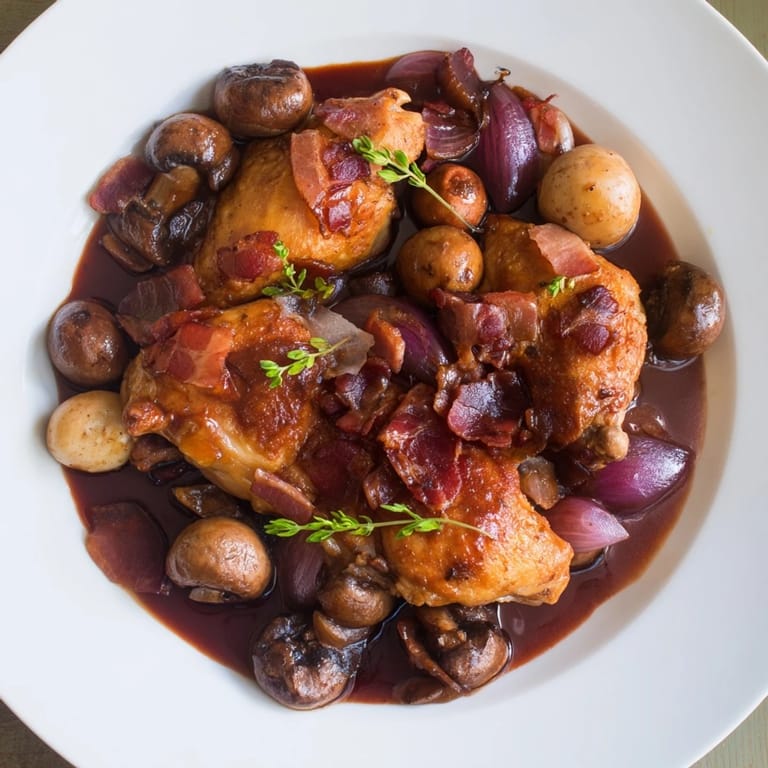
- Remove the lid from the Dutch oven for the final 15 minutes of cooking so the sauce reduces and concentrates. This is when the flavors sharpen. Stir in the sautéed mushrooms, taste, and adjust the seasoning with salt and pepper.
- Serve:
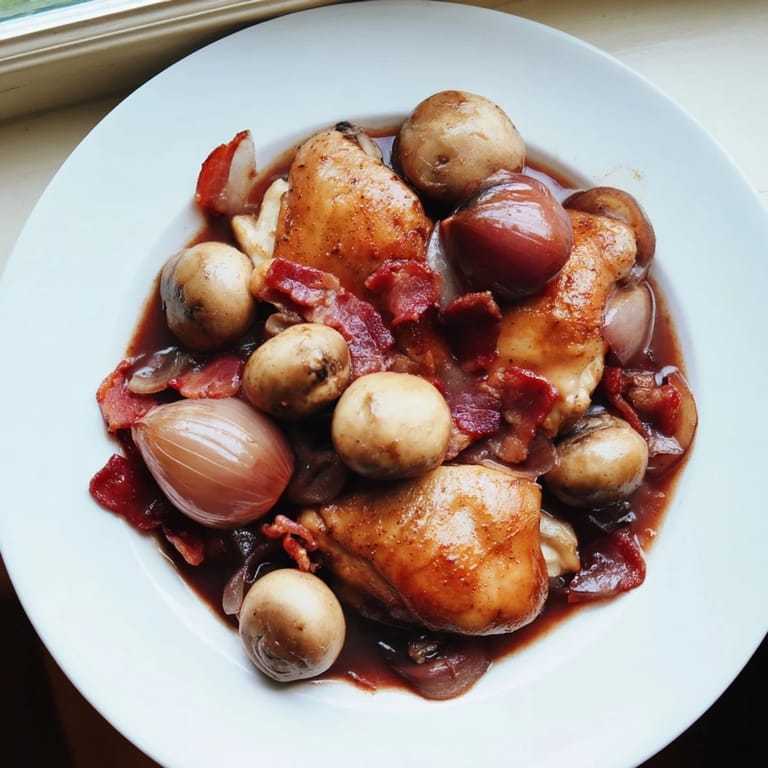
- Fish out the bay leaves and thyme sprigs. Ladle the chicken, vegetables, and sauce into bowls or onto plates, and serve immediately with crusty bread or creamy potatoes.
 Save to Pinterest
 My grandmother tasted this once and told me it reminded her of her own mother's kitchen in Lyon, which hit me harder than any compliment ever could. Food has this quiet power to connect us across time, and coq au vin is one of those dishes that carries that weight gracefully.
Wine Matters More Than You Think
The quality of the wine directly translates to the quality of the dish because the liquid reduces and concentrates, turning any harshness or thinness into something pronounced. A good Burgundy or Pinot Noir from a region you recognize will make this dish sing; a boxed wine will make you wonder why you bothered. You don't need expensive—just something that tastes clean and has some depth to it.
The Sauce Is Everything
This isn't a dish where you can dump everything together and hope for the best. The sauce develops flavor through the browning of the meat, the caramelization of vegetables, the tomato paste, and then the long, slow marriage of all those elements in wine. Respect the timing and the technique, and the sauce will reward you with something that tastes like hours of care even though most of it is passive cooking.
Serving and Storage Wisdom
This dish genuinely tastes better the next day because the flavors have time to settle and marry. Serve it with something to soak up the sauce—crusty bread, buttered noodles, or soft mashed potatoes all work beautifully. Store it in an airtight container in the fridge for up to four days, or freeze it for up to three months, and when you need comfort food, you've already done the hard work.
- If you want to add brandy, warm it slightly in a small pan and ignite it before pouring it over the mushrooms—the flame burns off the harsh alcohol taste and leaves behind the warmth.
- Substitute chicken thighs if you prefer; they're more forgiving and actually more flavorful than white meat.
- Fresh parsley scattered on top at the very end adds brightness that cuts through the richness.
 Save to Pinterest
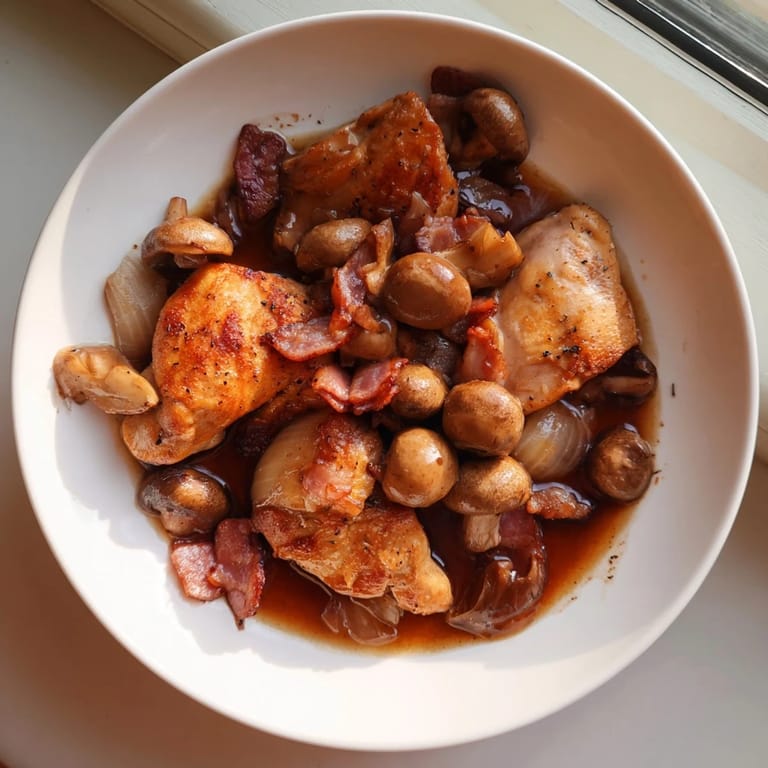
 Coq au vin is one of those recipes that reminds you why people spend hours in the kitchen. Make it once, and you'll understand why it's survived for centuries.
Questions & Answers
- → What type of wine is best for this dish?
Dry red wines like Burgundy or Pinot Noir work best, enhancing flavor without overpowering the dish.
- → Can I use different cuts of chicken?
Yes, chicken thighs or drumsticks can be substituted for a richer texture and faster cooking.
- → How do I get the mushrooms perfectly browned?
Sauté mushrooms in a hot pan with butter and oil until golden brown, avoiding overcrowding to ensure even color.
- → Is it important to remove the bay leaves and thyme before serving?
Yes, removing these herbs before serving prevents any tough or overpowering bites, keeping flavors balanced.
- → What side dishes complement this preparation?
Crusty French bread, buttered noodles, or creamy mashed potatoes are perfect accompaniments.