 Save to Pinterest
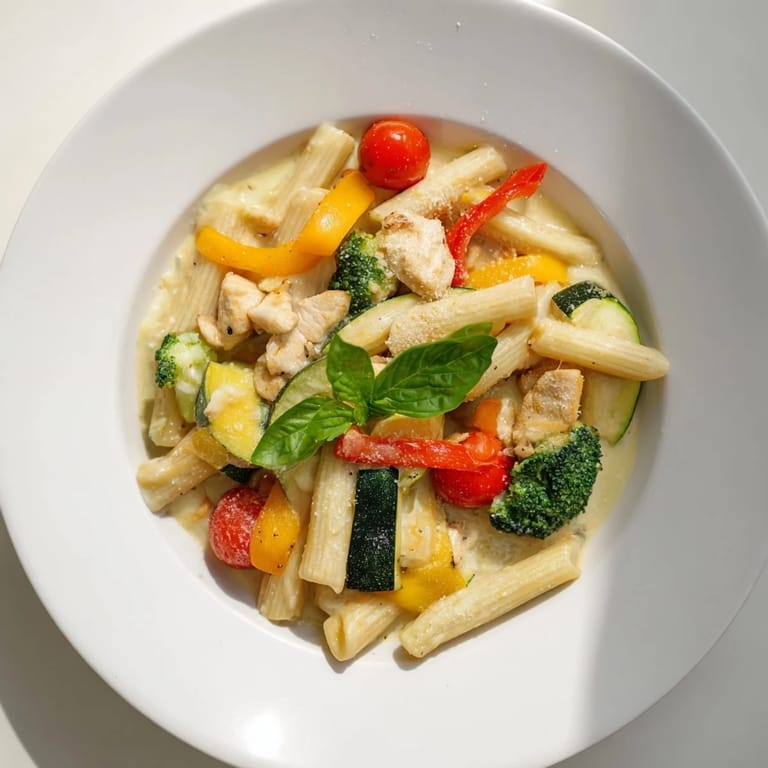
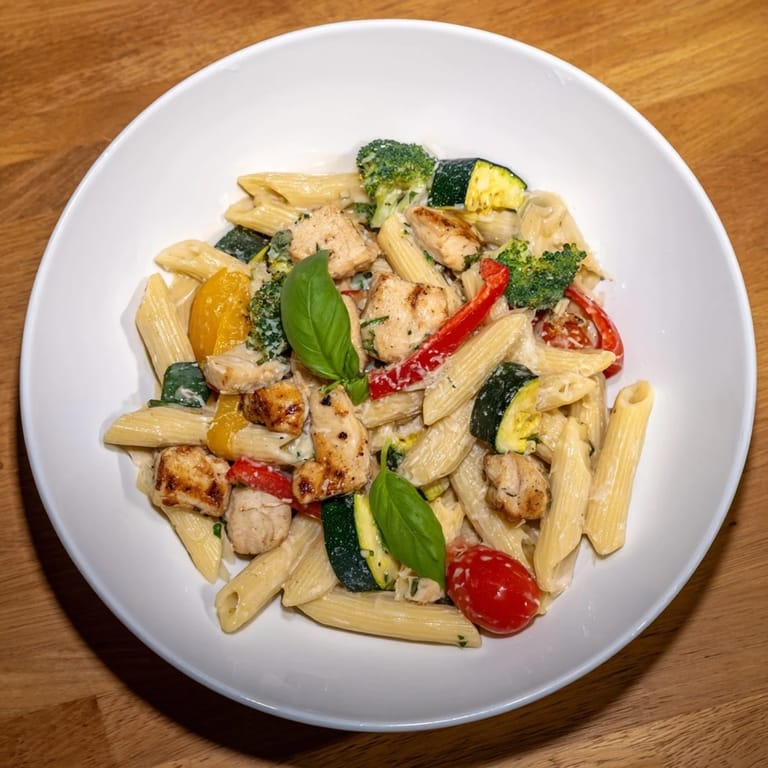
 I discovered this dish entirely by accident on a Tuesday when my pantry looked sad and my fridge was overflowing with vegetables that needed rescuing. Standing there with an armful of colorful bell peppers, zucchini, and broccoli, I realized I had the makings of something special—not some complicated Italian recipe, but a simple, honest pasta that came together in under 35 minutes and somehow tasted like comfort. The 5-4-3-2-1 concept came later, when I started counting the vegetables and realized how naturally balanced the whole thing was. My partner took one bite and asked when I learned to cook like this.
The first time I made this for guests, I was nervously tossing pasta in the skillet when my friend Sarah leaned against the counter and said, 'This smells like spring, even though it's January.' That small moment changed how I thought about cooking—it's not about impressing people with technique, it's about creating something that makes them feel something good. Now whenever I make this, I think about that comment and how the right combination of fresh ingredients can do that kind of magic.
Ingredients
- Chicken breasts: Cut into bite-sized pieces so they cook fast and distribute evenly through the pasta—no big chewy chunks.
- Red bell pepper: Adds sweetness and crunch; I slice mine thin so they stay a little firm even after cooking.
- Zucchini and yellow squash: These are the quiet heroes that keep the dish from feeling too heavy, so don't skip them even if you're not normally a squash person.
- Cherry tomatoes: They burst into little pockets of acidity that brighten everything, especially when you add them near the end.
- Broccoli florets: They stay sturdy through cooking and give you something satisfying to bite into.
- Penne or farfalle pasta: The shape holds the sauce and vegetables beautifully—tubular pasta is your friend here.
- Heavy cream: Just enough to coat everything; too much and you lose the fresh vegetable taste, too little and it feels dry.
- Parmesan cheese: Freshly grated makes all the difference; the pre-shredded stuff never quite melts the same way.
- Garlic: Minced fine so it perfumes the oil without burning—this is the foundation of everything good that happens next.
- Olive oil: Good quality, since you're using it raw in the sauce and cooked for the chicken.
- Italian herbs: Dried oregano, basil, and thyme in a blend—don't overthink it, just keep a jar in your spice rack.
Tired of Takeout? 🥡
Get 10 meals you can make faster than delivery arrives. Seriously.
One email. No spam. Unsubscribe anytime.
Instructions
- Get your pasta going:
- Salt the water generously—it should taste like the sea. Cook the pasta just until it still has a tiny bit of resistance in the center when you bite it; it'll finish cooking in the pan with the cream.
- Sear the chicken until golden:
- Medium-high heat, don't move the pieces around too much—let them sit and develop that golden crust. You're looking for 5 to 6 minutes, until the outside is sealed and the inside is no longer pink.
- Make your aromatics count:
- Add that minced garlic to the hot oil for just 30 seconds; any longer and it'll burn and taste bitter instead of sweet and fragrant.
- Cook your vegetables with intention:
- The pepper, zucchini, and squash go in first and need about 4 to 5 minutes; you want them tender but not mushy, still with a little snap when you bite them.
- Bring it all together gently:
- Lower the heat to medium-low before adding the cream and pasta—high heat and dairy are enemies. Toss everything until the cream coats the pasta and creates a light, silky sauce.
- Finish with restraint:
- Add the reserved pasta water a splash at a time if the sauce feels too thick; you want it to cling to the pasta, not pool at the bottom of the bowl.
 Save to Pinterest
 There was an evening when my eight-year-old nephew asked for seconds and then thirds, and my sister looked at me like I'd performed some kind of miracle—she told me later that he usually picks through anything with vegetables in it. That's when this dish stopped being about efficiency and became something I make when I want to feed people things they actually want to eat.
Why This Works as a Weeknight Dinner
Everything cooks on the same timeline, which means you're not standing over the stove managing different pans and different doneness levels. The chicken and pasta both finish around the same time the vegetables reach that perfect tender-but-still-crisp stage, and the whole thing comes together in one beautiful toss. There's no stress, no reheating, no scrambling—just a single skillet moment that feeds four people completely.
The Secret of the Five Vegetables
I used to think you needed more vegetables to make a dish feel abundant, but this taught me that five varieties in the right proportions create something that looks like abundance on the plate without overwhelming the pasta. Each vegetable brings something different—the pepper's sweetness, the squash's mild earthiness, the broccoli's nutty bite, the tomato's bright acidity—and together they create a complexity that feels way more sophisticated than it is. It's the kind of thing that makes you understand why Italian cooking is so good; it's not about a lot of ingredients, it's about the ones you choose.
Making It Your Own
Once you understand how this comes together, it becomes a template for your own variations. You can swap vegetables based on what's in season or what you have on hand, and the dish adjusts beautifully—snap peas instead of broccoli, asparagus instead of zucchini, or even a handful of spinach stirred in at the end for extra green. The backbone stays the same: good pasta, good technique, and fresh vegetables treated with respect.
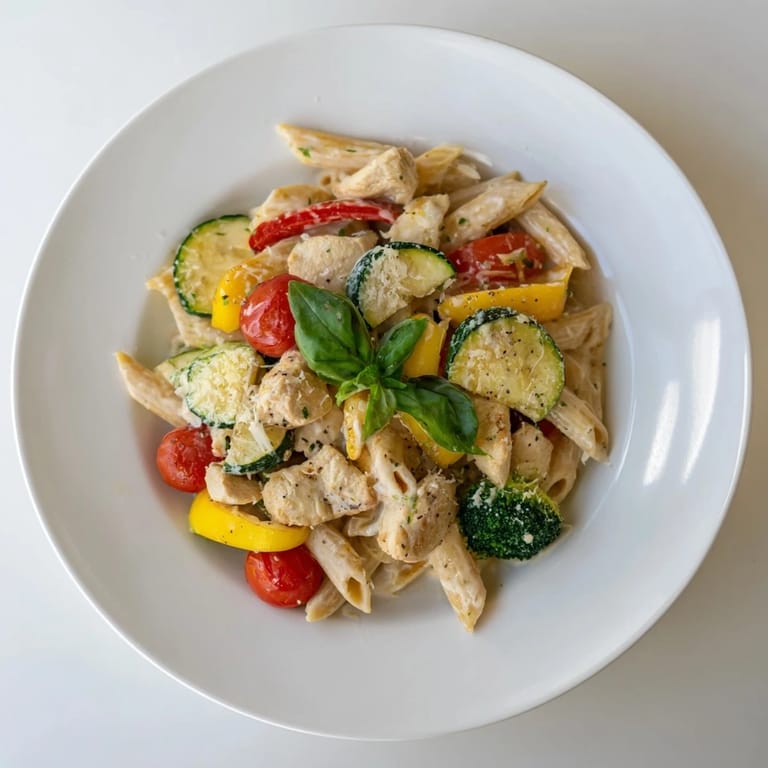
- Whole wheat pasta works beautifully here and adds a nutty complexity that actually complements the cream sauce.
- If you're making this vegetarian, tofu or chickpeas swap in for chicken without any adjustment to timing or technique.
- Fresh basil torn at the last second and scattered on top transforms this from good to unforgettable.
 Save to Pinterest
 This dish taught me that the best meals aren't the ones that take hours or require technique you don't have yet—they're the ones that make people pause and actually taste what's in front of them. Make this when you need a weeknight win.
Questions & Answers
- → What vegetables are included in this pasta?
The dish features red bell pepper, zucchini, yellow squash, broccoli florets, and cherry tomatoes for a vibrant mix.
- → How is the sauce prepared?
The sauce combines heavy cream, freshly grated Parmesan, and Italian herbs, blended with reserved pasta water to create a light, creamy texture.
- → Can I substitute the chicken with a plant-based option?
Yes, tofu or chickpeas can be used as protein alternatives for a vegetarian-friendly variation.
- → What pasta types work best for this dish?
Penne or farfalle pasta are recommended due to their shape, but any medium-cut pasta can be used.
- → How do I prevent the vegetables from overcooking?
Sauté vegetables until just tender, typically 4-5 minutes, to maintain texture and vibrant color.
- → What herbs enhance the flavor?
Dried Italian herbs add an aromatic boost, complemented by fresh basil leaves used as garnish.