 Save to Pinterest
 My first encounter with garlic chili oil noodles wasn't in a restaurant or from a recipe book—it was three in the morning in a friend's tiny apartment kitchen, when we'd been talking so long that suddenly we were hungry and the only things available were dried noodles and a collection of bottles we found in the back of the spice cabinet. We mixed what felt like everything together out of sheer desperation, and somehow it worked. Now whenever I make this dish, I'm transported back to that moment of happy accident, that feeling of discovering something delicious without even trying.
Years later, I made this for my sister on a cold evening when she showed up unannounced and exhausted from work. She took one bite and the whole mood shifted—suddenly we were laughing, sharing noodles straight from the bowl, and she asked for the recipe immediately. I realized then that food doesn't have to be complicated to matter; sometimes the simplest things wrapped in the right flavors become the ones people remember.
Ingredients
- Wheat noodles (200g): Use whatever chewy noodle you love—Chinese wheat noodles are ideal, but linguine works beautifully too, and the starch they release actually helps coat the noodles perfectly.
- Garlic (4 cloves): Mince it finely so it distributes evenly and toasts just right when the hot oil hits it, releasing that intoxicating aroma.
- Scallions (2, white and green parts): Keep them separate; the white parts infuse the oil, while the green garnish adds fresh bite at the end.
- Chili flakes (2½ tablespoons): Sichuan or Korean varieties have the best flavor, though honestly your favorite heat source works—this is where your personal spice threshold lives.
- Sichuan peppercorns (½ teaspoon, optional): They create that tingling numbness that makes your mouth feel alive, but skip them if you prefer straightforward heat.
- White pepper (¼ teaspoon): It's milder than black pepper and adds a subtle warmth without overpowering the chili.
- Sugar (½ teaspoon): Just enough to balance the heat and acidity so nothing tastes one-dimensional.
- Salt (½ teaspoon): Taste as you go since noodle cooking water will add salt too.
- Neutral oil (3 tablespoons): Canola, sunflower, or grapeseed all work—you need something with a high smoke point that won't compete with the flavors.
- Light soy sauce (1½ tablespoons): This is your base umami, the savory anchor that ties everything together.
- Black vinegar (1 tablespoon): Chinkiang vinegar has a dark, complex sweetness that store-bought rice vinegar can't replicate, but use what you have.
- Dark soy sauce (1 teaspoon, optional): A touch for deeper color and a hint of molasses-like richness.
- Sesame oil (½ teaspoon): Just a drizzle for that nutty finish that makes people ask what the secret ingredient is.
- Toasted sesame seeds (1 tablespoon): They add texture and a toasted richness that feels luxurious.
Tired of Takeout? 🥡
Get 10 meals you can make faster than delivery arrives. Seriously.
One email. No spam. Unsubscribe anytime.
Instructions
- Boil the noodles:
- Cook them according to the package directions until they're tender with just a bit of chew, then drain, saving about 2 tablespoons of that starchy cooking water—it'll help coat the noodles later.
- Build the chili base:
- In a heatproof bowl, combine the minced garlic, white scallion pieces, chili flakes, Sichuan peppercorns if you're using them, white pepper, sugar, salt, and sesame seeds, just sitting there waiting to come alive.
- Heat your oil carefully:
- Pour neutral oil into a small saucepan and warm it over medium-high heat until it shimmers and looks alive but isn't smoking—you want it hot enough to bloom the spices but not so hot it burns them.
- Create the sizzle:
- Slowly and carefully pour that hot oil over your garlic-chili mixture and listen for that immediate sizzle and pop—that's the sound of flavor being born, the whole kitchen filling with an aroma so good it almost doesn't feel fair.
- Make your sauce:
- Whisk together the light soy sauce, black vinegar, dark soy sauce if using, and sesame oil, then stir in that reserved noodle cooking water.
- Bring it all together:
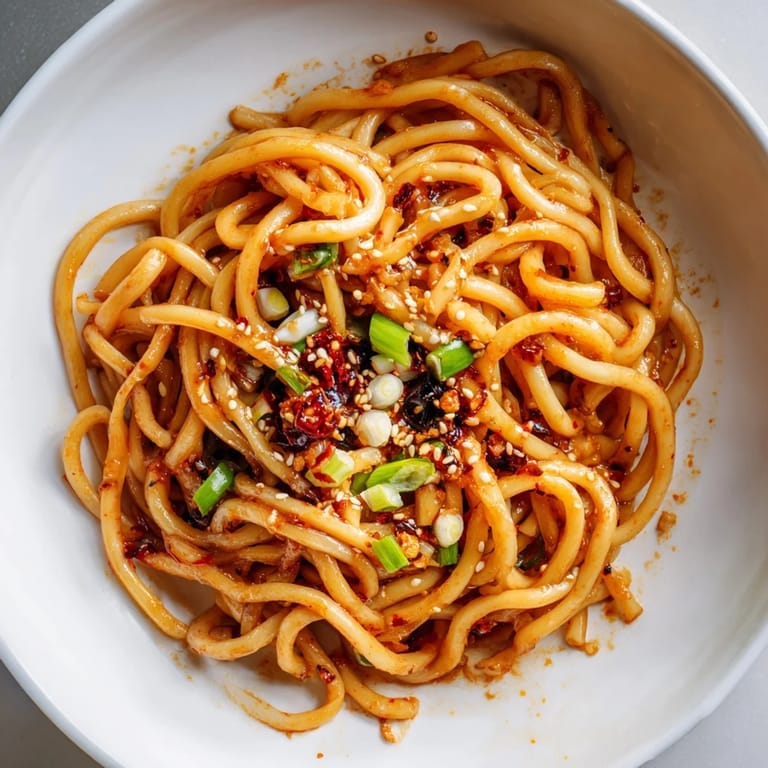
- Toss the drained noodles with the sauce in a large bowl, then pour the infused chili oil over everything and toss until every strand is glossy and coated.
- Finish and serve:
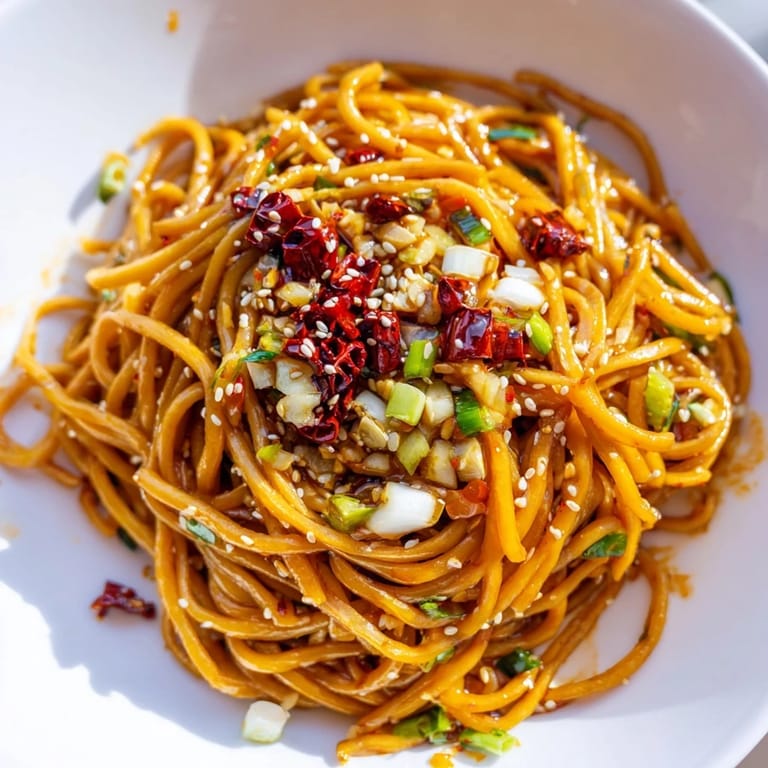
- Top with the green scallion pieces and extra sesame seeds, and eat it right away while the oil is still warm and the noodles still have that perfect texture.
 Save to Pinterest
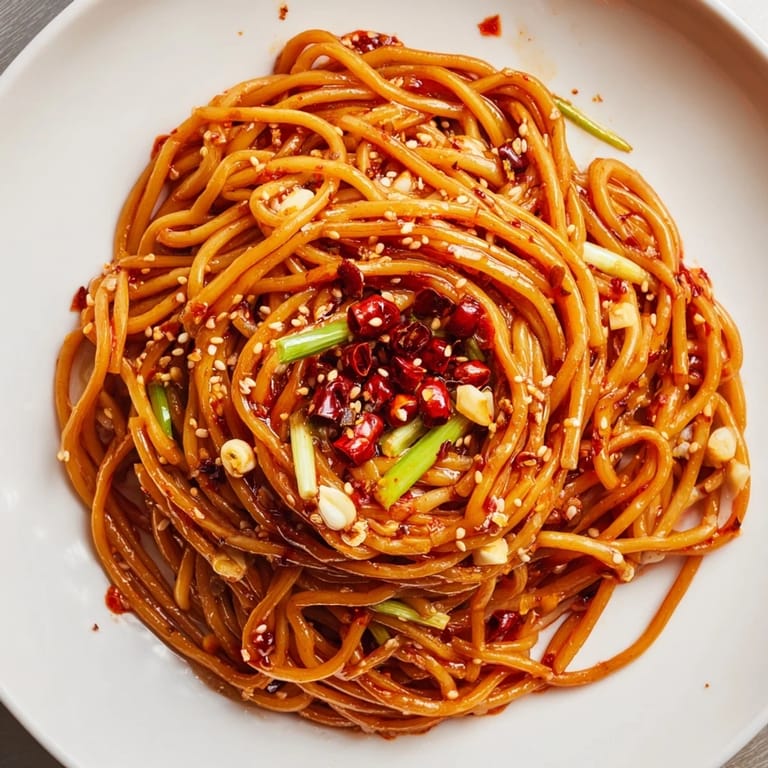
 There's something almost meditative about watching those noodles come together, the way the oil coats everything and transforms from golden to deep red. It's the kind of dish that makes the whole process feel like you've accomplished something, even though you barely did anything.
The Heat Spectrum
This dish lives in that beautiful middle ground where heat and flavor exist together rather than one drowning out the other. If you're sensitive to spice, you can reduce the chili flakes to just 1½ tablespoons and still have a deeply satisfying dish—it's better to start conservative and build heat than the other way around. For those who love pushing the limits, bump it up to 3 tablespoons and maybe double the Sichuan peppercorns for that numbing intensity that makes you feel brave.
Why This Works as a Solo Meal
Unlike many noodle dishes that feel like they need accompaniments, this one is genuinely complete by itself. The aromatics, the protein from the noodles and sesame seeds, the fat from the oil, the brightness from the vinegar—it's a full sensory experience in a single bowl. There's a reason people come back to this over and over; it satisfies something deeper than just hunger.
Infinite Variations
The beauty of this base is how adaptable it is to whatever's in your kitchen or whatever mood you're in. Add some quick-sautéed vegetables, crispy tofu, shredded chicken, or even a soft-boiled egg and suddenly you've shifted the whole character of the meal while keeping that core flavor intact. I've made versions with leftover rotisserie chicken, with snap peas wilted right into the hot noodles, with cashews for crunch—each one tells a different story but always feels like the same beloved dish.
- Sautéed vegetables keep their texture better if you cook them separately and add them right before serving.
- A drizzle of extra sesame oil right before eating elevates the whole thing in ways that surprise you.
- This actually tastes even better the next day cold, straight from the fridge, if you have leftovers.
 Save to Pinterest
 This is the kind of recipe that sits quietly in your back pocket, waiting for moments when you need something fast but meaningful. It never disappoints.
Questions & Answers
- → What kind of noodles work best for this dish?
Wheat noodles like Chinese wheat noodles or linguine hold the sauce well and provide a chewy texture perfect for absorbing the chili oil flavors.
- → How can the heat level be adjusted?
Modify the amount of chili flakes and Sichuan peppercorns in the oil to suit your preferred spice tolerance.
- → Can I make the chili oil ahead of time?
Yes, the chili oil can be prepared in advance and stored in an airtight container to deepen its flavors before tossing with noodles.
- → What alternatives exist for neutral oil?
Oils like canola, sunflower, or grapeseed can be used to achieve a clean base that won’t overpower the aromatics.
- → How should the noodles be cooked for best results?
Cook noodles until just tender, drain, and reserve some cooking water to help loosen the sauce and improve coating.
- → Are there any good pairings for this dish?
This spicy, aromatic noodle dish pairs well with crisp beverages like cold beer or fragrant jasmine tea for a balanced meal.