 Save to Pinterest
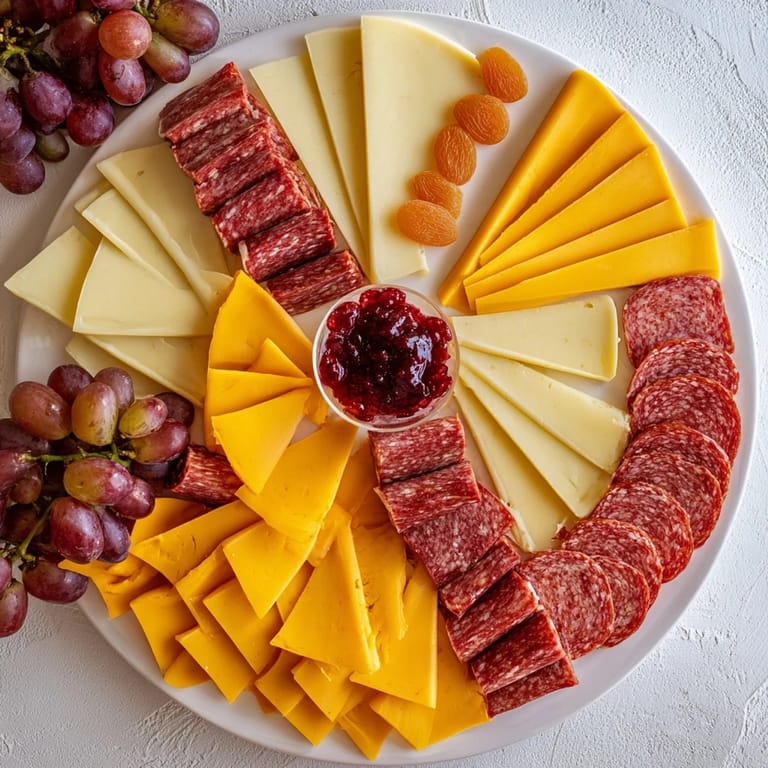
 I was arranging a charcuterie board for a dinner party when my friend Mira casually mentioned she'd been reading about geometric design in food. That sparked something—what if every single element had a shape and purpose? I spent the next hour with my sharpest knife, transforming ordinary cheese slices and cured meats into deliberate triangles and rhombuses. The board looked less like "random snacking" and more like edible architecture. When guests arrived, they actually paused before reaching for anything, visibly charmed by the intentionality.
Last month, I made this for a friend's art exhibition opening. People kept photographing the board more than the actual paintings, which was hilarious in a perfect way. That's when I realized this isn't just appetizers—it's a conversation starter, a small ceremony before everyone settles in to eat.
Ingredients
- Manchego cheese: Nutty and slightly crumbly, it holds its shape beautifully and gives earthy depth to the board.
- Aged cheddar: Firm enough to cut cleanly into clean lines, with enough character to anchor the whole arrangement.
- Brie: Keep it chilled so it stays firm when sliced; warm brie collapses and loses its geometric dignity.
- Gruyère: Use the rhombus cuts here to show off its crystalline texture and buttery sweetness.
- Prosciutto: Paper-thin and delicate, folding or cutting into triangles adds softness to balance the hard cheeses.
- Soppressata: Its firm texture makes clean rhombus cuts possible, and the spice adds complexity.
- Chorizo: Slice it thin and cut on the diagonal so it catches the light differently from the other shapes.
- Red and green grapes: Clustered in groups, they create breathing room and visual relief from the geometric precision.
- Dried apricots: Chop them diagonally to echo the other diagonal cuts and add tang to the board.
- Marcona almonds: Buttery and subtly sweet, they fill gaps without competing for attention.
- Fig jam: A small bowl or a few dollops provide sweetness and a textural shift.
- Gluten-free seed crackers: Breaking them into triangles keeps the theme consistent and gives them new purpose.
- Fresh rosemary or thyme: More than garnish—the aroma drifts up from the board and sets the mood.
Tired of Takeout? 🥡
Get 10 meals you can make faster than delivery arrives. Seriously.
One email. No spam. Unsubscribe anytime.
Instructions
- Sharpen your knife and arrange your workspace:
- A truly sharp knife makes clean, deliberate cuts that look intentional rather than jagged. Lay out all your ingredients first so you can see the colors and textures you're working with.
- Cut the cheeses into triangles and rhombuses:
- Work slowly—this isn't a race. A triangle is three cuts; a rhombus is four. The uniformity is what makes this board feel designed rather than casual.
- Slice and shape the cured meats:
- Prosciutto is forgiving because it's so thin, but soppressata and chorizo need a steady hand. Let each slice catch the light from a different angle.
- Arrange on your serving board with intention:
- Start with the largest pieces first, leaving breathing room. Alternate shapes and colors so no two similar items touch—think of it like setting a table where every placement matters.
- Cluster the grapes and fill the gaps:
- Grapes act like visual resting points between the geometric precision. They're your permission to have a little softness on the board.
- Add the almonds and fig jam strategically:
- Scatter almonds in the negative space, and place jam where it needs an anchor point—usually toward the center or in a small bowl on the side.
- Arrange crackers and garnish with herbs:
- Stack the crackers in small fans or pyramids to echo the triangular theme. Lay sprigs of rosemary or thyme across the board like it's part of the design, not an afterthought.
- Step back and look:
- Before serving, take a moment to see it as a whole. Does it feel balanced? Is there rhythm in the shapes and colors? Adjust anything that's bothering you.
 Save to Pinterest
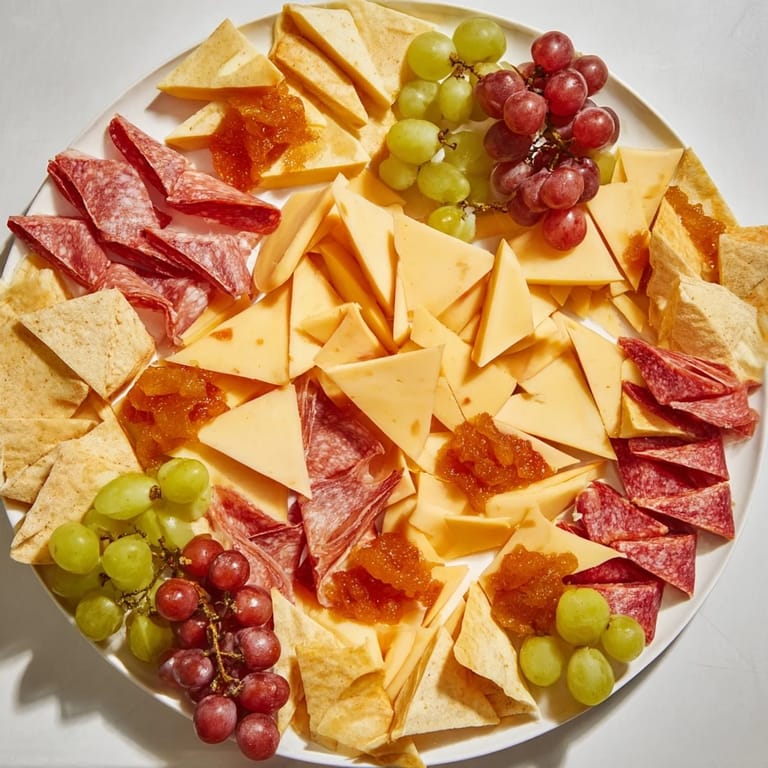
 The first time someone called this "too pretty to eat," I learned something about food presentation I'd never quite grasped before. Making something beautiful doesn't have to be complicated, and sometimes the simplest gesture—taking a knife and being deliberate instead of hasty—transforms an ordinary gathering into something people remember.
The Geometry Matters More Than You'd Think
It's tempting to cut things randomly and call it a day, but there's something almost meditative about committing to a shape. Once you decide everything is a triangle or rhombus, your hands start moving with more intention. You're not just slicing cheese—you're creating a visual language that says the person who made this cared about the details.
Wine and the Right Moment
This board doesn't exist in isolation; it's a gateway to conversation. Pair it with a crisp Sauvignon Blanc that cuts through the richness of the aged cheeses, or a dry rosé that echoes the colors you've arranged. The wine and the board should feel equally intentional.
Making It Your Own
The beauty of this recipe is that it's more template than rulebook. Swap in your favorite cheeses and cured meats—just keep them firm enough to hold a shape. You could use bresaola instead of soppressata, or swap the Manchego for Comté. What matters is that you've made the decision and stayed true to it on the board.
- Keep all your cuts deliberate and roughly uniform so the board reads as intentional rather than random.
- If you're nervous about cutting perfectly, a small ruler or straightedge tucked under your work can be your quiet guide.
- Remember that the shapes are the message—the message is that you took time to think about this gathering.
 Save to Pinterest
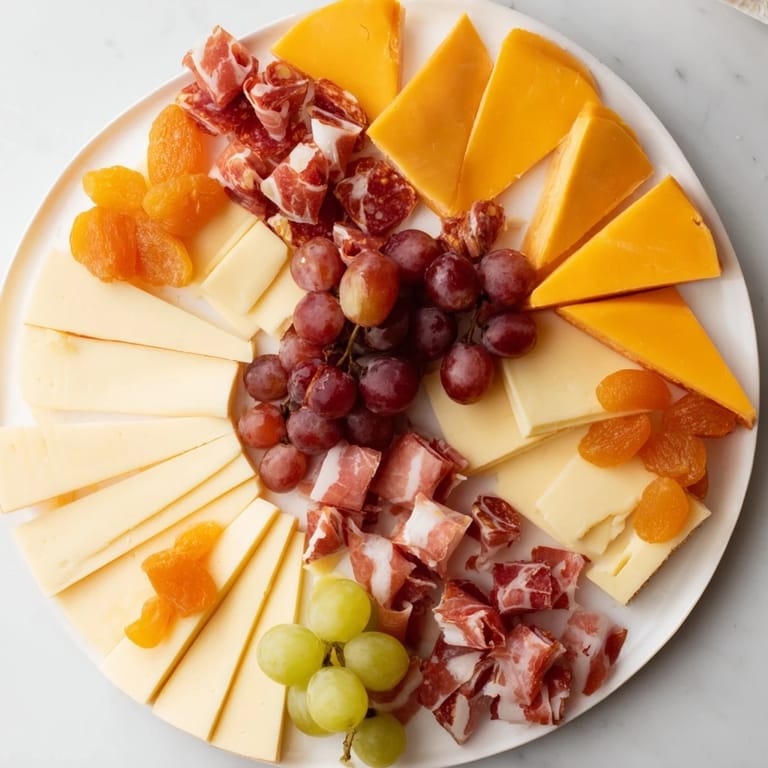
 This board is proof that the smallest thoughtful touches create the biggest moments. Serve it as an introduction to the meal, or let it be the centerpiece of the evening.
Questions & Answers
- → What cheeses are best for geometric cuts?
Firm cheeses like Manchego, aged cheddar, Brie, and Gruyère hold shapes well when cut into triangles or rhombuses for a clean presentation.
- → How can I maintain the shapes during serving?
Using a sharp knife and chilling softer cheeses helps maintain crisp geometric edges. Arrange items carefully and serve promptly.
- → What meats suit this platters style?
Cured meats like prosciutto, soppressata, and chorizo sliced or folded into triangles or rhombuses complement the geometric theme beautifully.
- → Which accompaniments enhance this board?
Seedless grapes, dried apricots, Marcona almonds, and fig jam provide contrasting textures and subtle sweetness to balance the savory elements.
- → Are there suggested drink pairings?
Crisp white wines such as Sauvignon Blanc or a sparkling rosé pair well, highlighting both the cheeses’ richness and cured meats’ flavors.