 Save to Pinterest
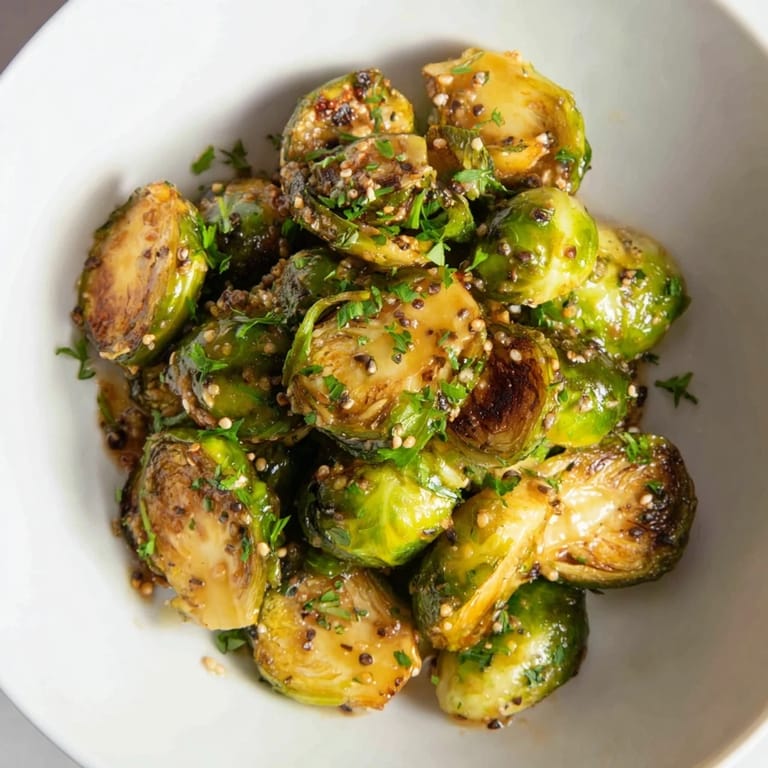
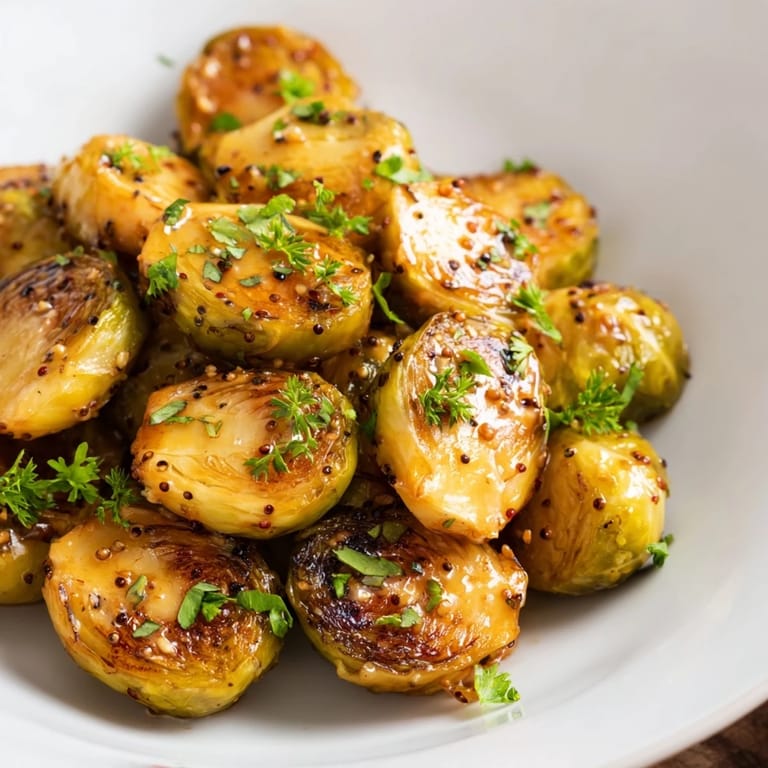
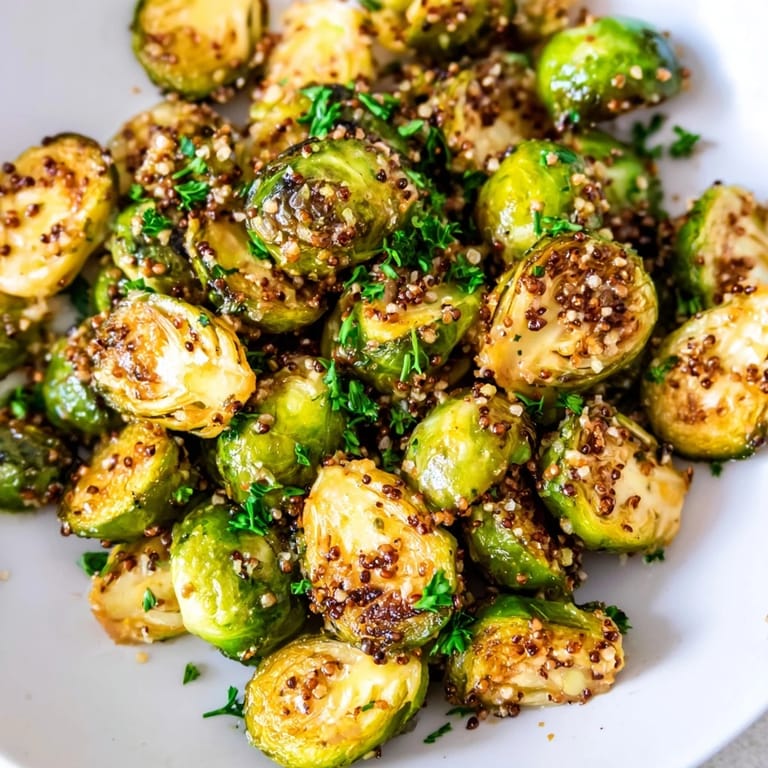
 There's something magical about the moment Brussels sprouts hit a hot sheet pan and you hear that satisfying sizzle. I was actually trying to use up what looked like sad vegetables from the farmers market when I stumbled onto the perfect ratio of honey and mustard, and suddenly these little green cabbages transformed into the kind of side dish that steals the show. The glaze catches and caramelizes until the cut sides turn burnished and crispy, while the insides stay tender. Now I make them constantly, sometimes even as a snack straight from the pan.
I served these at a potluck once, convinced they'd sit untouched while everyone reached for the mac and cheese. Instead, I watched my skeptical friend load up her plate, take a bite, pause, and then go back for seconds without saying a word. That's when I knew this wasn't just a side dish—it was the kind of simple recipe that changes minds.
Ingredients
- Brussels sprouts: Look for firm, compact heads about the same size so they cook evenly; the flat cut side is where the magic happens when it caramelizes.
- Olive oil: This carries the glaze and helps achieve that gorgeous golden color, so don't skip it.
- Honey: Brings natural sweetness that balances the mustard's tanginess; warm honey whisks in more smoothly.
- Dijon mustard: Sharp and sophisticated, this is the backbone of the flavor profile.
- Whole-grain mustard: The seeds add texture and a mild, slightly grainy bite that keeps things interesting.
- Garlic powder: A small amount adds savory depth without overpowering the other flavors.
- Apple cider vinegar: The acidity brightens everything and keeps the glaze from being one-note sweet.
- Salt and black pepper: These adjust the glaze's seasoning, so taste and adjust to your preference.
- Fresh parsley: Optional but recommended for a fresh, herbaceous finish that catches the light.
Tired of Takeout? 🥡
Get 10 meals you can make faster than delivery arrives. Seriously.
One email. No spam. Unsubscribe anytime.
Instructions
- Set your oven to high heat:
- Preheat to 425°F and line your baking sheet with parchment paper so cleanup is genuinely easy and nothing sticks.
- Whisk your glaze until smooth:
- Combine the oil, honey, both mustards, garlic powder, vinegar, salt, and pepper in a large bowl until you have a glossy, cohesive sauce. This is where patience pays off—take 30 seconds to really whisk it.
- Coat those sprouts generously:
- Toss the halved Brussels sprouts in the bowl until every piece is slicked with glaze; don't be shy about it. You want that caramelization to happen on every surface.
- Arrange cut-side down for maximum crust:
- Spread them on the sheet in a single layer with the flat, cut surfaces touching the pan. This is what creates that coveted crispy, golden bottom.
- Roast and flip halfway through:
- After about 12 minutes, they'll smell incredible; flip them and continue roasting for another 10–13 minutes until the edges are deeply browned and the insides yield easily to a fork.
- Finish with color and serve hot:
- Transfer to a serving dish and scatter parsley over top if you're using it. Eat them while the crust is still crispy.
 Save to Pinterest
 My partner, who claimed he'd never voluntarily eat Brussels sprouts, requested I make these specifically for his birthday dinner. Watching someone discover they actually love something they thought they hated is one of those quiet kitchen victories that sticks with you.
The Science of Caramelization
When you place those Brussels sprouts cut-side down on a hot pan, the sugars in the vegetable and the honey in your glaze undergo the Maillard reaction—a chemical transformation that creates hundreds of new flavor compounds. That's why the flat side turns so deeply golden and tastes richer than the rest. The high oven temperature (425°F) is crucial because it's hot enough to trigger this reaction without drying out the inside.
Why This Glaze Works So Well
The balance between honey's sweetness, mustard's tang, and vinegar's brightness creates a flavor that's complex enough to be interesting but simple enough that it doesn't overshadow the Brussels sprout itself. Dijon mustard adds sophistication while whole-grain mustard keeps things grounded and textural. Together with a touch of garlic powder, they create something that tastes like you fussed in the kitchen when really you just whisked five ingredients together.
Beyond the Basic Recipe
Once you've mastered the classic version, this recipe invites play. I've added crispy bacon pieces for richness, toasted nuts for crunch, and even a pinch of cayenne when I wanted heat. The foundation is sturdy enough to support variations while staying true to itself. Here are a few directions you might explore:
- Swap maple syrup for honey to deepen the flavor profile and add a subtle woodsiness.
- Top with toasted pecans or walnuts for texture and an earthy richness that complements the glaze.
- A light sprinkle of red pepper flakes adds warmth without overwhelming the delicate balance.
 Save to Pinterest
 These roasted Brussels sprouts prove that the simplest dishes are often the most satisfying. Serve them alongside roasted chicken, with a grain bowl, or honestly just on their own when you want something warm and deeply flavorful.
Questions & Answers
- → How do I get Brussels sprouts caramelized?
Roasting them cut side down at high heat allows caramelization to form, enhancing sweetness and texture.
- → Can I use a different sweetener than honey?
Yes, maple syrup works well as a vegan-friendly alternative that preserves the sweet balance in the glaze.
- → What mustard types are used for the glaze?
Dijon mustard adds smooth tang while whole-grain mustard contributes texture and depth to the glaze.
- → How can I add some heat to this dish?
A pinch of chili flakes mixed into the glaze or sprinkled on top before serving introduces a gentle spice.
- → Are there suitable garnishes to enhance flavor and presentation?
Fresh chopped parsley adds a bright herbal note and vibrant color when sprinkled just before serving.