 Save to Pinterest
 The sizzle of butter hitting the pan, the earthy scent of wild mushrooms releasing their moisture—that's what pulled my roommate out of her room one rainy Tuesday. I wasn't aiming for anything fancy, just craving something warm and filling. By the time I ladled in the third scoop of broth, she'd pulled up a stool and we ended up stirring in shifts, laughing at how seriously we took each addition of liquid. That night turned risotto from intimidating restaurant food into our go-to comfort ritual.
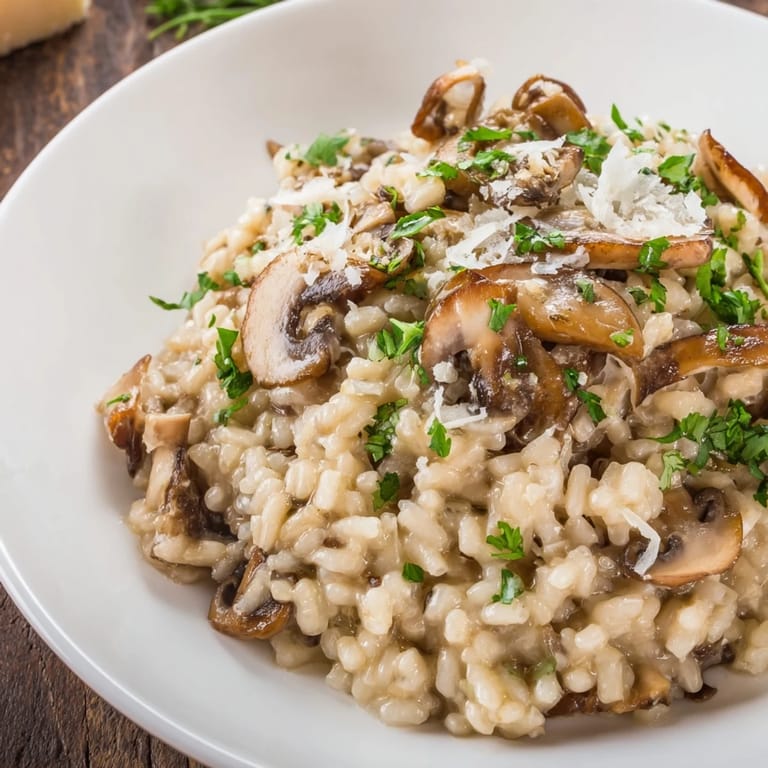
I made this for my parents' anniversary dinner once, convinced I'd mess it up under pressure. My dad stood by the stove, taste-testing every few minutes and declaring each stage "the best it's been yet." When I finally plated it with a snowstorm of Parmesan on top, my mom got quiet in that way she does when something genuinely surprises her. She later admitted she'd never thought of me as someone who could make "real" Italian food, and that moment felt better than any cookbook compliment.
Ingredients
- Arborio rice: The short, starchy grains are non-negotiable here; I tried long-grain once and ended up with expensive soup instead of creamy risotto.
- Vegetable broth: Keeping it warm on a back burner makes all the difference—cold broth shocks the rice and slows everything down.
- Mixed wild mushrooms: I love the mix of textures; shiitake add meatiness, cremini bring earthiness, and porcini (if you find them) deliver that deep, forest-floor fragrance.
- Yellow onion: Finely chopped is key; big chunks never quite melt into the background the way they should.
- Garlic: Two cloves feel right to me, but I've gone up to three when I'm in the mood for a little extra punch.
- Unsalted butter: You'll use it twice: first to sauté, then cold cubes at the end to create that glossy, restaurant-quality finish.
- Olive oil: Helps the butter not burn and adds a subtle fruity note that plays well with the mushrooms.
- Dry white wine: I usually grab whatever Pinot Grigio is open in the fridge; it deglazes the pan and adds brightness.
- Parmesan cheese: Freshly grated is the only way—pre-shredded has anti-caking agents that make the risotto gritty instead of silky.
- Fresh parsley: A handful of green at the end makes it look alive and adds a tiny herbal lift.
- Salt and black pepper: Season at the end; the broth and cheese bring plenty of salt on their own.
Tired of Takeout? 🥡
Get 10 meals you can make faster than delivery arrives. Seriously.
One email. No spam. Unsubscribe anytime.
Instructions
- Start the base:
- Warm the olive oil and butter in your largest skillet over medium heat, then add the onion and let it soften until it's see-through and sweet, about 3 to 4 minutes. This is your flavor foundation, so don't rush it.
- Build the mushroom layer:
- Toss in the garlic for just a minute until it smells toasty, then add all the sliced mushrooms and let them cook undisturbed for a couple of minutes before stirring. They'll release liquid, then reabsorb it and turn golden—wait for that caramelization.
- Toast the rice:
- Stir in the Arborio and let it sizzle for a minute or two, coating every grain in the buttery mushroom mix. You'll hear a faint crackling sound and smell a nutty aroma—that's when you know it's ready.
- Deglaze with wine:
- Pour in the white wine and stir constantly until it's almost completely absorbed. The pan will steam and smell bright and a little boozy—it's a good moment.
- Add broth gradually:
- Ladle in the warm broth one scoop at a time, stirring often and waiting until it's mostly absorbed before adding more. This takes patience, around 18 to 20 minutes total, but it's what makes the rice creamy instead of soupy.
- Finish with richness:
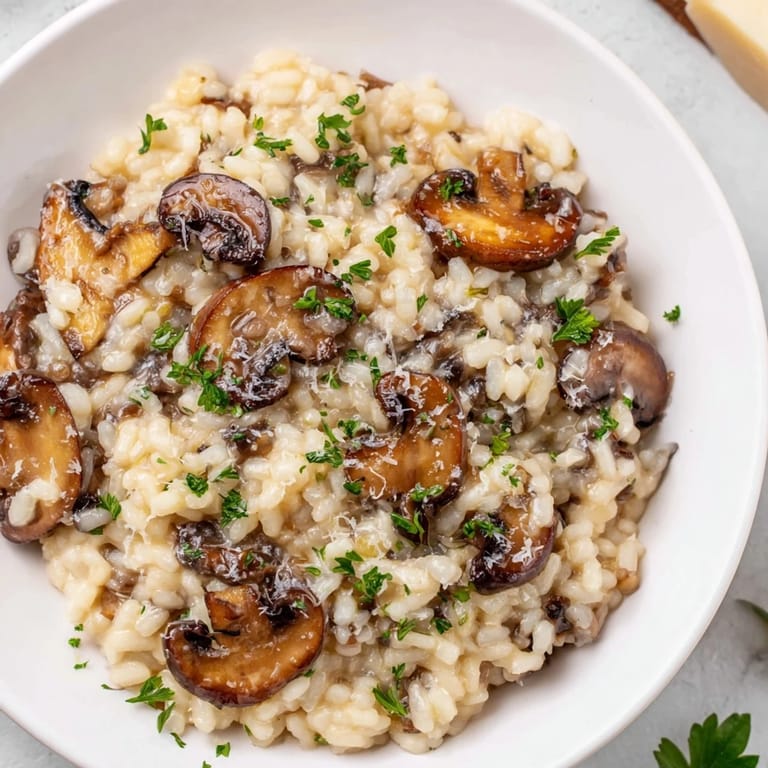
- Once the rice is tender but still has a tiny bite in the center, pull the pan off the heat and stir in the cold butter cubes, grated Parmesan, and half the parsley. Season with salt and pepper, then let it rest for 2 minutes to settle into itself.
- Serve immediately:
- Spoon into warm bowls, top with the remaining parsley and extra Parmesan, and bring it to the table while it's still steaming. Risotto waits for no one.
 Save to Pinterest
 One winter evening, I made a double batch and invited a few friends over with no real plan except to eat and talk. We ended up sitting on the floor around the coffee table, bowls in hand, and someone said it felt like the kind of meal that made you want to linger. I realized then that risotto isn't just about the technique—it's about the way it slows you down, makes you pay attention, and somehow turns a regular Wednesday into something worth remembering.
Choosing Your Mushrooms
I've experimented with every mushroom combination I could find, and here's what I've learned: cremini are dependable and affordable, shiitake bring a slightly smoky depth, and if you can get your hands on fresh porcini, they'll make the whole dish taste like a forest. Dried porcini are a secret weapon—soak them in warm water, chop them up, and add both the mushrooms and the strained soaking liquid to the broth for an intense umami boost. Even plain button mushrooms work in a pinch, though I like to roast them first to concentrate their flavor.
Wine and Broth Swaps
If you don't drink or just don't have wine on hand, a squeeze of lemon juice and an extra splash of broth will give you the acidity you need without the alcohol. I've also used chicken broth instead of vegetable when cooking for non-vegetarians, and it makes the risotto a little richer and more savory. Just make sure whatever broth you use is low-sodium, or you'll end up oversalting without realizing it until it's too late.
Make-Ahead and Storage
Risotto is best eaten the moment it's done, but life happens. If you need to prep ahead, you can cook it about halfway (until the rice is still quite firm), spread it on a sheet pan to cool, then finish it later by reheating gently with more broth. Leftovers thicken up in the fridge and lose that creamy flow, but they're perfect for shaping into balls, stuffing with mozzarella, breading, and frying into arancini. I've also stirred cold risotto into beaten eggs and made a crispy rice frittata that my friends devoured for brunch.
- Store leftovers in an airtight container in the fridge for up to 3 days.
- Reheat gently on the stovetop with a splash of broth or water, stirring constantly.
- Don't freeze risotto if you want to preserve the creamy texture—it gets grainy and sad.
 Save to Pinterest
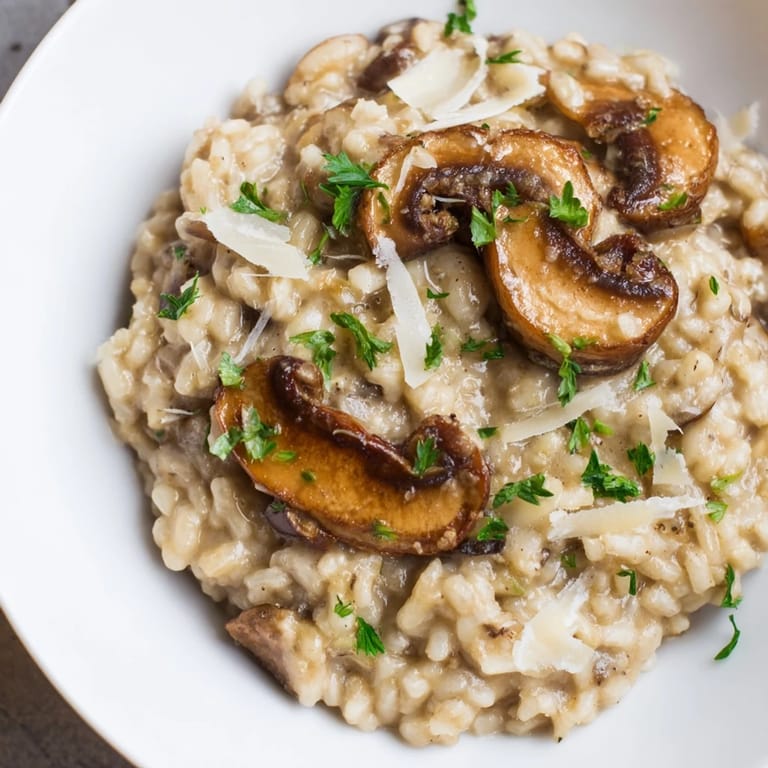
 This risotto has become the dish I make when I want to feel like I'm taking care of someone, even if that someone is just me. There's a quiet pride in watching it come together, one ladleful at a time, until the spoon drags slowly through the pot and you know it's ready.
Questions & Answers
- → What type of rice is used for this dish?
Arborio rice is used for its creamy texture and ability to absorb flavors well, making it ideal for risotto preparations.
- → Can I use dried mushrooms instead of fresh?
Yes, rehydrated dried porcini mushrooms add deeper flavor. Use their soaking liquid strained as a part of the broth for enhanced taste.
- → Which type of wine pairs best with this dish?
A crisp Pinot Grigio or Chardonnay complements the rich and earthy flavors, balancing the creaminess of the risotto.
- → How do I achieve the perfect risotto texture?
Cook Arborio rice slowly by adding warm broth ladle by ladle, stirring frequently to release starches, resulting in a creamy and al dente finish.
- → Is there a vegetarian option for the broth?
Vegetable broth is recommended for a vegetarian preparation, but chicken broth can be substituted if preferred.