 Save to Pinterest
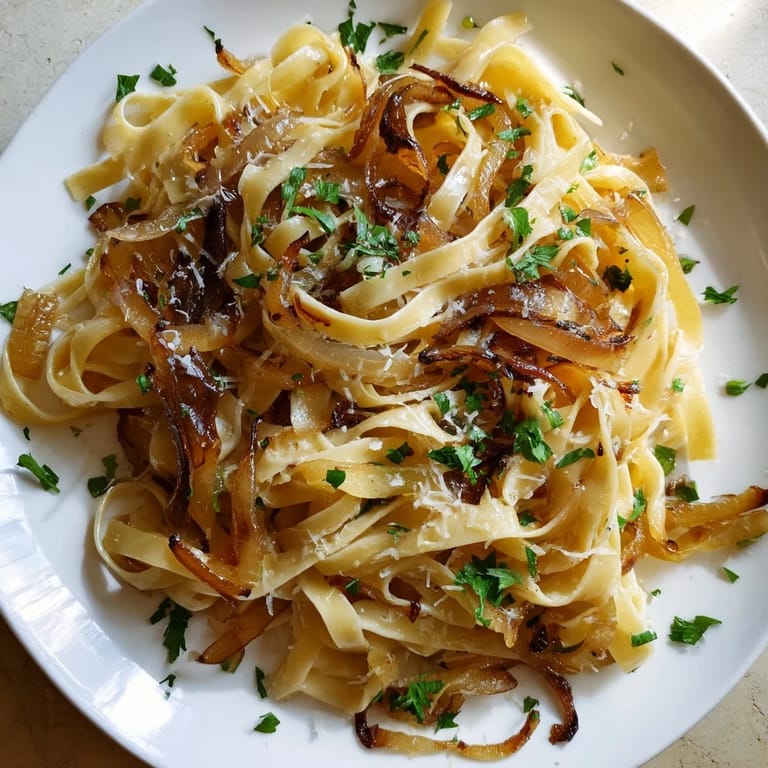
 There's something about the smell of onions slowly turning golden that makes you slow down in the kitchen. I discovered this dish on a rainy weeknight when I wanted something that felt like French onion soup but could work for dinner without the bread and broiler fuss. One pot, one honest technique, and you end up with something that tastes like it took hours but only requires patience and heat. My kitchen filled with that sweet, savory aroma, and suddenly my partner was standing in the doorway asking what smelled so good. That's when I knew this one was a keeper.
I made this for friends who were tired after a long day, and watching them taste it felt like watching someone find comfort they didn't know they needed. One guest actually asked if I'd been simmering broth for hours—the depth was that convincing. It became the dish I'd make when someone needed feeding, when the evening called for something warm but not heavy.
Ingredients
- Yellow onions (3 large, thinly sliced): The foundation of everything—slice them thick enough that they don't disappear but thin enough to caramelize evenly, which takes patience but rewards you with sweetness.
- Butter (2 tablespoons) and olive oil (2 tablespoons): Butter carries flavor while oil prevents burning, a combination that lets the onions turn deep gold without catching.
- Garlic (2 cloves, minced): Just enough to whisper in the background, added after the onions so it doesn't overshadow them.
- Dry white wine (60 ml): This cuts through richness and lifts the broth with acidity—don't skip it even if you have to open a bottle for just this.
- Broth (1 liter vegetable or beef): Beef makes it more luxurious, but vegetable keeps it lighter and still deeply satisfying.
- Fettuccine or linguine (350 g): Wider ribbons catch the sauce better than thin pasta, and they feel substantial against all that rich, glossy broth.
- Gruyère (120 g grated) and Parmesan (60 g grated): This two-cheese blend creates a creamy finish—Gruyère melts smooth while Parmesan adds a sharp, salty edge that makes everything taste more intentional.
- Thyme (1/2 teaspoon dried), bay leaf, sugar (1 teaspoon): The thyme and bay leaf build herbal depth, while sugar whispers against the onion char and balances the wine's edge.
Tired of Takeout? 🥡
Get 10 meals you can make faster than delivery arrives. Seriously.
One email. No spam. Unsubscribe anytime.
Instructions
- Melt and surrender to the heat:
- Warm butter and olive oil together over medium heat until they shimmer, then tumble in your sliced onions with a pinch of sugar. This isn't a race—you're coaxing sweetness out of something that starts sharp and pale.
- Let the caramelization happen:
- Stir occasionally as the onions soften and deepen from white to pale gold to amber to mahogany, which takes 20 to 25 minutes. You'll know it's right when they smell sweet and almost jammy, not burnt or bitter.
- Wake it up with garlic:
- Add your minced garlic and cook just until the smell hits you, about a minute, before it can brown and turn acrid.
- Deglaze with wine:
- Pour in the white wine and scrape the pan bottom with your spoon, loosening all those caramelized bits that hold flavor. Let it simmer until most of the wine evaporates, leaving behind its gentle acidity.
- Build the broth:
- Add thyme, bay leaf, and your broth, then bring everything to a gentle boil. This is your cooking liquid, and it's about to become something special.
- Marry pasta and sauce:
- Pour in the uncooked pasta, stir well, then turn heat down and let it simmer uncovered, stirring often, for 10 to 12 minutes until the pasta softens and drinks in the broth. The liquid should mostly disappear, thickening into something that clings to every strand.
- Finish with cheese:
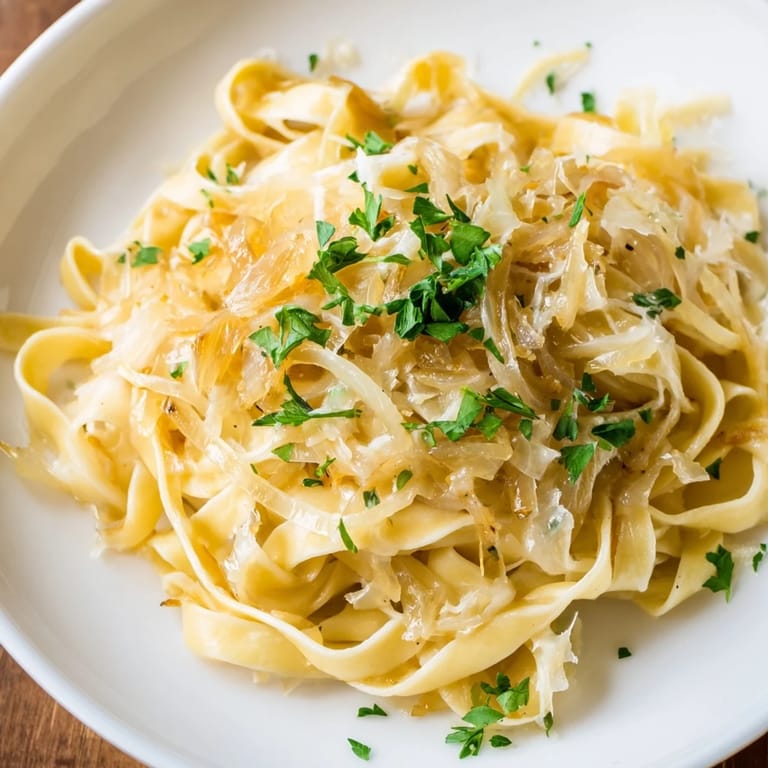
- Fish out the bay leaf, then stir in both cheeses until they melt into a creamy, rich sauce. Taste and season with salt and pepper, remembering that the broth and cheese already carry salt.
 Save to Pinterest
 I remember serving this on a cold winter night when someone at the table mentioned they'd been feeling homesick, and watching this dish—with its deep caramel and melted cheese—somehow make the evening feel less lonely. That's when I understood it wasn't just pasta; it was a small act of care in a bowl.
The Soul of Caramelization
The magic of this dish lives entirely in those first 25 minutes of cooking onions. Most people rush this step, thinking golden means done, but the real transformation happens when you keep going—when the color deepens, when the smell shifts from sharp to almost sweet, when the onions begin to collapse into themselves. I learned this the hard way by watching a guest who clearly knew food sit back and smile at the first taste, then ask if I'd used some special broth I'd been hiding. I hadn't—I'd just let the onions become themselves.
Variations Worth Exploring
I've played with this recipe enough times to know where it bends without breaking. The base is onions, broth, and cheese, and that stays sacred, but everything else can shift with what you have or what you're craving. Sometimes I add sautéed mushrooms for earthiness, or a splash more wine for brightness, or swap the Gruyère for Swiss if that's what's in my fridge. My friend once added crispy sage leaves on top, and suddenly it felt fancier without any real effort. The dish has enough confidence to handle experimentation.
How to Serve and Pair
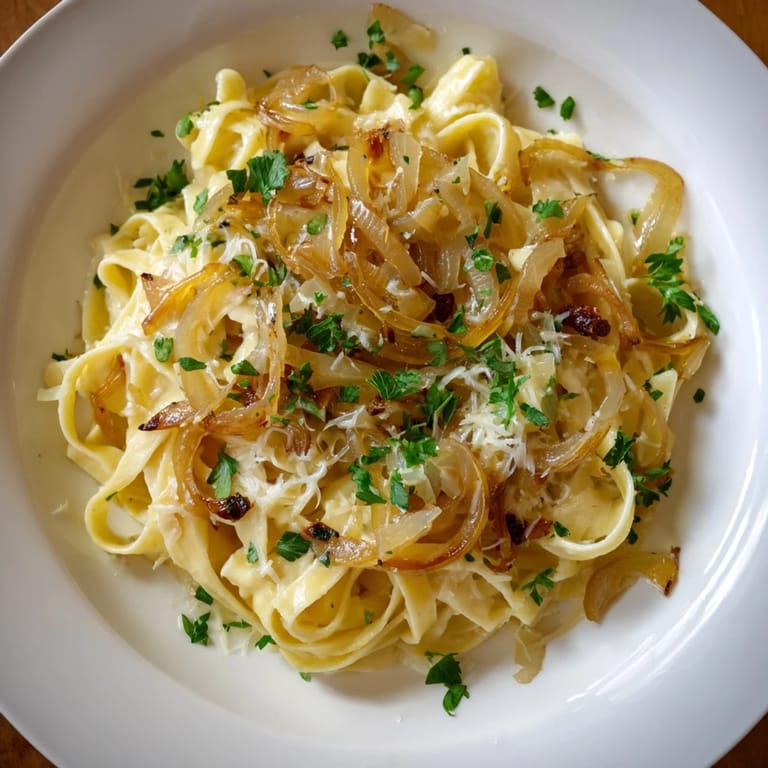
This tastes best served immediately, while the cheese is still glossy and the pasta is hot enough to steam gently. I always finish with fresh parsley—not because it changes the flavor dramatically, but because that green feels like an offering, like you're saying this matters enough to garnish. A crisp white wine like Sauvignon Blanc or a light Pinot Grigio sits beside it beautifully, cutting through the richness and making each bite feel lighter than it actually is.
- Serve straight from the pot if you're eating casually with people you trust.
- A simple green salad afterward feels good, something sharp to reset your palate.
- Save any leftovers and reheat gently with a splash of broth, as the pasta will have absorbed more liquid by the next day.
 Save to Pinterest
 This dish taught me that sometimes the most satisfying meals are the simplest ones, built on patience and a few good ingredients that know how to shine together. Make it when you want to feel like you've created something, not just assembled dinner.
Questions & Answers
- → What type of onions work best for caramelization?
Yellow onions are ideal for slow caramelization, offering a natural sweetness and deep golden color.
- → Can I substitute the white wine used in cooking?
Yes, a dry white wine like Sauvignon Blanc imparts acidity; alternatively, use extra broth or a splash of vinegar for similar depth.
- → How do I know when the pasta is perfectly cooked?
Stir frequently and cook until the pasta is al dente and most of the broth has absorbed, creating a creamy texture.
- → What are good alternatives to Gruyère cheese?
Swiss cheese provides a similar melt and flavor, while Parmesan adds sharpness; combining both enhances richness.
- → Is this dish suitable for vegetarians?
Yes, if vegetable broth is used instead of beef broth, it fits a vegetarian diet without sacrificing flavor.