 Save to Pinterest
 The first time I understood why osso buco mattered, I wasn't in Milan—I was in my tiny kitchen on a grey afternoon, the apartment already smelling like caramelized meat and tomatoes before the braise even started. My grandmother had sent a clipping about this Milanese classic, and something about the phrase "fork-tender veal" stuck with me like a promise. What I discovered, hours later when those shanks fell apart at the gentlest touch, was that this dish isn't really about technique or ingredients—it's about patience rewarding you with something transcendent.
I made this for someone I was trying to impress, and halfway through the braise I realized I'd forgotten to set a timer. Instead of panicking, I just leaned against the counter, glass of wine in hand, listening to the gentle simmer and knowing somehow that it would be perfect. When we sat down to eat, the shanks glistened under the kitchen light, and they didn't need any grand gestures—just that quiet, assured flavor that comes from things done slowly and done right.
Ingredients
- Veal shanks (4, about 350 g each, cross-cut, bone-in): Cross-cut is the magic word here—it exposes the marrow, which enriches the sauce as everything braises together, and it's what gives you that showstopping presentation.
- Salt and freshly ground black pepper: Season generously before dredging; this is your only chance to season the meat itself.
- All-purpose flour (1/3 cup or gluten-free alternative): The flour creates a delicate crust that browns beautifully and helps thicken the sauce—don't skip dredging, but do shake off the excess so you don't get a floury coating.
- Olive oil and unsalted butter (2 tbsp each): The combination of oil and butter gives you a higher smoke point and a richer flavor than either alone.
- Onion, carrots, celery, garlic (1 large onion, 2 carrots, 2 stalks, 4 cloves): This aromatic base, sometimes called soffritto, is where all the underlying depth comes from—dice everything evenly so it softens at the same rate.
- Dry white wine (1 cup): Use something you'd actually drink; the wine becomes part of the soul of this dish, so harsh or overly acidic wine will show.
- Diced tomatoes with juice (1 can, 400 g): Canned tomatoes are actually your friend here because they're picked at peak ripeness and already broken down.
- Beef or veal stock (1 1/2 cups): Homemade is wonderful if you have it, but good quality store-bought works beautifully too.
- Tomato paste (2 tbsp): This concentrated umami bomb deepens the sauce; blooming it in the pan for a minute before deglazing helps release its full flavor.
- Bay leaves and dried thyme (2 leaves, 1 tsp): These herbs perfume the entire braise with an earthy, Mediterranean warmth.
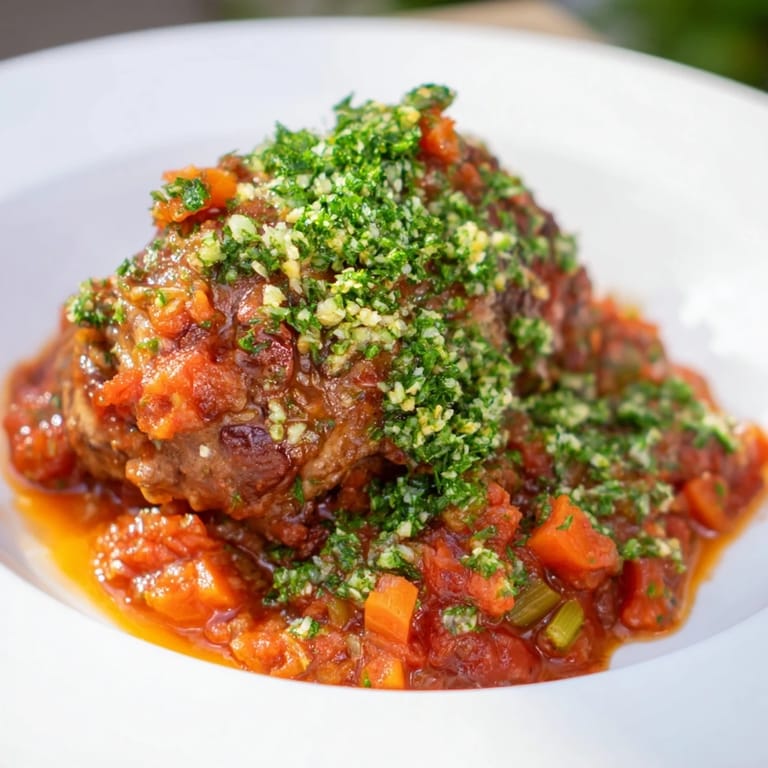
- Fresh flat-leaf parsley, garlic, lemon zest (2 tbsp parsley, 1 clove, zest of 1 lemon): Gremolata is your secret weapon—that bright, herby finish cuts through the richness and makes everything feel lighter and more alive.
Tired of Takeout? 🥡
Get 10 meals you can make faster than delivery arrives. Seriously.
One email. No spam. Unsubscribe anytime.
Instructions
- Prepare and season the shanks:
- Pat the veal shanks dry with paper towels—this helps them brown instead of steam. Season them generously on all sides with salt and pepper, then dredge lightly in flour, shaking off any excess so you get a whisper of coating, not a crust.
- Sear until golden:
- Heat your Dutch oven over medium-high heat and let the oil and butter get shimmering and fragrant. Working in batches if needed so you don't crowd the pan, brown the shanks on all sides until they're deeply caramelized, about 3-4 minutes per side—this is where the flavor story begins.
- Build the flavor base:
- In the same pot, sauté the onion, carrots, celery, and garlic until they're soft and just starting to color, about 6 minutes. You'll smell that moment when they're ready.
- Bloom the tomato paste:
- Stir in the tomato paste and let it cook for a minute, stirring constantly, so it caramelizes slightly and loses any raw edge. This step transforms a one-note ingredient into something deeper and more complex.
- Deglaze and build the braising liquid:
- Pour in the white wine, scraping up all those caramelized brown bits from the bottom of the pot with a wooden spoon—that's concentrated flavor you don't want to leave behind. Add the tomatoes with their juice, the stock, bay leaves, thyme, and half the lemon zest, stirring everything together until well combined.
- Return the shanks and start braising:
- Nestle the browned veal shanks back into the pot in a single layer, spooning some of that gorgeous sauce over them. Bring everything to a gentle simmer, then cover the pot and transfer it to a preheated 160°C (325°F) oven.
- Braise low and slow:
- Let the oven do the work for about 2 hours, until the veal is so tender a fork slides through the meat like butter and the bone feels loose. The gentle, even heat of the oven is what transforms a tough cut into something sublime.
- Make the gremolata while you wait:
- Mix together the finely chopped parsley, minced garlic, and remaining lemon zest in a small bowl, and let it sit so the flavors start to meld. This bright mixture is what brings the whole dish into focus.
- Finish and serve:
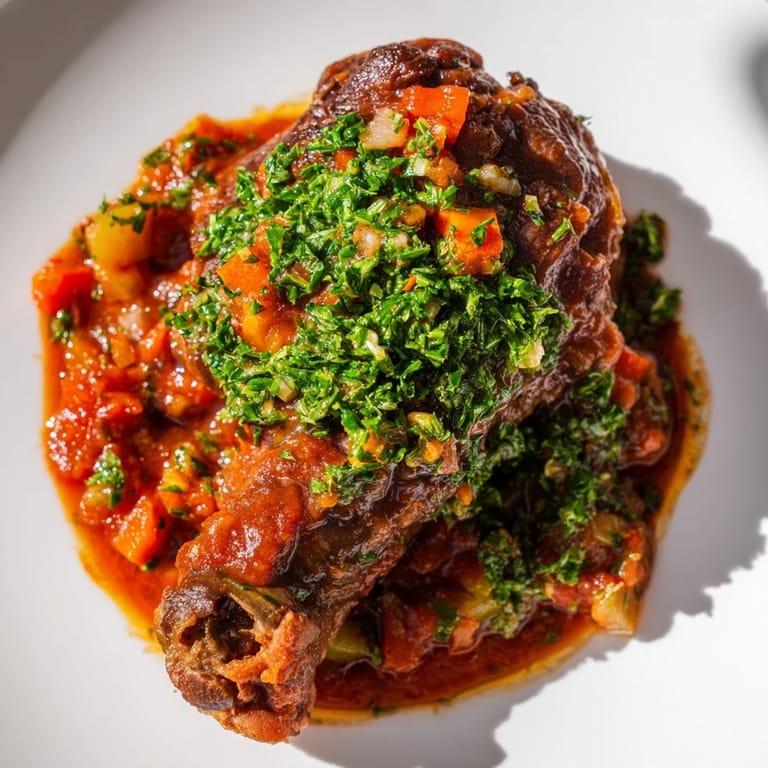
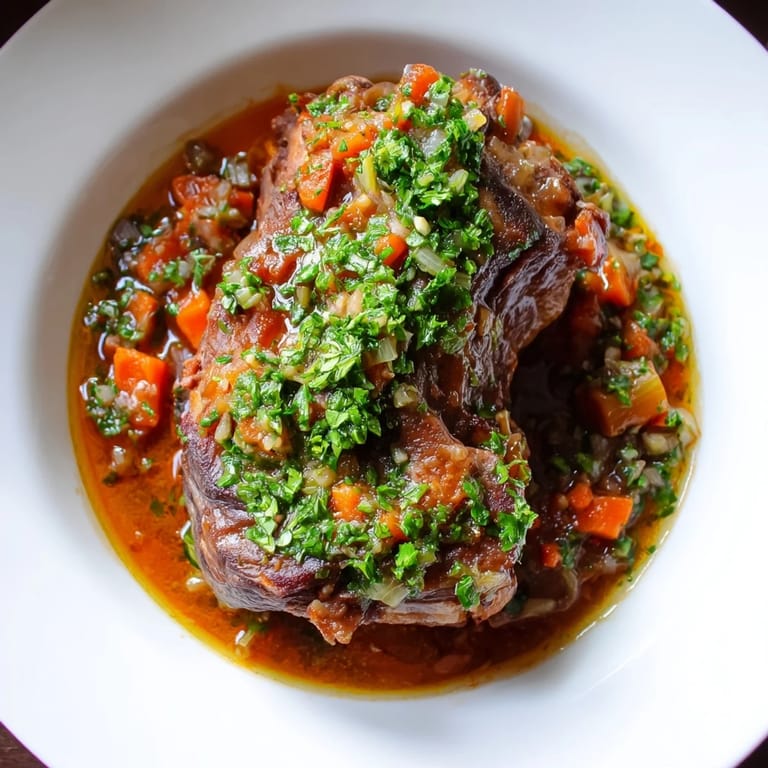
- Remove the shanks to a serving platter. Skim any excess fat from the braising liquid if you like, then taste and adjust the seasoning—simmer for a few extra minutes if you want a thicker sauce. Spoon the sauce over the shanks and crown each one with a generous pinch of gremolata just before serving, so that fresh herby note doesn't get lost in the heat.
 Save to Pinterest
 There's a moment near the end of the braise when you lift the lid and the steam rolls out, carrying with it this incredible aroma that's both rich and inviting—that's when you know you've done something right. The first time someone took a bite and closed their eyes, I understood that this dish had become more than sustenance; it was a small act of devotion translated into flavor.
Why This Dish Transcends the Ordinary
Osso buco belongs to a class of dishes that seem humble until you taste them, and then they reveal themselves to be quietly sophisticated. It's not flashy or trendy—it's the kind of food that's been feeding people around the same tables for generations because it simply works. The marriage of wine, tomato, and veal creates something greater than the sum of its parts, and the gremolata is the punctuation mark that says "this is finished, this is whole."
Choosing Your Accompaniments Thoughtfully
This dish practically demands saffron risotto (Risotto alla Milanese) because that's the original pairing in Milan, and there's real wisdom in that combination—the creamy rice catches the sauce and provides a perfect canvas for the shanks. If risotto feels like too much work, creamy mashed potatoes or polenta are equally beautiful, letting the braised veal be the star without competing for attention. Some nights I keep it simple with just good crusty bread to soak up every last drop of sauce, and honestly, that feels like the most honest way to eat this.
Making This Your Own
The foundation of osso buco is pretty sacred, but there's room to bend it to your tastes and what you have on hand. Some cooks add a splash of brandy or use red wine instead of white, and either works beautifully—it just shifts the mood slightly. If you can't find veal, beef shanks are a wonderful substitute and actually become more affordable; just give them an extra 20 or 30 minutes in the oven since beef takes longer to break down than veal.
- A handful of olives stirred in during the last 15 minutes adds a salty complexity that some find essential.
- If you're cooking gluten-free, swap the wheat flour for rice flour or cornstarch, which thickens the sauce beautifully without any compromise.
- Make this a day ahead if you can—the flavors deepen overnight, and it reheats beautifully, making it perfect for entertaining.
 Save to Pinterest
 When you sit down to a plate of osso buco, you're eating something that tastes like it took hours of hands-on work, but also feels effortless and natural. That's the quiet magic of cooking things slowly—you do the work early, and then time and heat do the rest, leaving you free to enjoy the evening and look forward to dinner.
Questions & Answers
- → What cut of meat is used for Osso Buco?
Veal shanks, usually cross-cut and bone-in, are used to achieve tender and flavorful results.
- → How long should veal shanks be braised?
The veal shanks are gently braised for about 2 hours until they become fork-tender and infused with the sauce.
- → What vegetables complement the main ingredients?
Onion, carrots, celery, and garlic are sautéed to form a rich flavor base for the sauce.
- → What is gremolata and how is it used?
Gremolata is a fresh mixture of lemon zest, parsley, and garlic that is sprinkled on the dish to add brightness and aroma.
- → Can the dish be made gluten-free?
Yes, use gluten-free flour for dredging the veal shanks to accommodate gluten-free diets.
- → What are ideal side dishes to serve with this braised veal?
Traditional accompaniments include saffron risotto, creamy mashed potatoes, or polenta to soak up the rich sauce.