 Save to Pinterest
 There's something about a bowl of Caldo Verde that transports you to a Portuguese kitchen on a cool evening. My neighbor Maria handed me a steaming cup years ago, and I watched how she stirred it with such quiet confidence, like she wasn't just making soup but holding onto something precious. The way the kale turned silky against the creamy potato base felt almost luxurious for something so simple. I knew I had to learn her way, and what she taught me was that the best comfort comes from letting a few good ingredients do exactly what they're meant to do.
I made this for friends during an unexpected snowstorm, when everyone was stuck at my place and hungry. Someone had brought chorizo, someone else had kale, and I had potatoes in the cupboard. Within an hour we were all crowded around the table, slurping from bowls, and the conversation turned from complaining about the weather to asking for the recipe. That's when I understood Caldo Verde isn't just soup—it's the kind of dish that makes people stay a little longer and talk a little easier.
Ingredients
- Potatoes (600g, peeled and diced): These break down into the broth and create that essential creaminess without any cream at all, which is the secret Maria shared with me. Waxy potatoes work better than floury ones because they hold their shape just enough.
- Onion (1 large, finely chopped): The foundation—it sweetens as it cooks and becomes almost invisible, but without it the soup tastes flat and one-dimensional.
- Garlic (2 cloves, minced): A small amount goes a long way here; too much and it bullies the other flavors into silence.
- Kale (120g, thinly sliced): Portuguese couve is traditional, but lacinato or curly kale work beautifully too. The thinness of the slice matters because it determines how quickly it wilts and how silky it becomes.
- Chorizo sausage (150g, thinly sliced): Use Portuguese chouriço if you can find it, but good Spanish chorizo brings almost the same warmth and smokiness. This is where the soul of the soup lives.
- Chicken or vegetable broth (1.2L): Don't use the super salty kind; you're building layers of flavor and salt can drown them out. A gentle broth lets everything else shine.
- Olive oil (2 tbsp total): One tablespoon for the initial cooking, one for finishing. The finishing oil matters—it adds a whisper of brightness at the very end.
- Salt and black pepper (to taste): Season as you go, not all at once at the end. You'll taste the soup transforming with each pinch.
Tired of Takeout? 🥡
Get 10 meals you can make faster than delivery arrives. Seriously.
One email. No spam. Unsubscribe anytime.
Instructions
- Build your base:
- Heat a tablespoon of olive oil in a large pot over medium heat and add your onion and garlic. You're listening for a gentle sizzle, and watching the onion turn translucent—it should take about 4 minutes. You'll smell the garlic before you see the change, and that's exactly right.
- Wake up the flavors:
- Add the diced potatoes and chorizo slices, stirring occasionally for 3 minutes. The chorizo begins releasing its oils and color into the pot, and the potatoes start absorbing all that smoky richness. This is where patience rewards you—don't rush it.
- Let it simmer:
- Pour in the broth and bring everything to a boil, then lower the heat, cover, and simmer for 20 minutes until the potatoes are so tender they fall apart with a wooden spoon. The kitchen smells almost too good to bear at this point.
- Extract the chorizo:
- Remove the chorizo slices with a slotted spoon and set them aside on a plate. You're going to add them back later, but they need a little break first.
- Blend into silkiness:
- Using an immersion blender, puree the soup until it's smooth and creamy, working right there in the pot. If you're using a standard blender, work in careful batches so nothing spills and the heat doesn't escape. This step transforms separate ingredients into something unified.
- Bring it home:
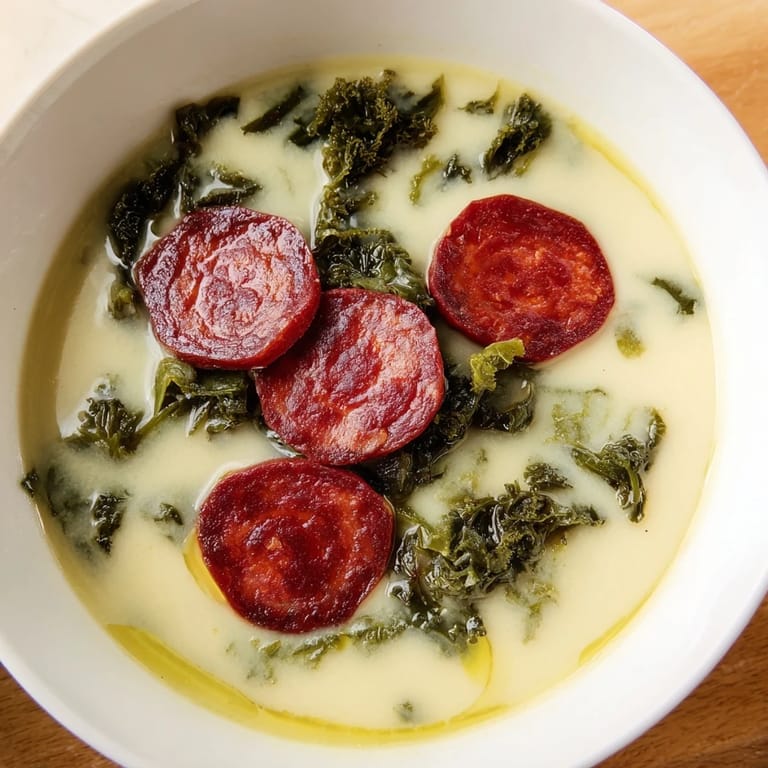
- Return the chorizo to the pot and add your thinly sliced kale. Simmer for another 5 to 7 minutes, watching as the dark green leaves surrender and turn silky against the creamy base. Stir in the remaining olive oil, taste for salt and pepper, and serve it hot.
 Save to Pinterest
 Years later, I still make this soup the way Maria taught me, and I've taught it to a few friends who now make it for their own tables. There's something almost sacred about passing on a recipe that's been trusted to you, especially when it arrives with a story and a person's care built into every step.
The Portuguese Soul of This Soup
Caldo Verde means green broth in Portuguese, and it shows up on tables across Portugal in ways that feel both humble and essential. It's not fancy, but it's been feeding families and gathered people for generations. What Maria taught me was that this soup sits at the intersection of poverty and abundance—simple ingredients, but each one chosen with purpose. The Portuguese understand that comfort doesn't require expense; it requires attention.
Timing and Texture Matter
The magic of this soup lives in its texture, which is why every step matters more than the ingredient list might suggest. The potatoes need to break down completely while the kale stays green and just barely tender. If you blend before the potatoes are truly soft, you'll end up with lumps. If you add the kale too early, it loses its color and becomes an afterthought. The 20 minutes of simmering isn't arbitrary—it's the exact amount of time the potatoes need to soften and the flavors to marry.
Variations and Occasions
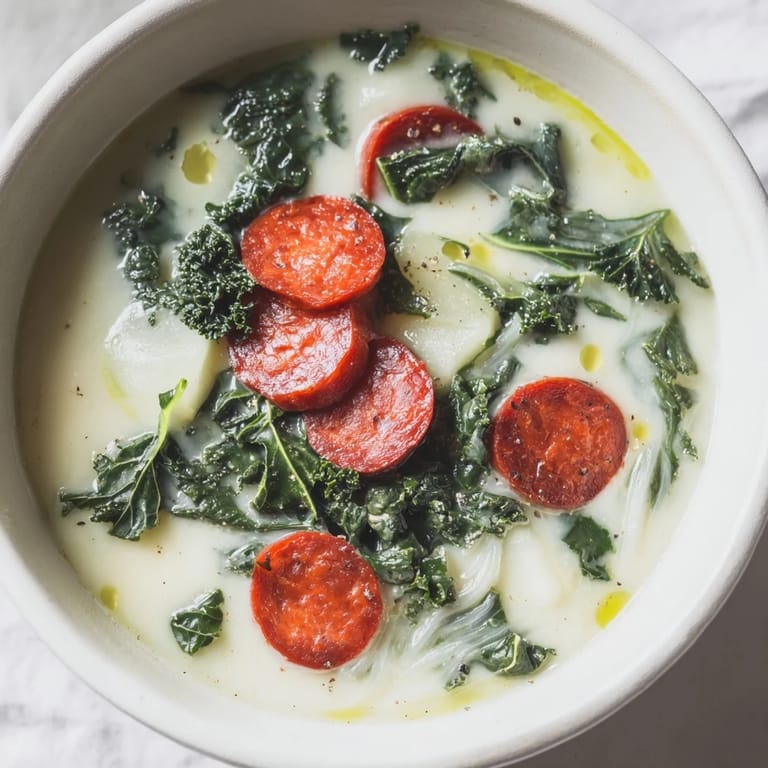
This soup is flexible enough to bend to what you have on hand, but not so flexible that it loses its identity. On nights when I'm vegetarian, I leave out the chorizo and add a teaspoon of smoked paprika to the broth, which gives it a similar warmth without the meat. On nights when people are coming over and I want to feel proud of what I'm serving, I make sure to use the best chorizo I can find and serve it in a deep bowl with crusty bread on the side.
- Make it entirely vegetarian by omitting the chorizo and using vegetable broth, adding smoked paprika for depth.
- Add a splash of heavy cream at the end if you want richness, though tradition keeps it creamy without it.
- Use whatever greens you have—collard greens, spinach, or even chard work beautifully when kale isn't available.
 Save to Pinterest
 A good Caldo Verde is proof that the best cooking comes from respecting simple things and knowing when to stop. Serve it hot with crusty bread, watch people's faces soften as they eat, and you'll understand why this soup has traveled the distance from Portuguese kitchens to tables all over the world.
Questions & Answers
- → What type of greens can I use instead of kale?
Collard greens or Portuguese couve are excellent alternatives, lending a similar texture and flavor.
- → Can I make a vegetarian version?
Yes, omit the chorizo and use vegetable broth. Adding smoked paprika can mimic the smoky flavor.
- → How do I achieve the creamy texture?
Puree the cooked potatoes, onions, and broth with an immersion or standard blender until smooth and velvety.
- → Is Spanish chorizo a good substitute?
Spanish chorizo works well and provides a comparable smoky, robust flavor for this dish.
- → What sides pair well with this dish?
Crusty bread or light salads complement the hearty, creamy qualities of the caldo verde.