 Save to Pinterest
 I discovered the magic of these protein snack boxes on a Tuesday when I was scrambling to pack lunch for the week and realized I had exactly zero motivation to make the same boring sandwich four days in a row. Instead of defaulting to takeout, I grabbed whatever proteins and veggies I had on hand and started layering them into containers like I was playing a game of Tetris with my fridge. The first time I opened one of these boxes mid-afternoon, the variety hit different—each bite was a surprise, and suddenly meal prep felt less like a chore and more like building something I actually wanted to eat.
My coworker asked what I was eating one day and literally said, "Wait, you made that?" when I opened the container—like I'd somehow crafted something restaurant-worthy in my kitchen. That moment shifted something for me; these boxes became my secret weapon for looking like I had my life together while actually just throwing good ingredients in a box. Now I make them every Sunday evening while listening to a podcast, and somehow they've become the thing my friends request when they ask what I'm bringing to picnics.
Ingredients
- Cooked chicken breast (8 oz): Slice it thick enough to feel substantial but thin enough that it doesn't overwhelm the box—I learned this after one particularly chunky attempt that threw off the whole balance.
- Hard-boiled eggs (4, halved): The yolk is your secret weapon for richness, and halving them makes them look more intentional than just tossing a whole egg in there.
- Turkey or ham (4 oz, sliced): Choose something you'd actually want to eat plain, because that's basically what you're doing—these deserve to be the star, not just filler.
- Cheddar cheese, cubed (4 oz): Cut it into half-inch cubes so it feels like a snack on its own, not like you're eating sad shreds at the bottom of a bag.
- Cherry tomatoes (1 cup): These stay fresher longer than regular tomatoes and add a burst of sweetness that balances the salty proteins beautifully.
- Cucumber slices (1 cup): The cooling effect of cucumbers against everything else is what makes these boxes feel refreshing rather than heavy.
- Baby carrots (1 cup): They're naturally sweet and require zero prep, which is exactly the energy these boxes are about.
- Apple slices (1 apple, tossed with lemon juice): The lemon juice stops browning and adds a subtle brightness that ties the whole thing together—I promise it makes a difference.
- Hummus (1/2 cup, divided into 4): This is your binding agent, the thing that makes everything taste intentional instead of random.
- Whole-grain crackers (16 total, 4 per box): Keep these separate until you're ready to eat, or they'll turn into sad, soggy cardboard by day two.
- Mixed nuts (1/4 cup, 1 tablespoon per box): These add textural contrast and stay crunchy all week if you keep them sealed properly.
Tired of Takeout? 🥡
Get 10 meals you can make faster than delivery arrives. Seriously.
One email. No spam. Unsubscribe anytime.
Instructions
- Gather your containers:
- Set out four meal prep boxes where you have room to work—I usually line mine up assembly-line style on the counter so I can see exactly how much space I have for each component.
- Distribute the proteins:
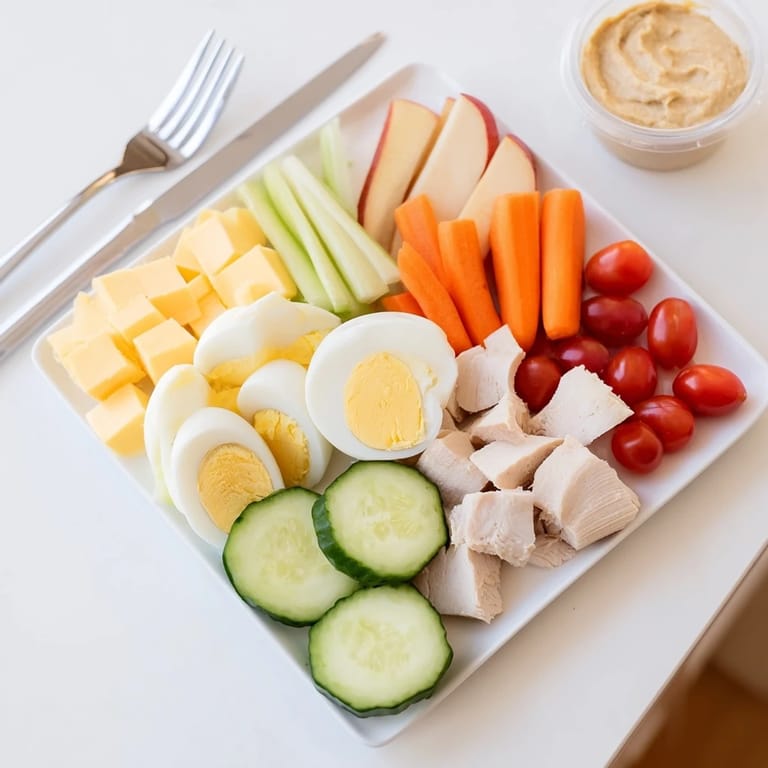
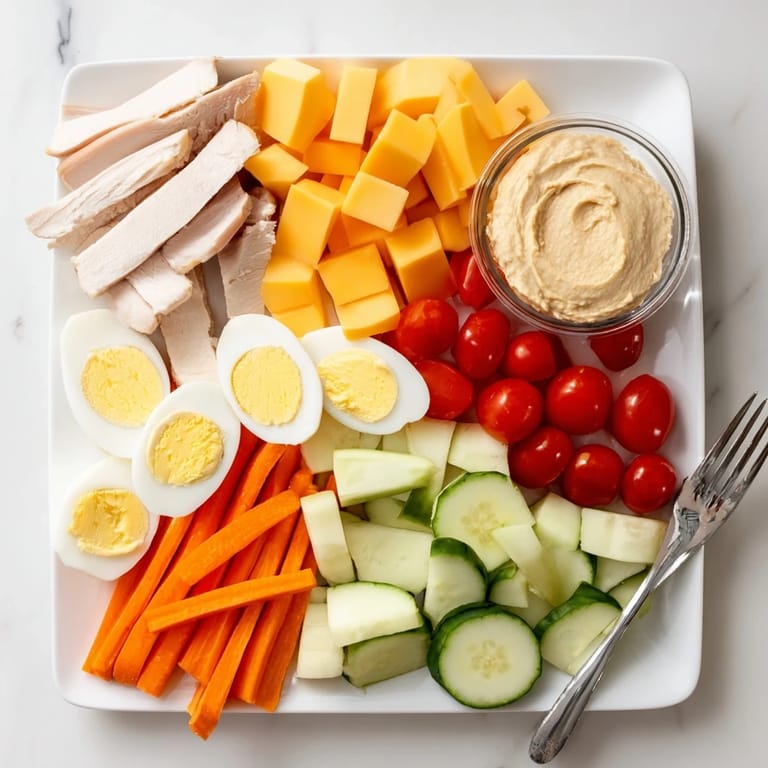
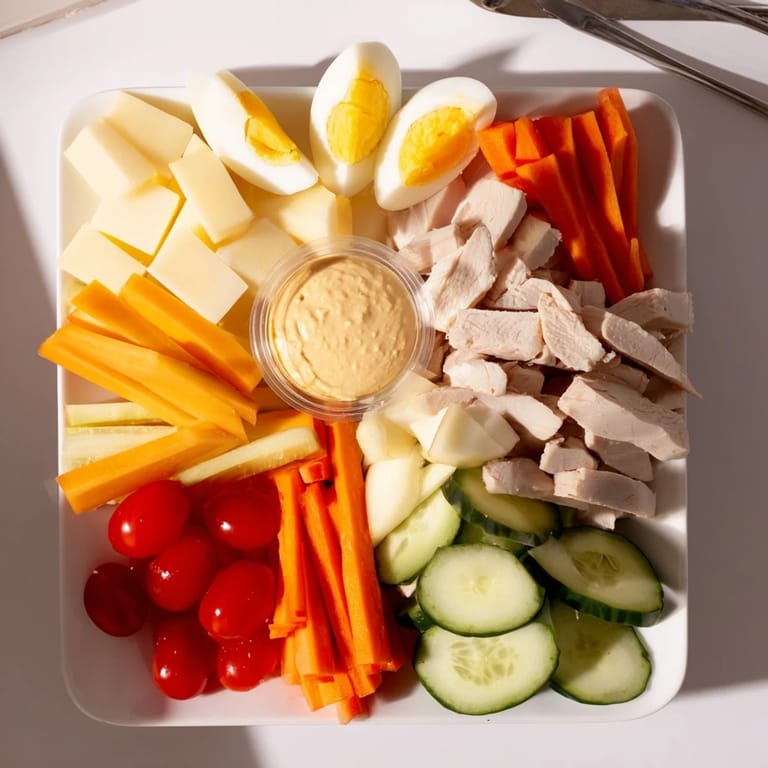
- Divide the chicken, turkey, eggs, and cheese evenly among the four boxes, placing them in separate sections so flavors don't bleed into each other before you're ready. Think of it like creating little protein neighborhoods rather than one big protein pile.
- Add the vegetables and fruit:
- Fill in the gaps with tomatoes, cucumbers, carrots, and apple slices, aiming for a balance of colors and textures in each box. This is where it starts looking like something you'd actually want to photograph.
- Portion the hummus:
- Spoon hummus into small lidded containers and nestle them into each box, making sure they're sealed tight so nothing leaks. This hummus acts as both dip and dressing, tying all the disparate elements together.
- Add crackers and nuts carefully:
- Distribute four whole-grain crackers per box and about a tablespoon of mixed nuts, but keep the crackers in a separate compartment or sealed bag within the box to preserve their crunch. The moment crackers hit hummus is when they're supposed to, not before.
- Seal and store:
- Close the containers firmly and refrigerate them until you're ready to eat—they'll stay fresh and delicious for three to four days, which is exactly how long most of us can commit to meal prep anyway.
 Save to Pinterest
 There's something genuinely special about opening a container you assembled yourself and realizing that you've created something that tastes good, looks intentional, and somehow makes you feel like you're taking care of yourself. These boxes have a way of turning a regular Tuesday lunch into something that feels deliberate instead of rushed.
Customization Is Your Superpower
The beauty of these boxes is that they're a starting point, not a rule book. Swap the chicken for grilled shrimp if you're feeling fancy, or use tofu and plant-based deli slices if that's your jam—everything works because the formula is solid. I've made versions with prosciutto and fresh mozzarella that felt Mediterranean, and others with smoked salmon that turned these into something I'd serve at a brunch. The protein can change, the cheese can change, and the vegetables can shift with whatever looks good at the market, but the structure remains the same.
The Crunch Factor Matters More Than You Think
After a few rounds of making these, I realized that crunch is doing most of the heavy lifting in terms of making you feel satisfied. Beyond the nuts and crackers, I started adding snap peas, bell pepper strips, and radishes because the textural variety is what keeps you engaged with the meal instead of just powering through it mechanically. A box without some kind of crunch element feels incomplete, even if it's technically nutritionally balanced.
Packing and Prep Wisdom
These boxes are genuinely portable—I've thrown them in a backpack, a beach bag, and the front seat of my car without major incident, though temperature matters. If you're taking them anywhere warm or far from a fridge, pack a small ice pack in the container itself to keep everything fresh and prevent any protein safety concerns. The sealed compartments mean nothing leaks, the variety means you won't get bored, and the protein-to-carb ratio means you'll actually feel satisfied instead of hungry two hours later.
- Double-check that any crackers or nuts you buy match any dietary restrictions or allergen concerns before assembly.
- These boxes are perfect for phase-loading your week on Sunday, which takes about thirty minutes for four days of lunches.
- If you find yourself with extra room in a box, fresh herbs like dill or basil add flavor without taking up much space.
 Save to Pinterest
 These protein snack boxes transformed how I approach eating during the work week—they're simple enough to make without stress, flexible enough to match whatever you're craving, and satisfying enough that you actually look forward to lunch. Once you get the formula down, you'll find yourself making these without even thinking about it.
Questions & Answers
- → Can I swap out the proteins?
Yes, grilled shrimp, tofu, or plant-based deli slices make great alternatives to chicken, turkey, or ham.
- → How do I keep crackers from getting soggy?
Keep crackers separate in their own compartment or container until you're ready to eat to maintain crunch.
- → What veggies work best in these boxes?
Cherry tomatoes, cucumber slices, baby carrots, snap peas, bell pepper strips, and radishes add freshness and crunch.
- → How long can these boxes be stored?
Store refrigerated and consume within 3-4 days to enjoy maximum freshness and flavor.
- → Are these boxes suitable for gluten-free diets?
Yes, use gluten-free crackers to keep the snack boxes gluten-free, along with naturally gluten-free proteins and veggies.