 Save to Pinterest
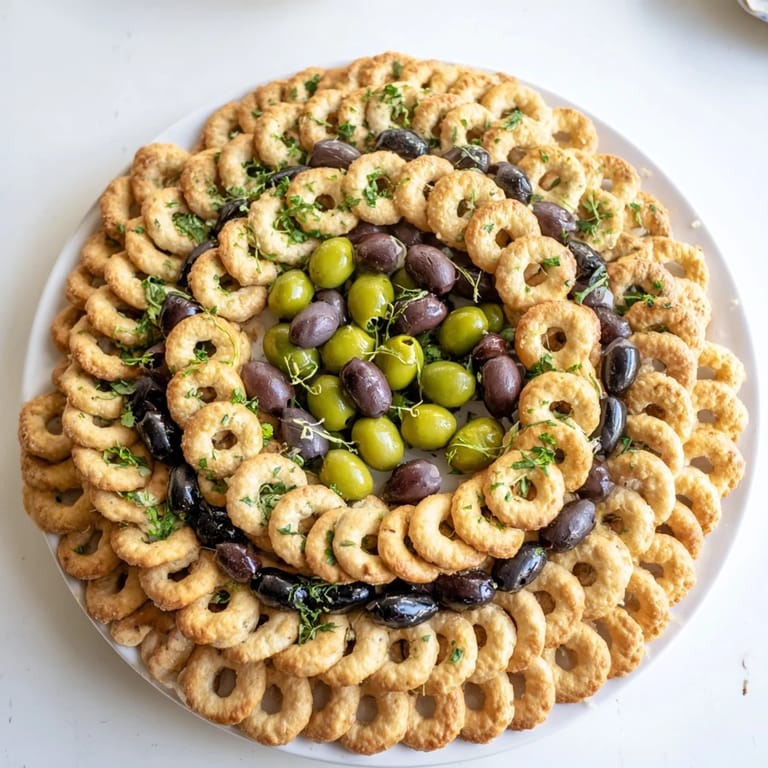
 I stumbled upon the idea for this platter while scrolling through photos of Rome at midnight, procrastinating on actual work, and suddenly thought: why not turn the Colosseum into something you can actually eat? The concept hit me as brilliantly silly—a circular arrangement of crackers mimicking those ancient stone tiers, with olives pooled at the center like tiny gladiators facing off. It felt like the kind of thing that would make people smile before they even took a bite.
The first time I made this for a dinner party, my friend walked in, saw the Colosseum arrangement, and immediately started humming the gladiator theme song from that movie. We both laughed so hard we nearly knocked the platter over. From that moment, I knew this wasn't just an appetizer—it was a conversation starter that broke the ice before anyone sat down.
Ingredients
- Round or Oval Crackers (100–120 g, about 40–50 pieces): These are your arena tiers, so pick crackers sturdy enough to hold up under toppings without snapping. I prefer ones that are slightly thicker and have a gentle curve—they lean outward naturally and create those dramatic overlapping rows.
- Mixed Olives (1 cup, about 150 g, pitted): The gladiators deserve respect, so use a mix of green and black for visual contrast and complexity of flavor. Pitted olives save you (and your guests) from the awkward pit moment mid-conversation.
- Fresh Parsley (2 tbsp, finely chopped, optional): A light sprinkle adds a pop of green and makes the whole thing feel intentional rather than thrown together, plus it gives a fresh herbaceous note.
- Extra Virgin Olive Oil (1 tbsp, optional for drizzling): This isn't just decoration—a thin drizzle brings out the olive's richness and adds a subtle shine that makes the platter photograph beautifully.
- Cubed Cheese (50 g, aged provolone or mozzarella, optional): If you add it, choose aged provolone for a sharper bite that contrasts the salty olives, or creamy mozzarella for something softer.
- Cherry Tomatoes (50 g, halved, optional): These add sweetness, acidity, and a burst of color that breaks up the monotony of green and black olives.
Tired of Takeout? 🥡
Get 10 meals you can make faster than delivery arrives. Seriously.
One email. No spam. Unsubscribe anytime.
Instructions
- Find Your Canvas:
- Grab a large, round serving platter or board—ideally at least 12 inches across so you have room to work with. The shape matters here because it's your Colosseum base, and a circle will feel intentional rather than random.
- Build the Arena Tiers:
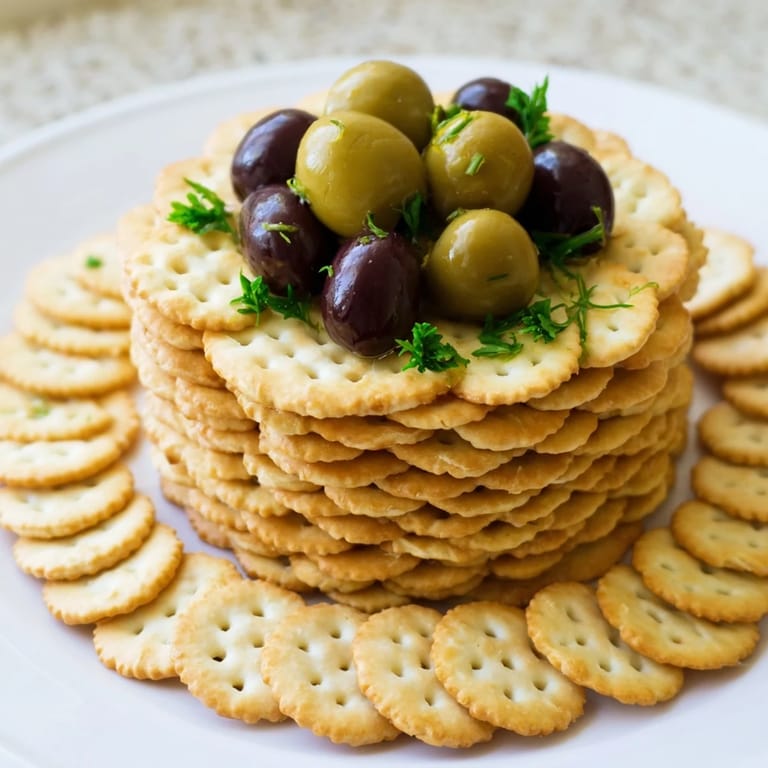
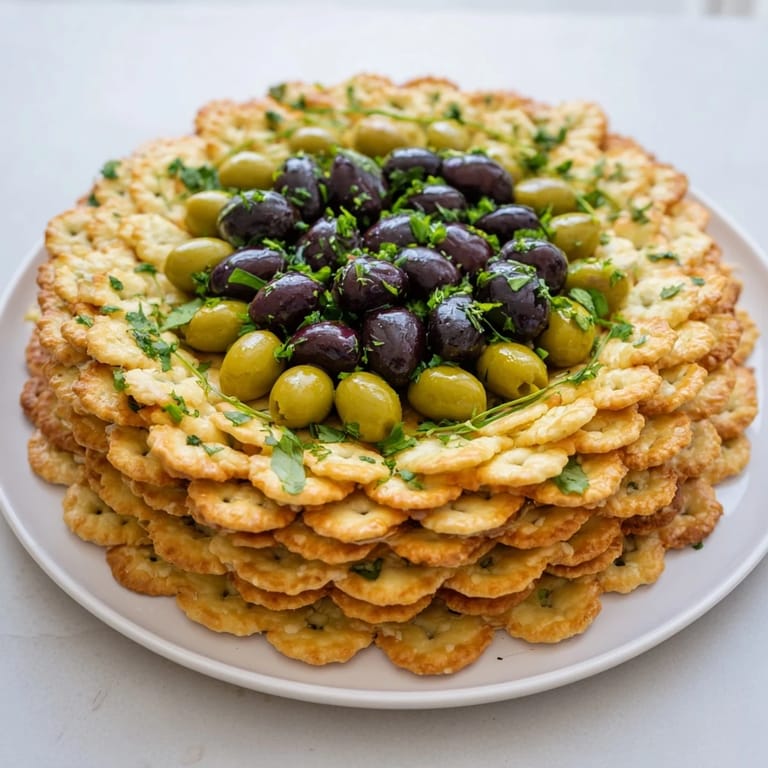
- Stand your crackers upright or slightly overlapping in concentric circles around the edge of the platter, working from the outer rim inward. This is meditative—lean them gently outward so they fan like ancient stone seats. If you have room, build two or three layers rising toward the center, creating actual depth.
- Crown the Center:
- Pile your pitted olives in a generous mound right at the heart of the platter. They should look confident and bold, like they're ready for the arena, not timid.
- Add Optional Details:
- Scatter cubed cheese and halved cherry tomatoes around the olive pile in patches, letting colors cluster rather than spreading them too thin. This gives the eye somewhere to land.
- Finish with Flourish:
- Sprinkle fresh parsley over the olives and drizzle olive oil if using—this final touch transforms it from assembled to crafted. Serve immediately while crackers are at peak crispness.
 Save to Pinterest
 I served this at a casual gathering last summer where someone's kid actually asked what the olives were supposed to be, and when I said gladiators, she spent the entire appetizer hour narrating their epic battles. Her genuine engagement reminded me that food doesn't have to be complicated to spark joy—sometimes it just needs a little playfulness and a fun story.
The Art of the Cracker Circle
The magic of this platter lives in the visual rhythm of overlapping crackers, so don't just scatter them randomly. Start at the outer edge and work your way in, letting each cracker lean slightly outward at roughly the same angle. You'll develop a feel for the spacing after placing the first ring—aim for slight overlaps so you can see the curve, but not so tight that they block each other. The second and third layers, if you add them, should sit between gaps in the layer below, creating actual architectural interest rather than just height.
Playing with Flavor Pairings
While olives are the soul of this platter, the supporting cast matters more than you'd think. If you go the cheese route, aged provolone brings a sharp, slightly funky note that plays beautifully against green olives' briny punch. Mozzarella, on the other hand, is mellower and lets the olives shine. Cherry tomatoes add sweetness that surprises people—it breaks up the salt in a way that makes you reach for another piece. Fresh herbs like parsley or even minced basil scattered on top add fragrance and make the whole thing feel intentional.
Making It Work for Different Diets and Occasions
This platter is inherently flexible, which is why I keep coming back to it. Swap crackers for gluten-free versions without losing any impact, skip the cheese entirely for a vegan spread, or add roasted red peppers, artichoke hearts, and sun-dried tomatoes if you want extra richness. The structure stays the same—concentric circles of something crunchy framing something savory in the middle—so you're really just playing with flavors and textures that complement olives rather than reinventing the wheel.
- Breadsticks or crostini work beautifully if you want something sturdier or more rustic than crackers.
- A drizzle of aged balsamic over the olives adds sophistication and a subtle sweetness that guests always ask about.
- Serve with a crisp Italian white wine or sparkling water with fresh lemon for the perfect pairing.
 Save to Pinterest
 This platter has a way of turning a simple appetizer into a moment—something people remember more for how it felt than what it tasted like. That's the real victory here.
Questions & Answers
- → What type of crackers work best for this platter?
Round or oval crackers that can be arranged upright are ideal. You can substitute with crostini or breadsticks for different textures.
- → Can I make this platter vegan?
Yes. Simply omit the cheese or use plant-based cheese alternatives to keep it vegan-friendly.
- → How should I arrange the crackers for visual effect?
Place the crackers upright or slightly overlapping in concentric layers around the platter edge to resemble the tiered seating of the Colosseum.
- → What olives are best used as 'gladiators'?
Mixed green and black pitted olives work well, offering a balanced taste and vibrant appearance at the platter's center.
- → Are there suggested accompaniments?
Cheese cubes like aged provolone or mozzarella and halved cherry tomatoes add color and richness but are optional.
- → How can I adapt this for gluten-free diets?
Use gluten-free crackers or breads to maintain the platter’s shape and texture while accommodating gluten sensitivities.