 Save to Pinterest
 The first time I made this soup was on a gray, drizzly Tuesday when I needed something to chase away the winter blues. I had a bunch of vegetables wilting in my crisper drawer and some frozen chicken breasts, so I threw everything into a pot not expecting much magic. But when those spring vegetables hit the hot broth, something wonderful happened—the kitchen suddenly smelled like hope and new beginnings. My roommate wandered in, drawn by the aroma, and declared it smelled like a garden after rain. We ended up eating it straight from the pot, standing in the kitchen, while rain tapped against the windows.
Last spring, I made this for my friend Sarah when she was recovering from surgery. She kept talking about how she was craving something comforting but not heavy, something that tasted like life and health. I brought over a steaming pot, and she ate three bowls, telling me between spoonfuls that she could actually feel the nutrients doing their work. Two weeks later, she asked for the recipe, saying it had become her go-to whenever she needed to feel taken care of.
Ingredients
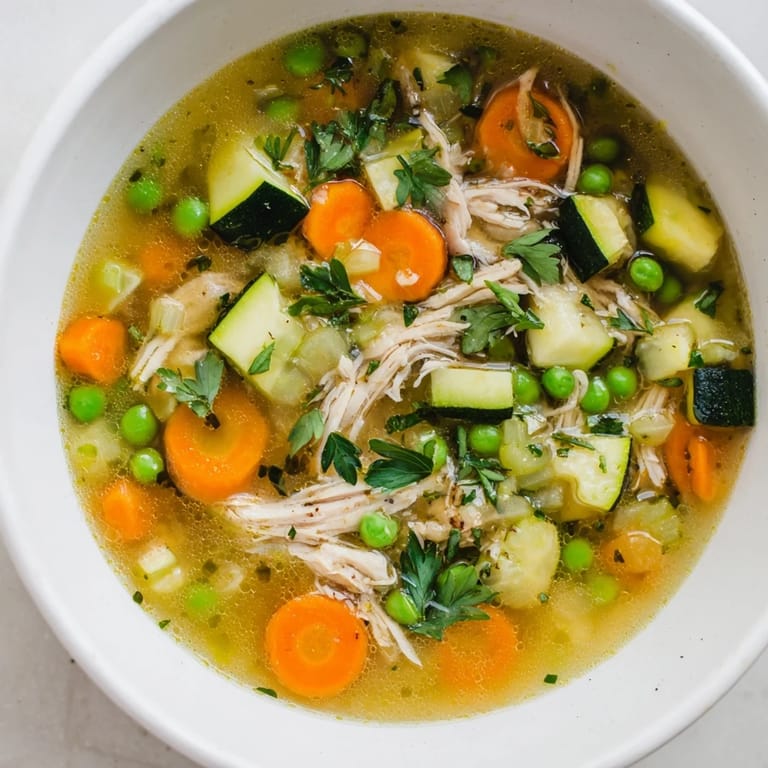
- 2 boneless skinless chicken breasts: These poach beautifully in the broth, becoming incredibly tender and shredding easily
- 2 medium carrots peeled and sliced: They add natural sweetness and hold their shape perfectly in the broth
- 1 medium zucchini diced: Adds a soft, buttery texture that melts into each spoonful
- 1 cup fresh or frozen peas: Little bursts of sweetness that make every bite feel like spring
- 1 medium yellow onion finely chopped: The foundation that creates depth and savory richness
- 2 celery stalks sliced: Essential aromatic that creates that classic soup flavor base
- 2 garlic cloves minced: Add this right before the broth to prevent burning and maximize flavor
- 6 cups low-sodium chicken broth: Control the salt level yourself for a perfectly seasoned soup
- 1 bay leaf: Remove before serving, it adds subtle herbal depth to the broth
- 1 teaspoon dried thyme: Earthy and aromatic, it bridges the gap between comfort and freshness
- 2 tablespoons fresh parsley chopped: Bright and herbaceous, it adds color and freshness at the end
- Salt and freshly ground black pepper: Season generously at the end to bring all flavors together
- Juice of ½ lemon optional: This secret ingredient makes all the flavors pop and taste brighter
Tired of Takeout? 🥡
Get 10 meals you can make faster than delivery arrives. Seriously.
One email. No spam. Unsubscribe anytime.
Instructions
- Build your flavor foundation:
- Heat a drizzle of olive oil in a large pot over medium heat, then add your onion, celery, and carrots. Sauté them for about 5 minutes until they soften and the onion turns translucent—your kitchen should start smelling amazing right about now.
- Wake up the garlic:
- Stir in the minced garlic and cook for just 1 minute until fragrant, being careful not to let it brown or it will turn bitter.
- Create the broth base:
- Pour in the chicken broth, then add your bay leaf and thyme. Bring everything to a gentle boil—this is when the herb aromatics start infusing into the liquid.
- Cook the chicken:
- Add the whole chicken breasts to the boiling broth, reduce heat to low, cover, and let simmer for 15 to 18 minutes. The chicken should be opaque throughout and reach an internal temperature of 165°F.
- Shred the chicken:
- Remove the cooked chicken to a plate and let it cool for a few minutes. Use two forks to pull it apart into satisfying shreds—this texture is so much better than cubed chicken.
- Add the spring vegetables:
- Drop the zucchini and peas into the simmering broth. Cook for 5 to 7 minutes until the vegetables are just tender—you want them to retain some bite and freshness.
- Bring it all together:
- Return the shredded chicken to the pot along with the fresh parsley and lemon juice if using. Taste and season generously with salt and plenty of black pepper until it sings.
- Serve it up:
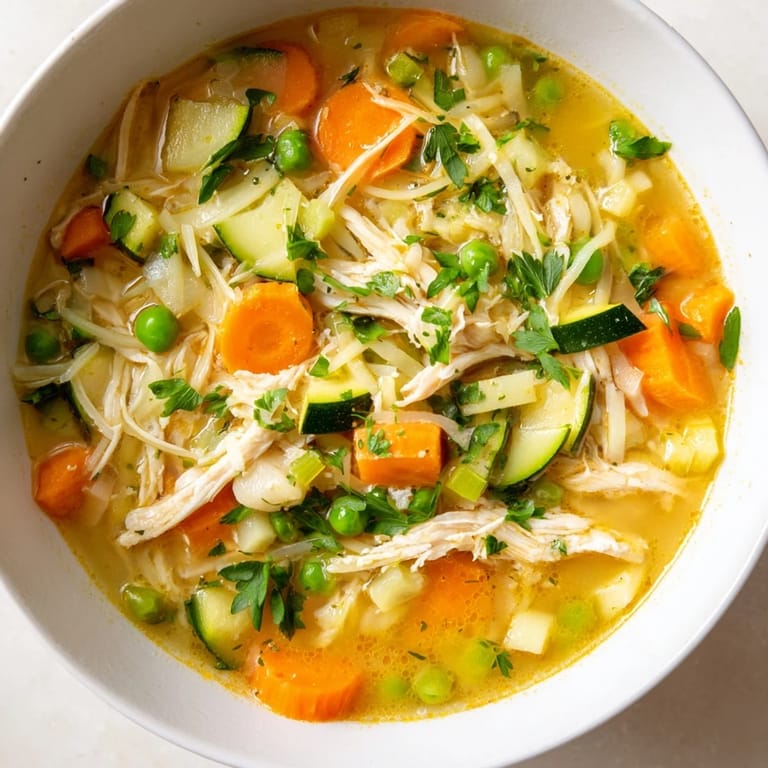
- Fish out and discard the bay leaf, then ladle the hot soup into bowls. Garnish with extra fresh parsley and serve while steam is still rising from each bowl.
 Save to Pinterest
 My grandmother used to say that soup was love you could eat, and making this recipe always brings her words back to me. There is something about the process of building layers of flavor, the way the house fills with warmth, the simple act of stirring a pot and waiting. This soup has become my Sunday reset ritual, a way to gentle myself into the week ahead with something nourishing and kind.
Making It Your Own
One of the things I adore most about this soup is how forgiving it is. I have made it with asparagus instead of zucchini when the grocery store was out. I have added handfuls of baby spinach in the last minute just to wilt it into the broth. Once, when I wanted something more substantial, I stirred in some cooked rice right at the end, and it became a completely different but equally wonderful meal. The recipe is a framework, not a rulebook.
The Perfect Season
While you can make this soup year round, there is something particularly special about it in early spring when the farmers markets start showing those first tender vegetables. The first time I made it with fresh peas straight from the pod, I understood why people go on about spring produce. The sweetness is incomparable, and the soup somehow tastes greener and more alive. That said, frozen peas work beautifully too, so never let seasonality stop you from making this.
Serving Suggestions
This soup shines with a slice of crusty bread for dunking—I love a sourdough that holds up to the broth. A crisp white wine like Sauvignon Blanc cuts through the richness beautifully. For a complete meal, pair it with a simple green salad dressed with lemon vinaigrette.
- Crumble some crackers on top for added texture
- Add a dollop of pesto for an herbal twist
- Serve with a wedge of Parmesan for grating at the table
 Save to Pinterest
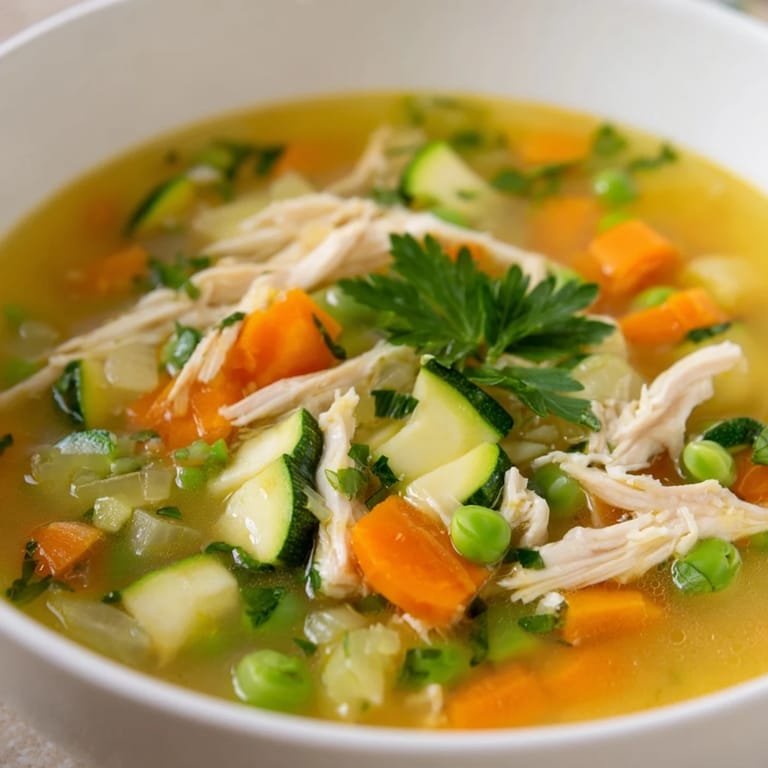
 There is a quiet kind of magic in a pot of soup simmering on the stove, and this one has become my reliable comfort. I hope it brings you the same warmth it has brought to my kitchen table, time and time again.
Questions & Answers
- → Can I make this soup ahead of time?
Yes, this soup stores well in the refrigerator for up to 3 days. Store in an airtight container and reheat gently on the stovetop over medium heat, adding a splash of broth if needed to restore the desired consistency.
- → What vegetables work best as substitutes?
Asparagus, green beans, spinach, and fresh herbs like dill or tarragon are excellent substitutes. You can also add mushrooms, leeks, or snap peas for different seasonal variations while maintaining the soup's light character.
- → How do I keep the chicken tender while cooking?
Keep the heat at a gentle simmer rather than a rolling boil, and cook the chicken breasts only until they reach an internal temperature of 165°F (74°C). Overcooking will make them dry. Shredding immediately after cooking helps preserve moisture.
- → What type of broth should I use?
Low-sodium chicken broth is ideal as it allows you to control the salt level. For deeper flavor, use homemade broth if available. Always check store-bought broth labels for gluten content if following a gluten-free diet.
- → Can I add grains or pasta to make it heartier?
Absolutely. Add cooked rice, small pasta like orzo or ditalini, or barley in the final stages of cooking. This transforms the soup into a more substantial main course while keeping prep time minimal.
- → How do I enhance the flavor without salt?
Lemon juice, fresh herbs like parsley and thyme, and minced garlic add brightness and depth. A bay leaf contributes subtle complexity. Finish with freshly ground black pepper for extra dimension without relying on salt.