 Save to Pinterest
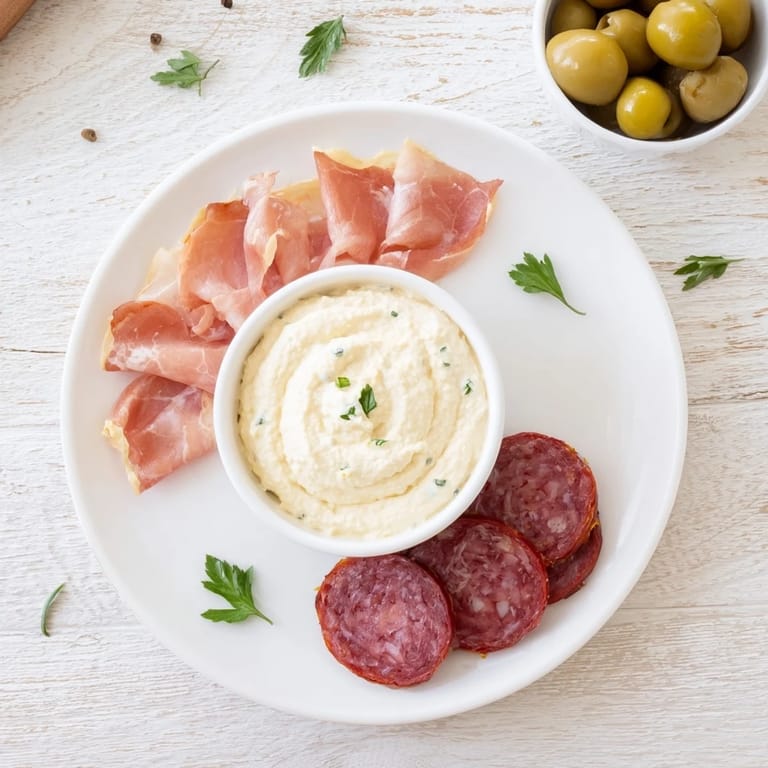
 The Compass Rose came to life one evening when I was staring at my charcuterie board, thinking there had to be a smarter way to present cured meats at a party. Instead of the usual scattered arrangement, I imagined something with direction, intention, and a little bit of theater. The idea of four meats pointing inward toward a creamy dip felt both elegant and practical, like a map that told you exactly where to go for flavor. That night, I sketched it out on paper before even testing it, which is rare for me. The first platter I made was a quiet triumph, and now it's become my go-to when I need something that looks like it took hours but tastes even better than it looks.
I'll never forget the moment a friend's teenage daughter stood in front of my Compass Rose and asked if she could take a picture before eating it. Her mom laughed and said no one ever asks permission to photograph food at our house. That's when I realized this platter had crossed from just being delicious into something worth pausing for, worth documenting. Since then, every time I make it, I set it up a few minutes before people arrive and watch them notice it. That pause, that moment of admiration before the eating begins, is now part of why I love making this dish.
Ingredients
- Smoked salmon: Look for a quality slab that slices easily; the smokiness is your northern flavor story, so don't skimp here.
- Spicy chorizo: Slice it at an angle to show off the red color and add visual interest; the heat balances the richness of everything else on the platter.
- Prosciutto: Paper-thin is non-negotiable—ask the butcher counter to slice it for you if you're not confident with your knife skills.
- Roast beef: Cold roast beef from the deli counter works perfectly and saves you hours of cooking time.
- Cream cheese: Soften it properly so it mixes smoothly without lumps; this is where the dip's silky texture lives.
- Sour cream: It cuts through the richness and adds a subtle tang that keeps people reaching for more.
- Fresh chives: The green brightens the whole dip both visually and in flavor; frozen won't give you that same pop.
- Lemon juice: Fresh is essential here—bottled tastes tired and robs the dip of its personality.
- Pickled vegetables and olives: These fill the gaps and add texture variation so every plate feels complete.
- Fresh herbs: A final scattered garnish of parsley or dill makes the platter look intentional and alive.
Tired of Takeout? 🥡
Get 10 meals you can make faster than delivery arrives. Seriously.
One email. No spam. Unsubscribe anytime.
Instructions
- Make the dip first:
- While your platter sits in front of you, whisk the softened cream cheese with sour cream until you don't see any streaks. Fold in the chives and lemon juice, taste, and adjust salt and pepper—this is where you'll know if your dip is ready.
- Place the dip at center stage:
- Transfer it to a small serving bowl and set it exactly in the middle of your large platter. This is your anchor point for everything else.
- Fan the salmon northward:
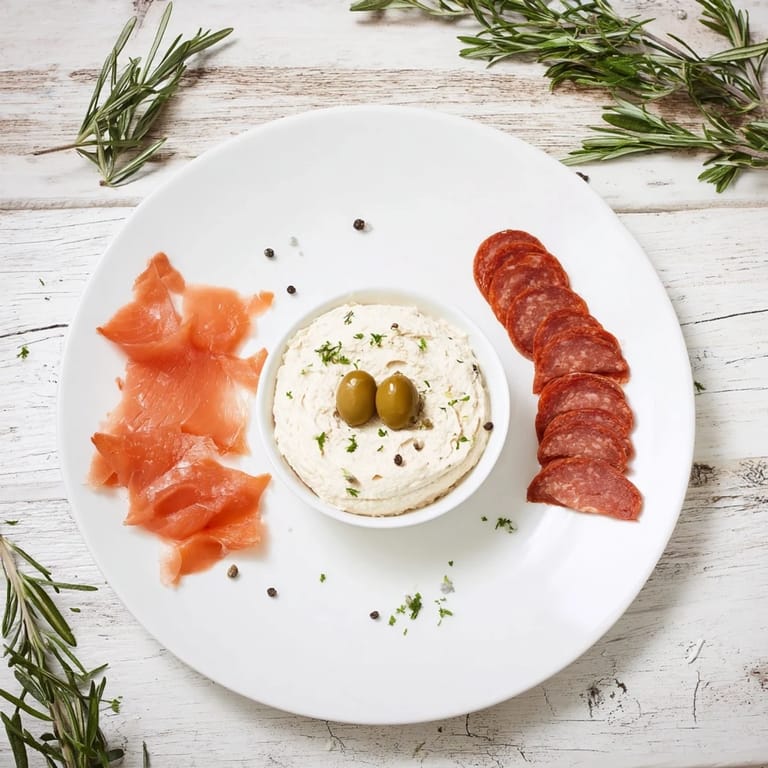
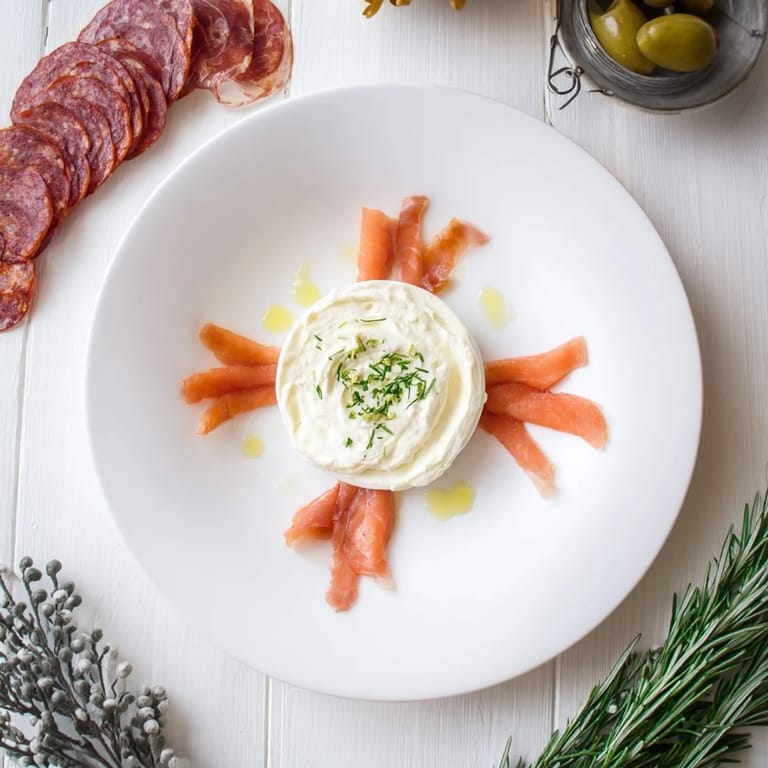
- Lay the salmon slices above the dip in an overlapping fan pattern, all pointing up like they're trying to escape. The pink against the white dip creates an instant focal point.
- Arrange chorizo to the south:
- Below the dip, place the chorizo slices in a fan pointing downward. The red of the chorizo against the cream dip creates visual balance.
- Lay prosciutto to the east:
- To the right of the dip, arrange the prosciutto in a fan pattern pointing right. Its delicate appearance contrasts beautifully with the roast beef opposite it.
- Position roast beef to the west:
- To the left, fan the roast beef pointing left. The dark color grounds the platter and rounds out your compass.
- Fill the gaps strategically:
- Nestle pickled vegetables and olives in the spaces between each meat point, filling negative space without crowding. This is the moment where the platter goes from intentional to inviting.
- Finish with fresh herbs:
- Scatter parsley or dill across the whole arrangement as if you're painting with green. This final step transforms it from food into art.
 Save to Pinterest
 My favorite memory tied to this dish happened when my mother-in-law came for lunch and I served it as a starter. She studied it for a long moment, then said it was the first appetizer she'd seen in years that made her feel like she was being treated rather than rushed through. We ended up talking for an hour before even touching the main course, using the platter as our conversation centerpiece. Food that creates space for connection instead of just checking a box—that's when I knew this wasn't just a clever presentation trick.
Why the Compass Works
There's something about four directions that feels complete and balanced on a platter. It breaks the monotony of a traditional charcuterie board and gives guests a framework for how to eat, which sounds silly until you realize most people don't know where to start with random arrangements. The dip at the center becomes the destination rather than an afterthought. What started as a visual concept became a practical way of building a plate that tastes cohesive without feeling planned.
Customizing Your Compass
The beauty of this structure is that it accommodates substitutions without losing its soul. Smoked trout in place of salmon, pancetta instead of prosciutto, beef carpaccio swapping for roast beef—each change creates a different flavor story while keeping the visual integrity intact. I've made versions for pescatarians by using smoked mackerel and white fish, and the compass still holds. The dip can shift too; a beet and horseradish version adds earthiness, while a dill and lemon variation brings brightness. The form stays the same, but the flavors travel wherever your guests need them to go.
Serving Moments That Matter
Timing affects how people experience this platter more than you might expect. If you set it out fifteen minutes before eating, the room's warmth will soften the cream cheese dip ever so slightly, making it more spreadable on crackers. If you prefer it firmer, keep it coming straight from the fridge and refresh it halfway through serving. Some of my best entertaining moments happened when I paired this with a sparkling wine that cut through the richness, or a light red that echoed the earthiness of the roast beef. The Compass Rose isn't just about the food on the platter—it's about creating a moment where hospitality and flavor speak the same language.
- Make the dip the morning of if you're short on time, and simply re-whip it gently before serving to restore its silky texture.
- If you're worried about meats drying out, cover the platter loosely with plastic wrap until the last possible moment before guests arrive.
- The compass works on any size platter, so scale the portions up for a crowd or down for an intimate dinner without losing the visual impact.
 Save to Pinterest
 This platter has taught me that the best entertaining happens when you balance visual impact with genuine simplicity. You're not cooking here—you're curating, arranging, and creating a moment worth remembering. That's all any of us really want from food, isn't it?
Questions & Answers
- → What meats are featured in the Compass Rose platter?
The platter includes smoked salmon, spicy chorizo, thinly sliced prosciutto, and roast beef, each placed to represent the four compass directions.
- → How is the central dip prepared?
The dip combines cream cheese, sour cream, fresh chives, lemon juice, salt, and pepper, whipped until smooth for a creamy center.
- → Can the meats be substituted for dietary preferences?
Yes, cured or roasted meats can be swapped based on preference or dietary needs, maintaining the platter’s balance of flavors.
- → What garnishes accompany the platter?
Pickled vegetables, assorted olives, and fresh herbs like parsley and dill are used to fill the spaces and enhance color and aroma.
- → What beverage pairs well with this meat assortment?
A crisp white wine or a light-bodied red complements the variety of meats, enhancing the overall tasting experience.