 Save to Pinterest
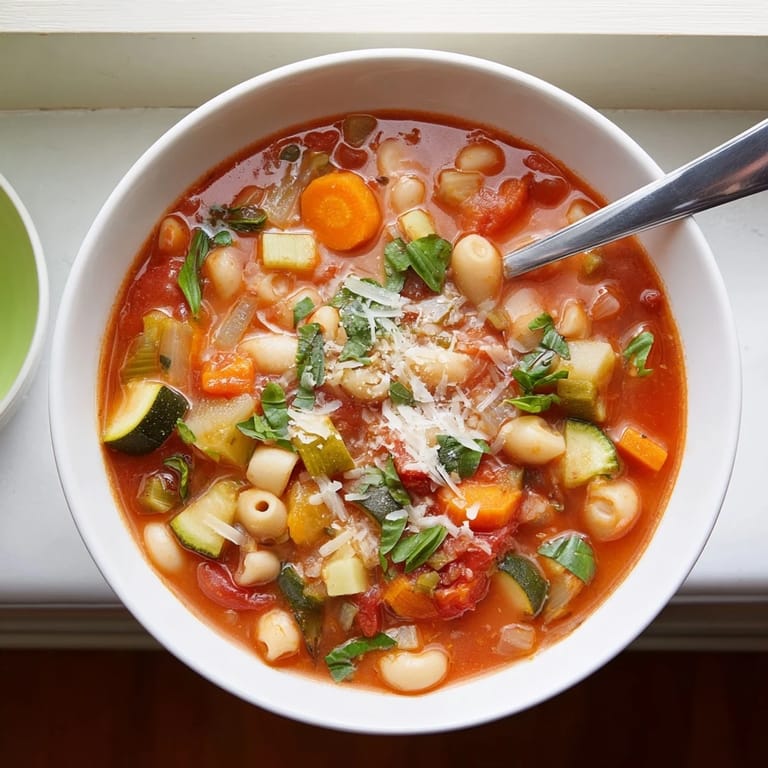
 The first time I made minestrone, I was snowed in during a surprise March blizzard with nothing but a random assortment of vegetables from the back of my crisper drawer. That improvisation turned into the version I still make, trusting whatever the season offers instead of following a strict formula. Something magical happens when you let the vegetables dictate the soup rather than the other way around.
My Italian neighbor Elena caught me adding all the vegetables at once and gently corrected me, explaining that building flavors in stages is what makes minestrone sing. Now I take that extra few minutes to sauté each wave of vegetables, and the difference is undeniable. She was right about so many kitchen things.
Ingredients
- 2 tablespoons olive oil: The foundation that carries all the aromatics from the garlic and onion into every spoonful
- 1 medium onion, finely chopped: Forms the aromatic base that gives the soup its depth
- 2 cloves garlic, minced: Add it right after the onion so it mellows into the oil rather than burning
- 2 medium carrots, diced: Their natural sweetness balances the tomatoes beautifully
- 2 celery stalks, diced: Provides that savory backbone that Italian cooking relies on
- 1 medium zucchini, diced: Holds its shape well and absorbs the broth like little sponges
- 1 medium potato, peeled and diced: Thickens the soup naturally as it breaks down slightly during cooking
- 1 cup green beans, cut into 1-inch pieces: Add a fresh snap and bright color to the bowl
- 1 can (14 oz / 400 g) diced tomatoes, with juices: The acidity cuts through the richness of the olive oil
- 4 cups (1 liter) vegetable broth: Use a good quality one since it becomes half the flavor profile
- 2 cups water: Prevents the broth from becoming too intense and lets vegetable flavors shine
- 1 can (15 oz / 425 g) cannellini beans, drained and rinsed: Creamy and substantial, they make this soup a complete meal
- 3/4 cup small pasta: Ditalini or elbows work perfectly but any tiny shape will do
- 1 teaspoon dried oregano: Earthy and robust, it holds up through long simmering
- 1 teaspoon dried basil: Sweet and herbaceous, it complements the oregano without overpowering
- 1 bay leaf: The secret ingredient that adds subtle depth people notice but cannot quite identify
- Salt and freshly ground black pepper, to taste: Taste and adjust gradually since the broth already contains sodium
- 1/4 cup chopped fresh parsley: Brightens everything up just before serving
- 2 tablespoons chopped fresh basil (optional): Worth adding if you have it for that final burst of summer
- Freshly grated Parmesan cheese (optional): The salty finish that brings all flavors together
Tired of Takeout? 🥡
Get 10 meals you can make faster than delivery arrives. Seriously.
One email. No spam. Unsubscribe anytime.
Instructions
- Build your aromatic foundation:
- Heat olive oil in a large pot over medium heat, add onion and garlic, and sauté for 2 to 3 minutes until fragrant and translucent, taking care not to let the garlic brown
- Soften the harder vegetables:
- Add carrots, celery, zucchini, potato, and green beans then sauté for 5 to 6 minutes until slightly softened and coated in that aromatic oil
- Create the soup base:
- Stir in diced tomatoes with their juices, vegetable broth, water, dried oregano, dried basil, bay leaf, salt, and pepper, then bring everything to a gentle boil
- Let it develop:
- Reduce heat to a simmer, cover, and cook for 15 minutes so the vegetables release their flavors into the liquid
- Add substance:
- Stir in cannellini beans and pasta then continue simmering uncovered for 10 to 12 minutes until the pasta is tender and vegetables are perfectly cooked through
- Finish with fresh herbs:
- Remove and discard the bay leaf, stir in fresh parsley and basil, then adjust seasoning as needed before serving
 Save to Pinterest
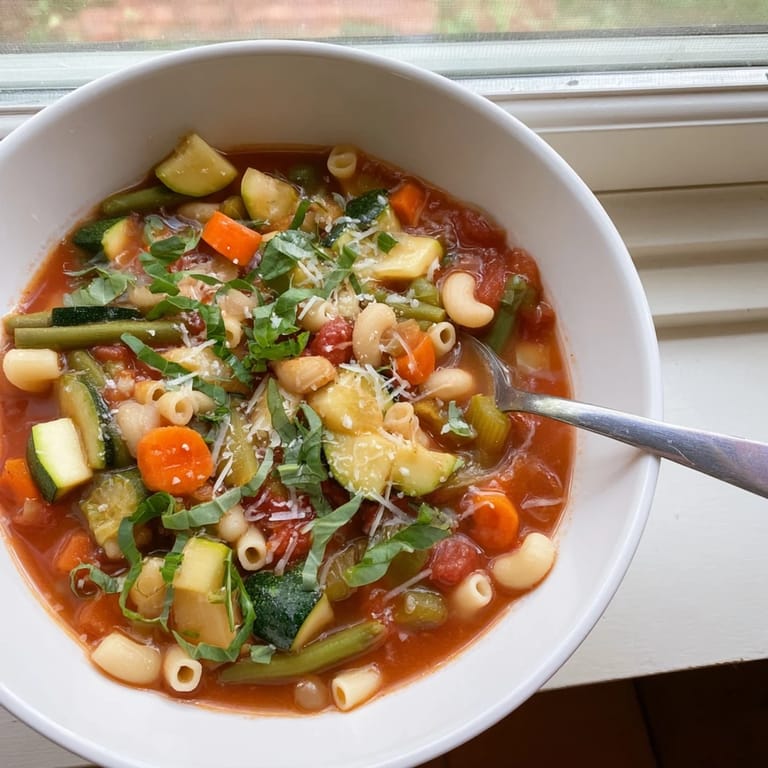
 This recipe became my go-to when my daughter was sick and nothing else sounded good to her. She asked for it three days in a row, and I realized then that a truly good vegetable soup is one of the most comforting things you can put on a table.
Making It Your Own
Seasonal vegetables work beautifully here so use spinach or kale in winter, swap in fresh tomatoes in summer, or add chopped cabbage in fall for heartiness. The beauty of minestrone is that there is no wrong way to make it as long as you cook with intention and taste as you go.
Serving Suggestions
A thick slice of crusty Italian bread for dipping is almost mandatory and transforms this from a simple soup into a proper meal. A glass of Chianti cuts through the tomatoes and olive oil while bringing out the sweetness of the vegetables.
Storage & Reheating
This soup keeps beautifully in the refrigerator for up to four days and actually improves as the flavors meld together. Freeze portions in airtight containers for up to three months, leaving a bit of space since liquids expand when frozen.
- Reheat gently over medium low heat, adding a splash of water or broth if the pasta has absorbed too much liquid
- The soup may thicken considerably in the fridge which is completely normal and just means the flavors have concentrated
- Avoid boiling when reheating or the pasta might break apart and vegetables become mushy
 Save to Pinterest
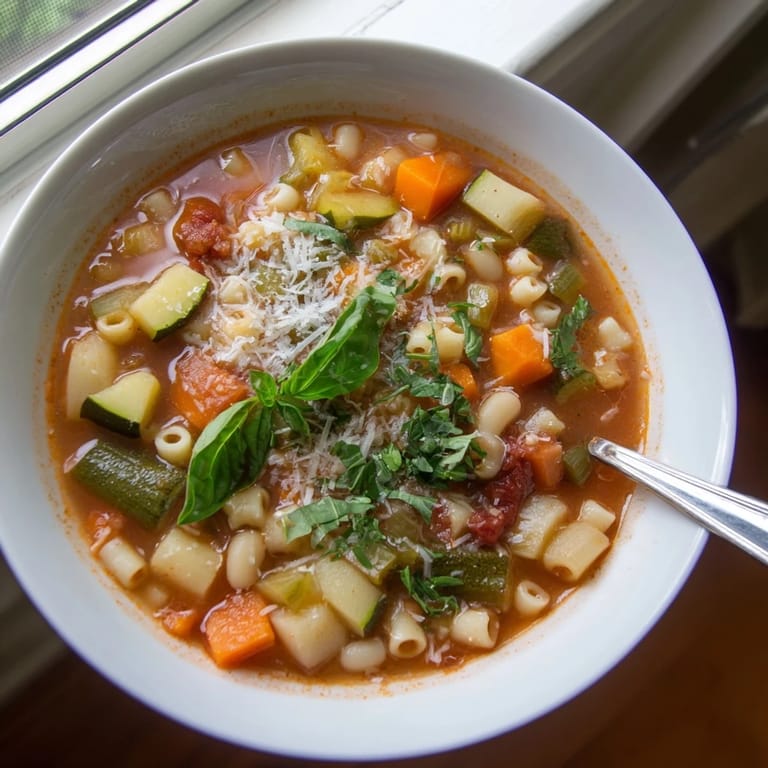
 There is something deeply satisfying about a soup that uses whatever you have on hand and still tastes like it came from a kitchen in Italy. Keep this one in your back pocket for days when you need comfort in a bowl.
Questions & Answers
- → Can I make minestrone soup vegan?
Yes, simply omit the Parmesan cheese garnish or use a plant-based alternative. The soup itself is completely vegan-friendly.
- → What vegetables work best in minestrone?
Traditional vegetables include carrots, celery, zucchini, potatoes, and green beans. You can also add spinach, kale, cabbage, or whatever seasonal produce you have available.
- → Can I freeze this soup?
The soup freezes well for up to 3 months. For best results, slightly undercook the pasta before freezing, as it will continue cooking when reheated.
- → What pasta shape works best?
Small pasta shapes like ditalini, elbow macaroni, or small shells work perfectly. They hold their shape well and are easy to spoon up with the vegetables.
- → How long does leftover soup keep?
Stored in an airtight container in the refrigerator, the soup will keep for 4-5 days. The flavors often develop and improve after a day or two.
- → Can I add meat to this soup?
Absolutely. Pancetta or bacon added with the onions provides a savory depth. You can also add shredded chicken or Italian sausage for extra protein.