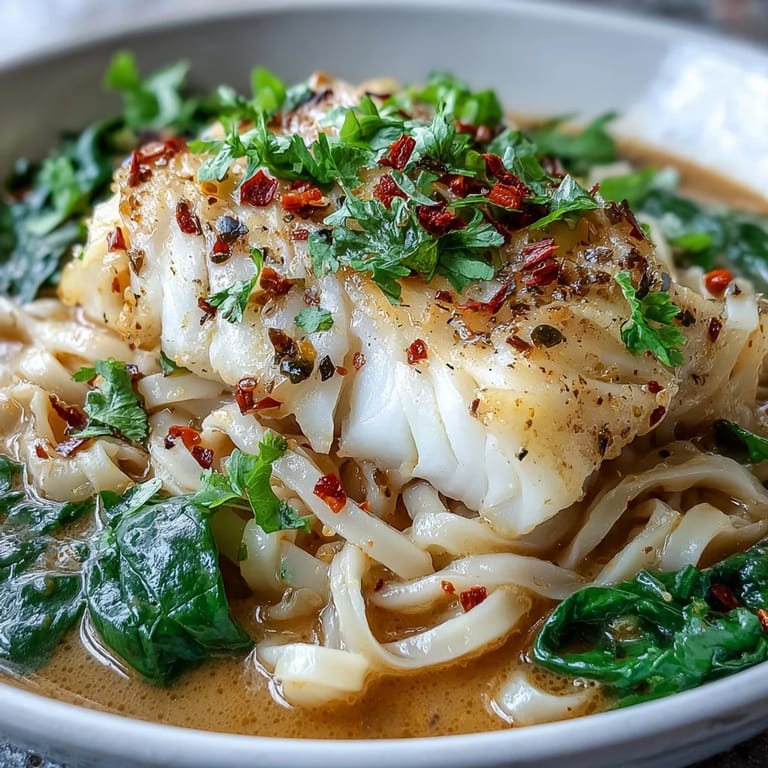
 Save to Pinterest
 The smell of ginger hitting hot oil always clears my head. I threw this together on a Tuesday night when I had four fillets of cod in the fridge and nothing planned. The coconut milk can in the pantry caught my eye, and suddenly I was building a broth instead of roasting another plain piece of fish. It turned into one of those accidental wins that I now make on purpose.
I made this for a friend who swore she hated fish. She finished the whole bowl and asked for the recipe before she left. The trick was the broth, it was warm and a little sweet, with just enough spice to keep things interesting. She never tasted fishiness, just comfort. Now she texts me when cod goes on sale.
Ingredients
- Cod fillets: Use skinless and boneless pieces around 150 g each so they cook evenly and stay tender when poached.
- Neutral oil: Canola or sunflower works best because they let the other flavors shine without adding their own taste.
- Onion: Slice it thin so it softens quickly and melts into the broth without chunky bites.
- Garlic and ginger: Mince and grate them fresh for the most fragrant base, dried versions fall flat here.
- Red chili: Slice it thin and remove seeds if you want warmth without too much heat.
- Red curry paste: This adds depth and a little spice, blooming it in the pan wakes up all the oils inside.
- Coconut milk: Use a full fat can for creaminess, light versions make the broth taste watery.
- Fish or vegetable stock: Either works, fish stock adds more body but vegetable keeps it lighter.
- Fish sauce and soy sauce: Together they build umami and balance the sweetness of the coconut.
- Lime juice: Freshly squeezed brightens everything and cuts through the richness right before serving.
- Udon noodles: Fresh ones have the best chew, but frozen works if you cook them just until tender.
- Baby spinach: It wilts in seconds and adds color without any bitterness.
- Carrot: Julienne it thin so it stays crisp and cooks in the same time as the greens.
- Shiitake mushrooms: Slice them and they soak up the broth while adding earthy flavor.
- Spring onions and coriander: Save these for the top so they stay fresh and add a bright finish.
Tired of Takeout? 🥡
Get 10 meals you can make faster than delivery arrives. Seriously.
One email. No spam. Unsubscribe anytime.
Instructions
- Build the aromatics:
- Heat the oil in a large saucepan over medium and add the sliced onion. Let it soften for 3 minutes, then stir in garlic, ginger, and chili and cook until the kitchen smells amazing, about 1 minute.
- Bloom the curry paste:
- Stir in the red curry paste and cook for 1 minute, letting it sizzle and release its oils. This step makes all the difference in flavor depth.
- Make the broth:
- Pour in the coconut milk and stock, then bring to a gentle simmer. Add fish sauce, soy sauce, and lime juice, then taste and adjust if needed.
- Poach the cod:
- Slide the cod fillets gently into the simmering broth. Cover and let them poach for 6 to 8 minutes until they turn opaque and flake easily with a fork.
- Cook the noodles:
- While the fish poaches, cook the udon noodles in a separate pot according to package directions. Drain and divide them among 4 bowls.
- Add the vegetables:
- Drop the spinach, carrots, and shiitake mushrooms into the broth. Simmer for 2 to 3 minutes until just tender but still bright.
- Assemble the bowls:
- Carefully lift the poached cod out and set aside. Ladle the hot broth and vegetables over the noodles in each bowl.
- Finish and serve:
- Top each bowl with a piece of cod, then garnish with spring onions and coriander leaves. Serve right away while everything is hot.
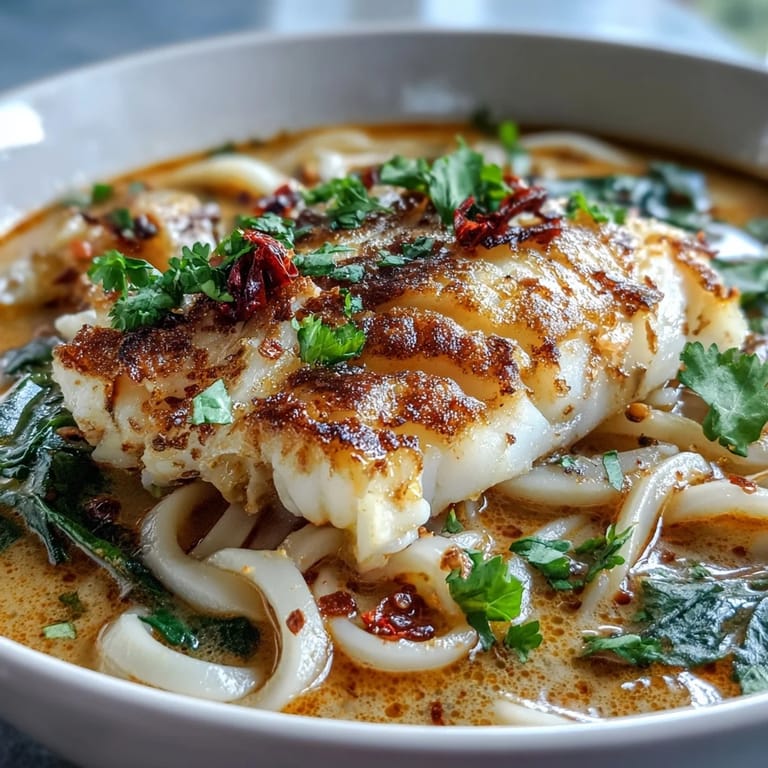 Save to Pinterest
 This became my go to when I need to feed people without stress. Everyone gets their own bowl, it looks impressive, and I am not stuck at the stove while they wait. One friend always asks if I made extra broth because she drinks it straight from the bowl. I started making double just for her.
Swapping the Fish
Cod is mild and holds together well, but haddock or halibut work just as nicely. I have even used salmon when I wanted something richer, though it changes the vibe a little. Just make sure whatever you choose has firm flesh so it does not fall apart when you lift it out of the broth. Avoid anything too delicate like sole, it will turn to mush.
Making It Hotter or Milder
If you love heat, add an extra chili or drizzle chili oil on top before serving. I keep a jar of chili crisp on the table so everyone can adjust their own bowl. For a milder version, skip the chili entirely and use less curry paste. The ginger and garlic still give plenty of flavor without any burn.
Storing and Reheating
This is best eaten fresh, but leftovers keep for a day in the fridge if you store the components separately. The broth reheats gently on the stove, and you can poach fresh fish or just warm up the cooked pieces. Do not store the noodles in the broth or they will turn soggy and bloated.
- Reheat broth slowly over low heat to avoid curdling the coconut milk.
- Cook fresh noodles if possible, they only take a few minutes.
- Add fresh herbs at the end so they stay bright and do not wilt.
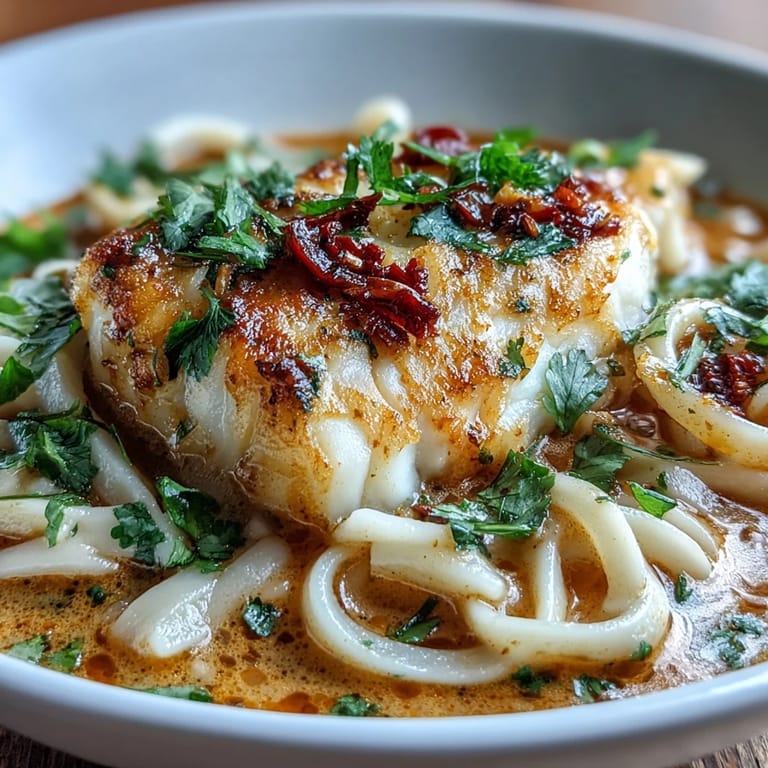 Save to Pinterest
 This bowl has become my answer to cold nights and long days. It is warm, filling, and always tastes like I put in more effort than I did.
Questions & Answers
- → Can I use a different type of fish for this dish?
Yes, you can substitute cod with other firm white fish such as haddock, halibut, or sea bass. Ensure the fish is fresh and adjust poaching time slightly depending on the thickness of the fillets.
- → How do I make this dish gluten-free?
Replace udon noodles with gluten-free rice noodles and use tamari instead of soy sauce. Always verify that your fish sauce and curry paste are certified gluten-free by checking the labels.
- → Can I prepare the broth in advance?
Yes, you can make the coconut broth up to 2 days ahead and store it in the refrigerator. Reheat gently before poaching the fish and adding the vegetables to ensure everything stays fresh and vibrant.
- → What can I substitute for udon noodles?
Rice noodles, soba noodles, or even ramen noodles work well as alternatives. Cook according to package instructions and adjust based on your dietary preferences or what you have available.
- → How spicy is this dish and can I adjust the heat level?
The heat level is moderate and comes mainly from the red curry paste and optional fresh chili. To reduce spiciness, use less curry paste or omit the chili. For more heat, add chili oil or extra sliced chilies when serving.
- → What vegetables can I add or substitute?
Bok choy, snap peas, bell peppers, or bean sprouts are excellent additions or substitutions. Add heartier vegetables earlier in the simmering process and delicate greens just before serving to maintain texture.