 Save to Pinterest
 There's something about arranging food on a wooden board that feels like creating a tiny edible landscape. Last summer, I was hosting a casual lunch on my apartment's narrow balcony, and rather than fussing over a hot stove, I decided to build this mezze platter instead. The moment I stepped back and looked at all those jewel-toned vegetables catching the afternoon light, I realized I'd stumbled onto something better than a traditional sit-down meal. It became this beautiful, no-stress way to feed people while keeping myself present and relaxed.
I made this for my neighbor one afternoon when she'd had a rough week at work, and I'll never forget how she just sat there picking through the olives and cheese, slowly unwinding. The platter somehow gave her permission to take her time, to nibble without obligation. That's when I understood that this isn't just food; it's an invitation to slow down.
Ingredients
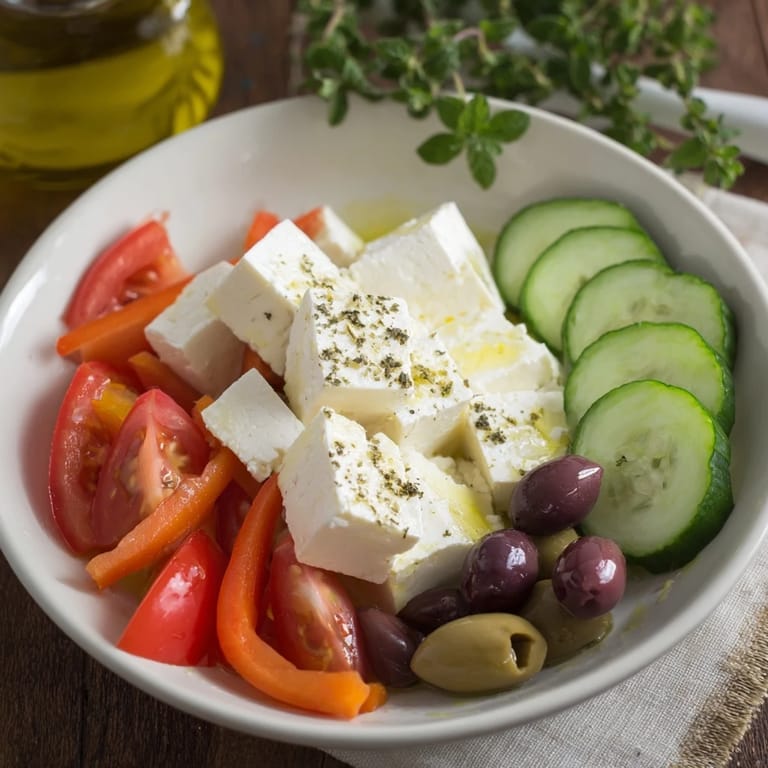
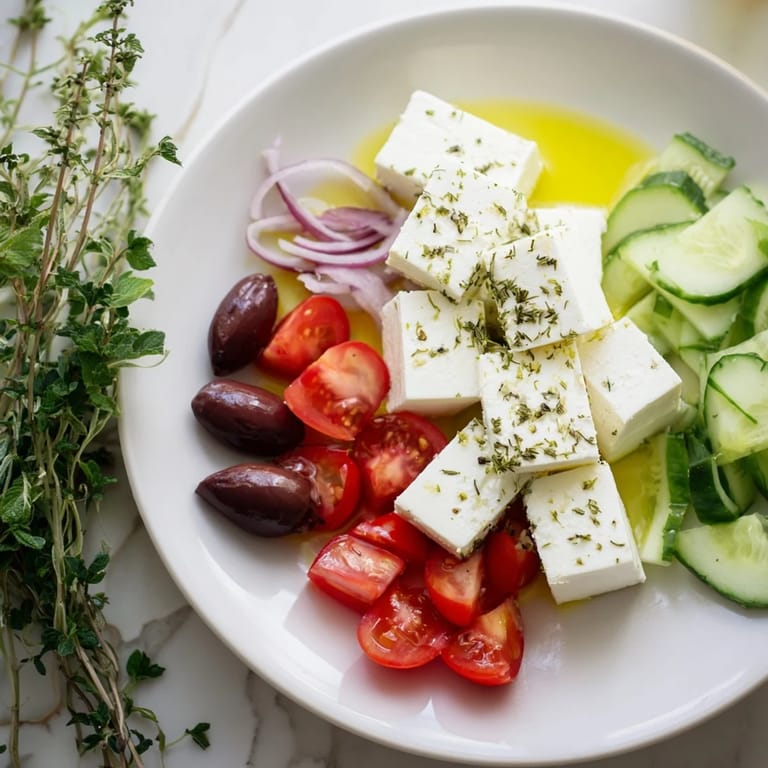
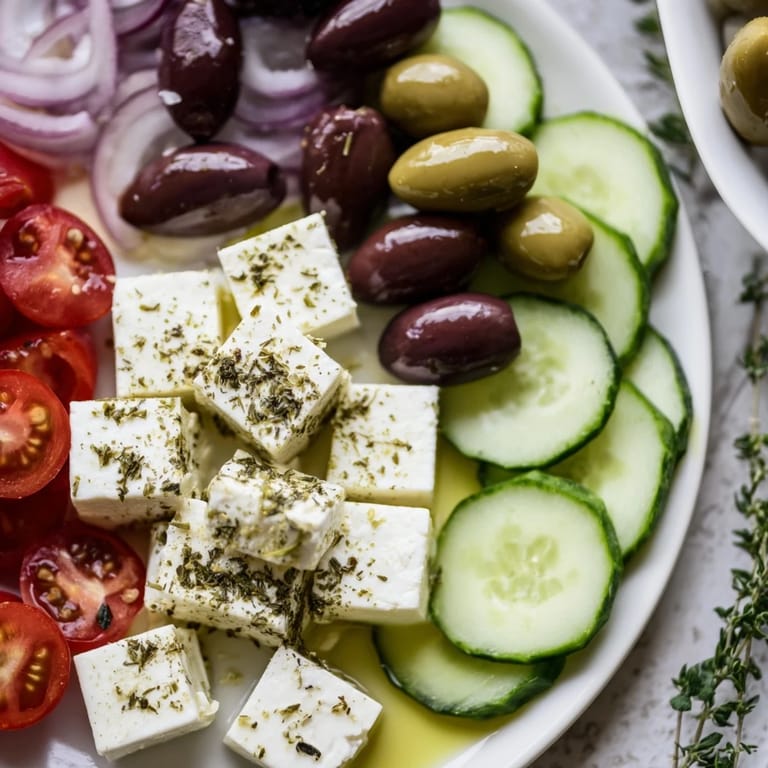
- Feta cheese: The salty, crumbly anchor that ties everything together; cube it generously and don't worry about perfect shapes.
- Fresh mozzarella balls: These little pillows are mild and creamy, and they're worth finding at a decent market rather than settling for rubbery versions.
- Cucumber: Slice it into fat rounds so it has presence on the board; thin slices disappear too quickly.
- Cherry tomatoes: Halving them prevents them from rolling around and makes them easier to pair with other bites.
- Yellow bell pepper: The brightness matters here; it's not just a vegetable, it's part of the visual story.
- Red onion: Slice it thin and don't be shy; its sharp bite is what keeps everything from feeling one-note.
- Radishes: They add a crisp, peppery note that most people don't expect, and their hot-pink color is a bonus.
- Kalamata olives: Pit them yourself if you can; the flavor is richer and you control the brine.
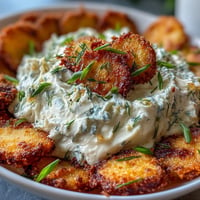
- Hummus and tzatziki: These are your bridges between vegetables and bread, and they should be room temperature, not cold from the fridge.
- Extra virgin olive oil: A good one makes all the difference; this isn't the time to use the cheap bottle.
- Fresh herbs: Mint and dill are the final flourish that transforms a platter into an experience.
Tired of Takeout? 🥡
Get 10 meals you can make faster than delivery arrives. Seriously.
One email. No spam. Unsubscribe anytime.
Instructions
- Set your stage:
- Place your platter or board on a clean surface and take a breath. Start with the cheeses, positioning feta cubes and mozzarella balls in separate clusters, leaving breathing room between them.
- Build with vegetables:
- Fan out cucumber slices, halved tomatoes, pepper strips, onion slices, and radishes in small groups, thinking about color balance and spacing like you're composing a painting.
- Add the olives:
- Pile them in a small bowl or directly on the board; they should feel like a small discovery when someone reaches for them.
- Settle the dips:
- Spoon hummus and tzatziki into small bowls and nestle them among the vegetables where they feel natural, not forced.
- Finish with oil and seasoning:
- Drizzle olive oil over the feta and vegetables lightly, then scatter sea salt and cracked black pepper across everything. Go easy; you want spots of seasoning, not a heavy hand.
- Crown with herbs:
- Tuck mint and dill sprigs into gaps and across the top, making sure they catch the light and add that sun-kissed feeling.
- Serve immediately:
- Set out the crispbreads or pita wedges on the side and let everyone build their own adventure.
 Save to Pinterest
 What started as a practical solution to entertaining without cooking has become my favorite way to gather people together. There's something profoundly generous about saying, 'Build what you want, take your time, enjoy your day' without any fuss or performance.
The Art of Arrangement
This might sound precious, but the platter's beauty isn't accidental. Think of yourself as an artist, not a cook. You're playing with contrast—the deep green of olives against cream-colored feta, the bright yellow peppers against purple onion. Odd numbers and asymmetry feel more natural than military precision. Let clusters of the same ingredient have gaps between them so your eye can rest.
Making It Your Own
The skeleton of this platter is flexible, which is part of its charm. I've made versions with roasted red peppers, thin slices of prosciutto, candied nuts, and preserved lemon. One winter evening, I added pomegranate seeds and pomegranate molasses to the hummus, and it felt like a completely different meal. The goal isn't to rigidly follow a template; it's to build something that reflects what you have and what you're craving.
Pairing and Timing
This works beautifully as an appetizer before a main course, but I've also served it as a light lunch with thick slices of bread and a bottle of cold wine. The best time to make it is when you want to entertain without stress, or when you're sitting outside and the weather is so good you'd rather not spend time cooking. It's a mood as much as a meal.
- A chilled Sauvignon Blanc or crisp rosé is the natural pairing, but even sparkling water with fresh lemon feels right.
- If you're making this ahead, prep all your vegetables and keep them in the fridge, then assemble on the platter no more than an hour before serving.
- Remember that this is meant to be shared and lingered over, not rushed through.
 Save to Pinterest
 This platter has taught me that some of the best meals aren't about technique or complexity. They're about generosity, good light, and the simple pleasure of feeding people things they love.
Questions & Answers
- → What cheeses are used in this mezze platter?
The platter features cubes of feta cheese and fresh mozzarella balls (bocconcini), combining creamy and tangy textures.
- → How can I make this platter gluten-free?
Use gluten-free crispbreads or pita wedges to keep the platter naturally gluten-free without compromising flavor or texture.
- → Are there vegetarian-friendly options included?
Yes, all ingredients are vegetarian. For vegan alternatives, substitute plant-based feta and omit mozzarella.
- → What herbs enhance the flavor and presentation?
Fresh mint and dill sprigs are used in garnishing to add bright herbal notes and a fresh, sunlit appearance.
- → Can I prepare this mezze platter in advance?
For the best freshness and vibrant appearance, assemble just before serving. Prepare ingredients ahead to save time.