 Save to Pinterest
 I'll never forget the moment I decided to stop arranging charcuterie boards like everyone else. It was at a gallery opening, watching a friend's abstract art installation, when I thought: why can't food be art too? That night, I rushed home and started playing with angles, bold colors, and dramatic lines on my largest serving board. The Zig-Zag Lightning Strike was born—a platter so visually arresting that people literally gasped when I brought it to the table. Now, whenever I need to impress without spending hours cooking, I reach for this arrangement. It's become my signature move at dinner parties.
My neighbor brought this platter to our last potluck and suddenly, everyone was taking photos instead of diving straight for the food. Kids who normally ignore vegetables were reaching for the colorful pepper strips. That's when I realized the magic wasn't just in the taste—it was in making people curious about what they were eating. The zig-zag pattern somehow made even simple cucumbers feel exciting.
Ingredients
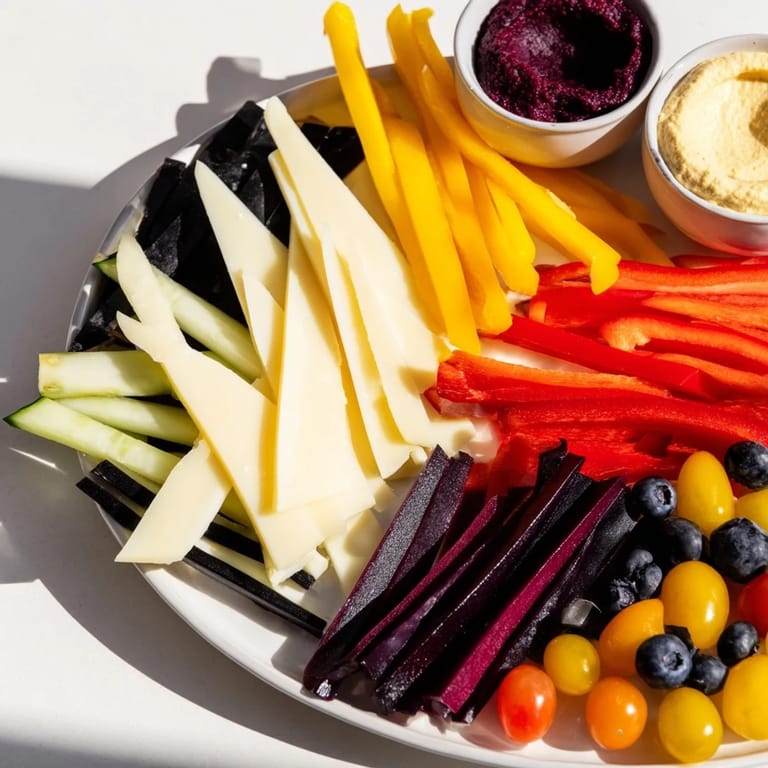
- Red and yellow bell pepper strips: These form the backbone of your lightning bolt—the reds and yellows create that intense color contrast that makes the whole board pop. Cut them into long, aggressive strips rather than soft rounds; the angles are what make this design sing.
- Cucumber sticks: The pale green adds breathing room between the bolder colors. They stay crisp for hours if you keep them slightly cool, and their mild flavor balances the sharpness of the cheeses.
- Purple carrots: If you can find these, they're worth seeking out. Regular orange carrots work perfectly fine, but the purple ones add an unexpected richness to the color story and taste slightly earthier.
- Sharp white cheddar, sliced thin: This is your main cheese player—slice it into angular shards that catch the light. The sharpness cuts through all the fresh vegetables beautifully and won't get lost on the board.
- Black wax gouda: The dramatic dark coating makes this cheese look almost edible art. The nutty flavor and those dark angular slices are what push this from nice-looking to genuinely stunning.
- Blueberries and golden cherry tomatoes: These are your jewels—scatter them along the zig-zag line to create little moments of color that make people want to reach in and grab them.
- Beet hummus and classic hummus: Place these in small bowls at key points. The beet hummus is particularly gorgeous and adds another layer of that bold color play you're going for.
- Blue corn tortilla chips and black sesame rice crackers: These reinforce the angular geometry and add crunch. The dark colors of the black sesame crackers especially echo the gouda and add visual continuity.
Tired of Takeout? 🥡
Get 10 meals you can make faster than delivery arrives. Seriously.
One email. No spam. Unsubscribe anytime.
Instructions
- Wash, prepare, and cut everything sharp:
- This is where the magic starts. Take your time here—wash all your produce, peel what needs peeling, and cut everything into long, angular pieces. Think aggressive angles, not soft curves. Your vegetables should look like they're pointing somewhere with purpose. This takes about 10 minutes, and it's where you set the whole visual tone.
- Find your lightning bolt path:
- Look at your large board and imagine a diagonal line running from one corner to the opposite corner, maybe with a slight zigzag bend in the middle. This is your lightning bolt path. Stand back and visualize the colors before you place anything down.
- Lay your color-blocked foundation:
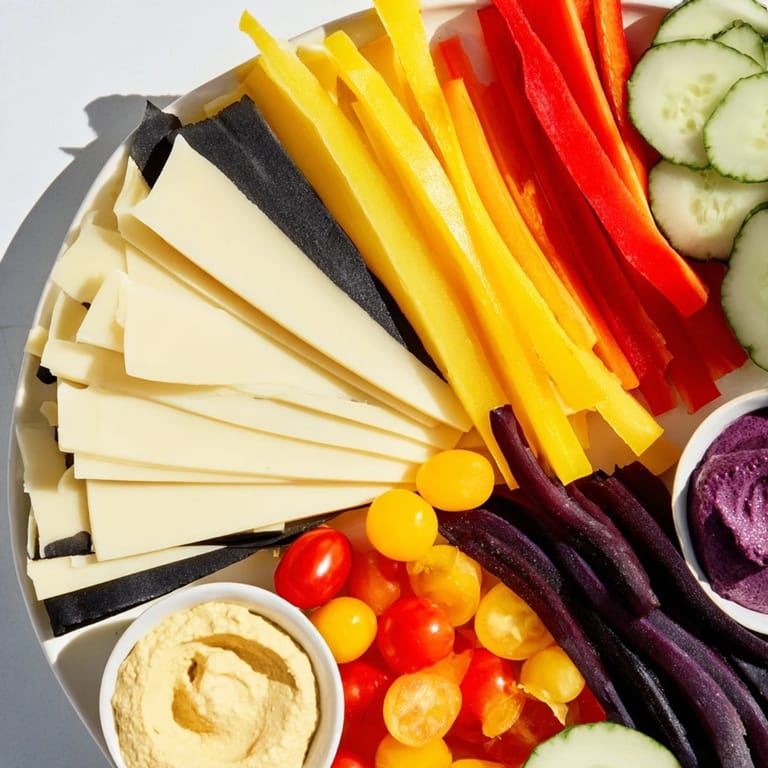
- Start with your most vibrant colors: red peppers, then yellow peppers, then cucumber, then purple carrots. Arrange them in angular sections along your zig-zag path, alternating between cool and warm tones. Place the white cheddar next to red peppers where it creates maximum contrast—this is intentional color work, like painting.
- Add the dark drama:
- Slice your black wax gouda and place those pieces along the zig-zag where they'll catch light and create shadow. These dark pieces are what make the whole arrangement feel bold and modern rather than just colorful.
- Position your dips at the junctions:
- Place small bowls of beet hummus and classic hummus at 2-3 key points where your zig-zag might bend or where colors meet. This creates natural gathering points and adds functional drama to your design.
- Frame with crackers and chips:
- Tuck your blue corn chips and black sesame crackers along the outer edges of your zig-zag line. They're like a frame around your lightning bolt, reinforcing those sharp angles and protecting the fresh ingredients from drying out slightly.
- Scatter the jewels:
- Finally, scatter your blueberries and golden cherry tomato halves along the zig-zag line like little bursts of light. These add dimension and make people want to dive in.
- Serve with confidence:
- Serve immediately while everything is fresh and the colors are at their most vibrant. This board is best viewed and enjoyed within a couple hours of assembly.
 Save to Pinterest
 Last summer, my teenage nephew came to a dinner party with his eyes glued to his phone until I brought this board to the table. He literally put the phone down to take a picture. Then he started actually eating vegetables. That moment—seeing someone genuinely excited about food because it looked like art—that's when I knew this platter was more than just a nice visual trick. It's a conversation starter, a phone-putter-downer, a moment maker.
The Art of Color Blocking
The zig-zag arrangement works because of something designers have known for centuries: contrast creates interest. When you put white cheddar next to red peppers, it's not just pretty—it's almost shocking. When you add those black sesame crackers and black gouda, you create depth. The pale cucumbers give your eye a place to rest between the bold colors. Think of building this platter like you're creating a visual rhythm. You're not just putting food down; you're conducting a conversation through color.
Making It Your Own
While this board works beautifully as written, the real magic happens when you adapt it to what you love. If you're vegan, swap in plant-based cheeses that have good color—they matter more here than on a traditional board because everything is about visual impact. If you find beautiful roasted beets, add them. If you see a striking purple daikon, slice it thin and add it. The structure stays the same: bold colors, angular pieces, high contrast. The specific ingredients are your creative choice. I once made this entirely in shades of green and white for an elegant dinner party—pale green cucumbers, white cheese, green grapes, pale green honeydew. Same concept, completely different vibe.
- Always prep your board no more than 1-2 hours before serving to keep everything fresh and crisp
- Keep a damp paper towel nearby while arranging to refresh any vegetables that start to look tired
- Step back every few minutes and look at your work from arm's length—angles that look perfect up close might not read as striking from across the room
The Perfect Pairing
This platter begs for something refreshing alongside it—a crisp Sauvignon Blanc with its herbaceous notes plays beautifully against the sharp cheese and fresh vegetables. If you're serving without alcohol, sparkling water with fresh lemon or lime keeps everything feeling bright and modern. The hummus dips add richness, so your drink should cut through that with acidity or bubbles. Honestly, watching people sip wine, munch on colorful vegetables, and then grab another photo of the board before eating more? That's the whole experience right there.
 Save to Pinterest
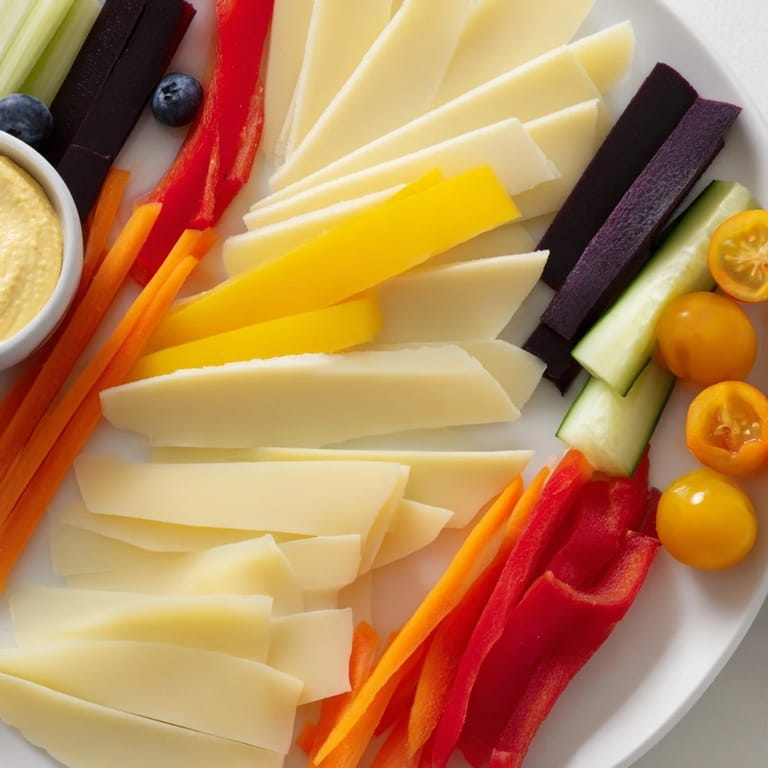
 This platter isn't about cooking skills or complicated techniques—it's about seeing your table as a canvas and your food as the art. Every time someone stops mid-conversation to take a photo, you'll know you've made something that matters.
Questions & Answers
- → How do I create the zig-zag pattern?
Arrange ingredients diagonally across a rectangular board, alternating contrasting colors and shapes to emphasize sharp lines.
- → Can I substitute the cheeses for a vegan option?
Yes, plant-based cheeses can replace dairy varieties to maintain the contrasting textures and shapes.
- → What dips pair well with this platter?
Beet hummus and classic hummus complement the fresh vegetables and add creamy texture at strategic points.
- → How can I add more color contrast?
Incorporate roasted beet slices or golden beets alongside the existing vegetables and fruits for enhanced vibrancy.
- → Is this platter suitable for gluten-free diets?
Use gluten-free crackers or chips to accommodate gluten sensitivity without compromising crunch and presentation.