 Save to Pinterest
 I'll never forget the afternoon I discovered the magic of geometry in cooking. A friend had just returned from a minimalist art exhibition and came home buzzing with ideas about negative space and perfect proportions. That evening, we stood in the kitchen with nothing but vegetables and a ruler, and something clicked—what if we could make a dish as visually stunning as those gallery installations? We spent hours meticulously cutting each ingredient into perfect cubes, arranging them like a edible mosaic on a plain white plate. When our guests arrived, no one expected such visual poetry from something so simple. That night taught me that sometimes the most elegant meals come not from complicated techniques, but from intention and precision.
I made this for my sister's birthday dinner last summer, and I watched her face light up when I set it down. She's always the minimalist in our family—clean lines, simple aesthetics—and I knew this would speak to something in her. What surprised me most was how the guests kept reaching for more, finding new flavor combinations with each cube they selected. It became less about eating and more about a shared experience of discovery.
Ingredients
- 1 small cucumber, peeled and cut into 1 cm cubes: The watery crispness keeps everything fresh and balanced—peel it to remove the tough skin and any lingering bitterness
- 1 ripe mango, peeled and cut into 1 cm cubes: Choose one with a gentle give when pressed, not rock-hard; the sweetness is crucial for lifting the whole composition
- 1 ripe avocado, peeled and cut into 1 cm cubes: Add this just before serving so it doesn't brown—it's the rich, creamy anchor that makes every other ingredient taste better
- 1 small red beet, cooked, peeled, and cut into 1 cm cubes: Cook it first (boil for 20 minutes), then cool before cutting; it stains everything with its gorgeous magenta, so peel it with gloved hands
- 1 small yellow bell pepper, seeded and cut into 1 cm cubes: Raw peppers bring a bright snap and a hint of sweetness without any bitterness if you remove the white interior membrane
- 1 small watermelon wedge, rind removed, cut into 1 cm cubes: The juiciest, most unexpected element—it adds moisture and a subtle sweetness that surprises the palate
- 120 g feta cheese, cut into 1 cm cubes: The salty, creamy counterpoint that makes you realize you needed dairy all along; it anchors all those bright vegetables
- 2 tbsp extra-virgin olive oil: Use something you love tasting on its own—this isn't the place for cooking oil, it's about flavor
- 1 tbsp lemon juice: Fresh squeezed if possible; it brings everything into focus and prevents browning
- 1/2 tsp sea salt: Taste as you go; the feta is salty, so you might need less than you think
- 1/4 tsp freshly ground black pepper: Grind it fresh right before using—it makes a real difference in brightness
- 1/2 tsp honey (optional): Just a whisper if your fruit isn't as sweet as you'd hoped
Tired of Takeout? 🥡
Get 10 meals you can make faster than delivery arrives. Seriously.
One email. No spam. Unsubscribe anytime.
Instructions
- Cut everything into perfect cubes:
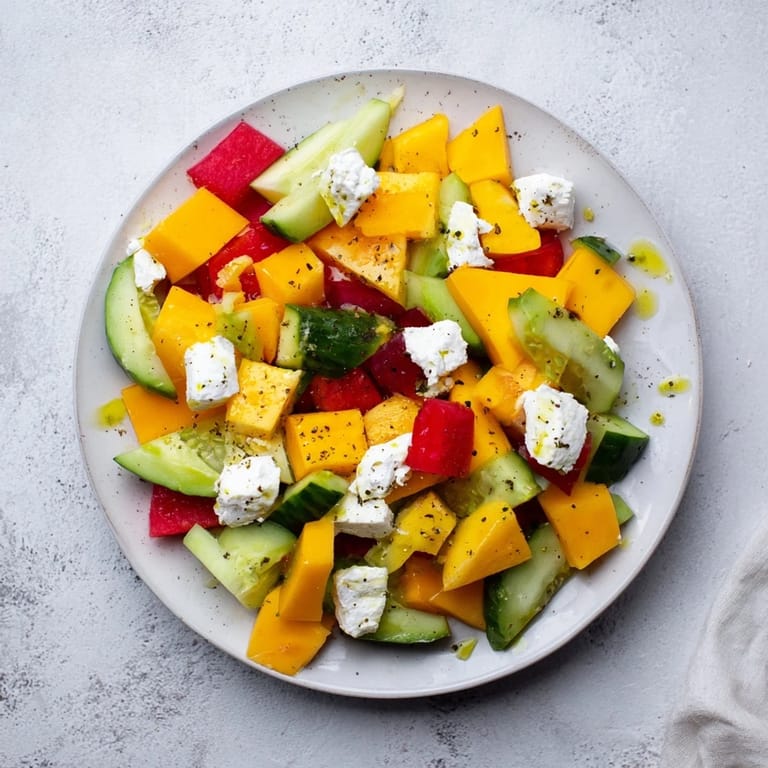
- This is meditative work—lay out each vegetable and cut it into uniform 1 cm pieces. A sharp knife is non-negotiable here; it should glide through without crushing. If you're the type who wants precision, lay a ruler alongside your cutting board as a guide. The uniformity matters not just for looks but for how the flavors distribute on the plate.
- Make your dressing:
- In a small bowl, whisk together the olive oil, lemon juice, salt, pepper, and honey if using. Taste it straight from the spoon—it should make you pause with its brightness. This dressing is delicate, so don't overpower it.
- Arrange on a platter with intention:
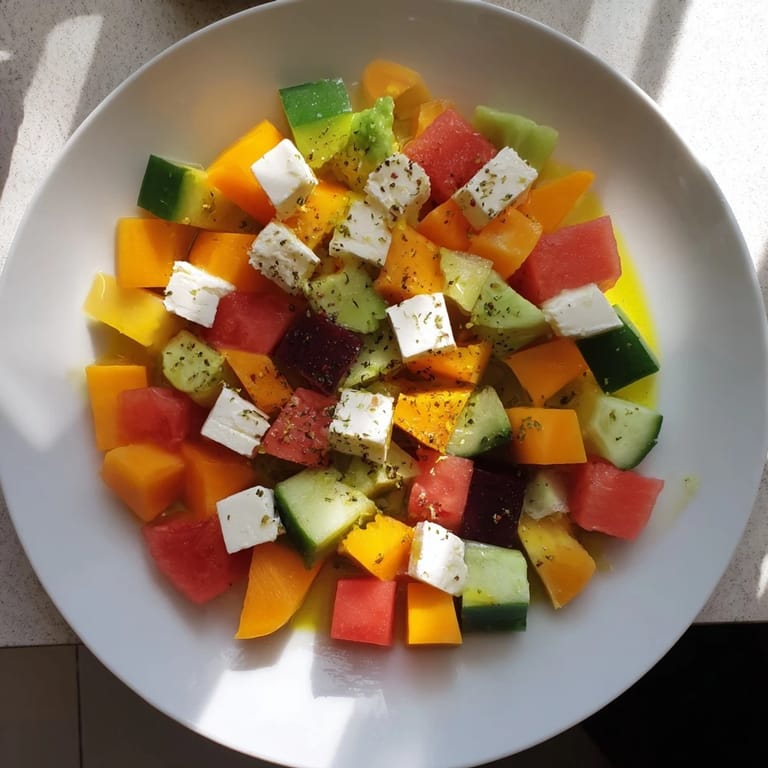
- Find a large, flat surface—a wooden board, a white plate, or a slate platter all work beautifully. Start with one color and build from there, creating a grid or pattern that pleases your eye. Leave space between the cubes so each ingredient stands alone. This is the moment where cooking becomes art.
- Dress it gently:
- Right before serving, drizzle the dressing lightly over everything. Don't drown it—this salad is about restraint and letting each ingredient shine.
- Serve immediately:
- The magic only lasts so long before the juices start mingling and the geometry softens. Bring it to the table while everything is still crisp and defined.
 Save to Pinterest
 My mother came to visit just as I was perfecting this dish, and she watched me arranging cubes for nearly twenty minutes without saying a word. When I finally stepped back, she smiled and said, 'This is what you needed to make—something that requires patience and rewards precision.' She was right. There's something deeply satisfying about taking raw ingredients and transforming them into something that makes people slow down and really look at their food.
The Art of the Perfect Cut
The secret weapon here is a truly sharp knife. I learned this the hard way after attempting this salad with a dull blade and producing bruised, ragged cubes that wept their juices everywhere. A good chef's knife or a vegetable knife makes all the difference—it should slice through even delicate fruits like avocado without crushing them. If you're serious about this salad becoming a regular in your rotation, invest in a knife sharpener or learn how to use a whetstone. Your vegetables will thank you, and honestly, once you feel how much easier cooking becomes with sharp tools, you'll wonder how you ever managed without one.
When Precision Meets Flavor
There's a temptation to think that uniform cutting is purely about aesthetics, but it actually affects how you taste the food. When every piece is the same size, your palate encounters flavors in the same proportion each time, creating a kind of rhythm to the eating experience. It forces you to slow down and notice—notice how the peppery watercress of a raw bell pepper plays against the sweetness of mango, how the feta's saltiness lingers after the crisp cucumber melts away. This salad teaches you to eat mindfully, which honestly, isn't the worst lesson a dish can offer.
Variations and Personal Expression
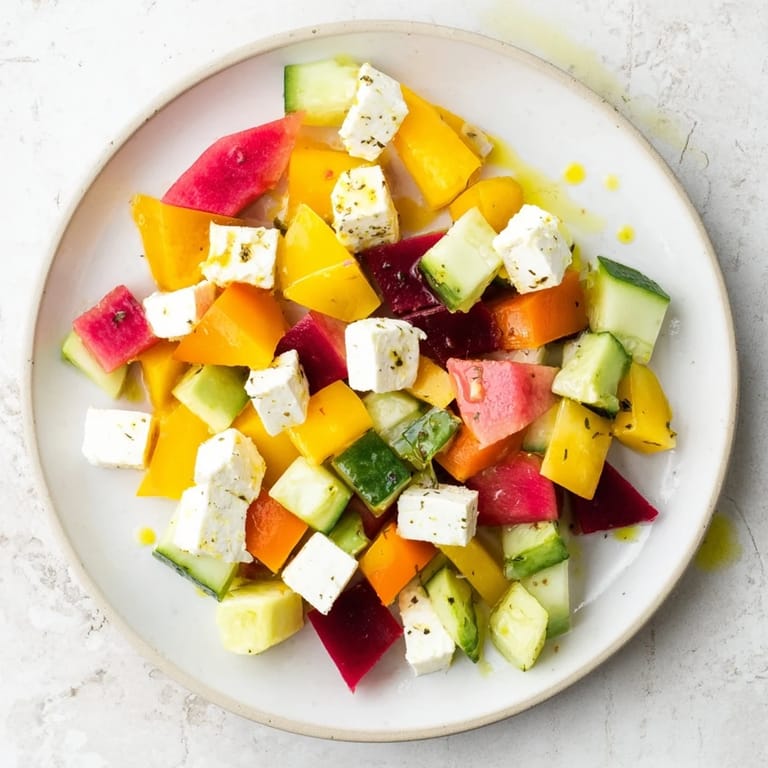
Once you master the basic cube, this framework becomes endlessly adaptable. I've made versions with fresh pineapple instead of mango on a hot summer day, swapped the watermelon for crisp apple slices when it was too cold for anything refreshing, and even experimented with roasted beets and golden beets for different color palettes. The beauty of this salad is that the technique—the cutting, the arrangement, the restraint—matters more than the specific ingredients. Make it your own by playing with seasonal vegetables and whatever speaks to you that day. Just remember to keep the dressing simple and the cubes uniform.
- Try papaya or pineapple for tropical brightness, or swap in crisp apple for autumn gatherings
- For vegan versions, firm tofu cut into cubes works beautifully in place of feta, or try a plant-based cheese alternative
- Microgreens or edible flowers scattered over the top add unexpected texture and visual drama just before serving
 Save to Pinterest
 This salad has become my go-to when I want to impress without stress, when I need to feel creative without turning on the stove. It's proof that sometimes the simplest idea—cutting everything the same size and arranging it with care—can be the most memorable.
Questions & Answers
- → What tools are essential for preparing the cubes?
A sharp chef's knife and a cutting board are essential. Using a ruler can help achieve uniform 1 cm cubes for a clean presentation.
- → Can I substitute feta cheese for a vegan option?
Yes, firm tofu cut into cubes works well as a dairy-free alternative, maintaining the texture and form.
- → How should the salad cubes be arranged?
Cubes should be placed in an orderly geometric grid, alternating colors and flavors to create visual appeal and balanced bites.
- → Is there a recommended dressing for this salad?
A simple mix of extra-virgin olive oil, lemon juice, sea salt, black pepper, and optional honey complements the ingredients without overpowering them.
- → Can other fruits replace mango in this dish?
Yes, papaya or pineapple cubes can be used to introduce different sweet and tropical flavor notes.