 Save to Pinterest
 I discovered the magic of the infinity loop while experimenting with plating techniques during a quiet afternoon in my kitchen. I wanted to create something that looked as beautiful as it tasted, something that would make my dinner guests pause before picking up their forks. That's when I realized that the figure-eight shape, endlessly flowing and elegant, could become the foundation for a dish that guides you through layers of flavor with every carefully arranged bite.
I remember serving this to my sister for the first time on a warm summer evening. She walked into the kitchen and literally gasped at the presentation before tasting anything. When she finally did, the way her face lit up as she experienced that seamless transition from couscous to vegetables to salmon told me everything I needed to know. This dish became her request for every special occasion after that.
Ingredients
- Fresh salmon fillets: Choose sustainably sourced, skinless fillets that feel firm to the touch. The salmon is the star here, so don't compromise on quality. About 300 grams gives you enough to flake into generous pieces without the fish feeling sparse on the platter.
- Olive oil: Use a good quality extra virgin olive oil for rubbing the salmon before baking. It creates a tender interior while the oven gently cooks the delicate flesh.
- Salt and freshly ground black pepper: Season generously but thoughtfully. Fresh black pepper makes a real difference in this dish.
- Zucchini, carrot, and fennel: These vegetables are the threading of your infinity loop. Slice them thinly and uniformly so they cook evenly and nestle together beautifully. The fennel adds an unexpected anise note that elevates everything.
- Baby spinach leaves: Their gentle earthiness bridges the gap between the couscous and the bright vegetables. They wilt slightly when placed warm on the platter, creating a soft contrast.
- Pearl couscous: This is your base, your figure-eight foundation. It's heartier than regular couscous and holds its shape beautifully when molded into curves.
- Vegetable broth: Use a good quality broth to cook the couscous. It infuses each grain with subtle flavor rather than just water alone.
- Greek yogurt: The creamy counterpoint to everything else. It acts as an anchor for the lemon and dill dressing, adding richness without heaviness.
- Lemon zest and fresh dill: These brighten the entire dish. The lemon zest should be finely grated, and the dill finely chopped so they distribute evenly through the yogurt.
- Capers and toasted pine nuts: These are your finishing touches. Capers add a briny pop, while toasted pine nuts provide a subtle crunch and nuttiness that ties everything together.
Tired of Takeout? 🥡
Get 10 meals you can make faster than delivery arrives. Seriously.
One email. No spam. Unsubscribe anytime.
Instructions
- Get Your Oven Ready:
- Preheat to 180°C (350°F). This moderate temperature allows the salmon to cook gently through without drying out. While it preheats, gather all your ingredients and prepare your workspace.
- Start the Couscous Base:
- Bring vegetable broth to a boil in a small saucepan, listening for that rolling bubble sound. Add the pearl couscous, which will hiss slightly as it hits the hot liquid. Reduce heat, cover, and let it simmer gently for 10 minutes. You'll know it's ready when all the liquid is absorbed and the couscous is tender but still has a slight bite to it. Fluff gently with a fork and set aside to cool slightly.
- Blanch the Vegetables to Perfection:
- Bring a pot of salted water to a rolling boil. Working with one vegetable at a time, blanch the zucchini slices, then carrots, then fennel for just 1 to 2 minutes each. They should go from raw to just tender-crisp. Immediately transfer to ice water to stop the cooking and set their vibrant colors. This step is crucial. Pat them dry thoroughly afterward so they don't weep water onto your platter.
- Bake the Salmon Until Just Cooked:
- Pat your salmon fillets dry and rub them with olive oil, then season generously with salt and pepper. Place on a parchment-lined baking tray and bake for 12 to 15 minutes. You're looking for the moment when the flesh is opaque and flakes gently, not when it's completely dry. Let it cool slightly, then break into large, attractive flakes with your fork.
- Create the Lemon-Dill Dressing:
- Combine Greek yogurt with lemon zest and finely chopped fresh dill in a small bowl. Stir gently to distribute the bright flavors. Taste it and adjust if needed. This dressing should smell fresh and clean.
- Arrange Your Infinity Loop:
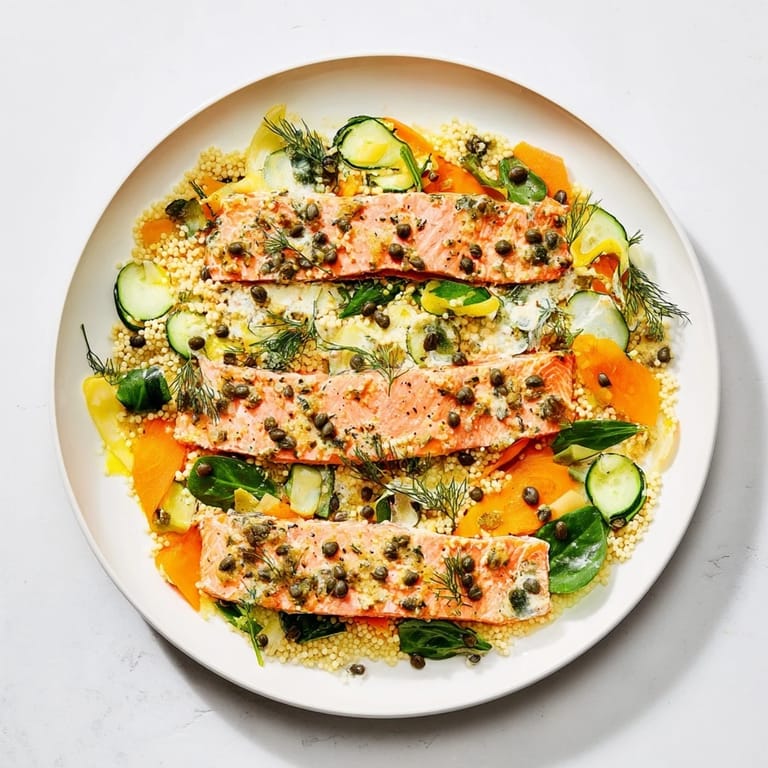
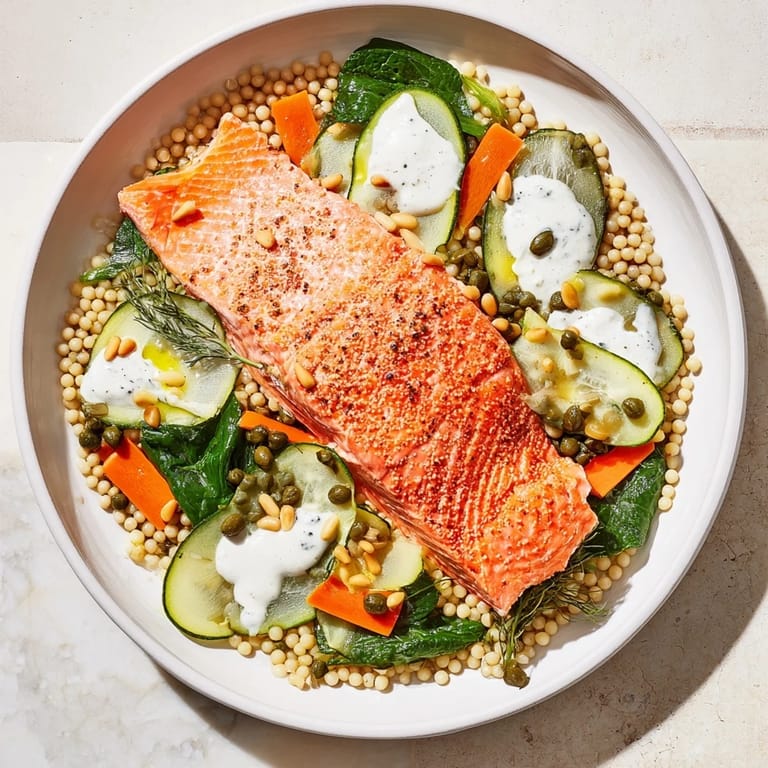
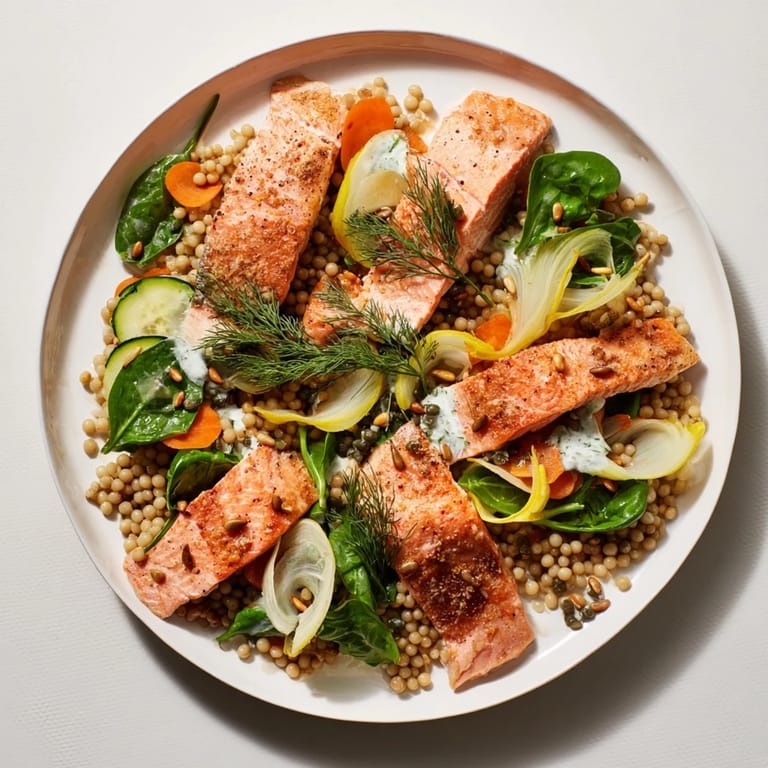
- This is where the magic happens. On your large platter, use a spoon or your hands to arrange the pearl couscous in a continuous figure-eight pattern. Think of it like drawing the infinity symbol with your fingers. Once your base is set, begin layering the blanched vegetable slices along the couscous, alternating zucchini, carrot, and fennel to create visual rhythm and flow. Tuck baby spinach leaves into the curves. Nestle the salmon flakes into the bends of the loop. Dot the yogurt dressing strategically along the design, then scatter capers and toasted pine nuts as the final flourish. Step back and admire what you've created.
- Serve with Intention:
- Serve immediately while everything is still at the right temperature. Encourage each guest to follow the infinity loop with their fork, so they experience all the components in harmony. Each bite should travel through couscous, vegetables, salmon, and dressing in one graceful motion.
 Save to Pinterest
 I'll never forget the first time a guest told me this was the most beautiful thing they'd ever eaten before tasting it. That comment reminded me why I cook. It's not just about nourishment or tradition. Sometimes cooking is about creating a moment that lingers in someone's memory long after the last bite.
The Art of Plating with Purpose
The infinity loop isn't just decoration. It's a deliberate choice to guide your palate through a journey. When you follow the figure-eight with your fork, you're experiencing a carefully orchestrated flow from grain to vegetable to protein to dressing. This continuous path creates a narrative on the plate, making the meal feel intentional and thoughtful rather than random. It's a subtle way of saying, 'I made this with care.'
Building Flavor Through Contrast
What makes this dish sing is the interplay between textures and temperatures. The warm couscous base, cool blanched vegetables, flaked salmon, and cool yogurt dressing create a multi-sensory experience. The fennel's subtle anise notes dance with the brightness of lemon and dill, while the briny capers and toasted pine nuts add complexity. Every element serves a purpose. The spinach's earthiness grounds everything, preventing any single flavor from overwhelming the others.
Making It Your Own at the Table
While the infinity loop is stunning as presented, remember that this dish is meant to bring people together. Don't stress if the plating isn't museum-perfect. The real magic happens when your guests lean in, inhale the aroma of fresh herbs and salmon, and taste the careful balance of flavors.
- Feel free to add thin slices of radish or beet for extra color and a peppery note that plays beautifully with the other vegetables
- If salmon isn't available or not to your taste, trout offers similar delicacy while cod provides a milder, flakier alternative
- This dish pairs wonderfully with a crisp Sauvignon Blanc or a light-bodied Pinot Gris that won't overpower the subtle flavors
 Save to Pinterest
 Cooking is really just an act of generosity dressed up in technique and ingredients. This dish reminds me that the most impressive meals are often the ones made with the simplest intention: to share something beautiful with someone you care about.
Questions & Answers
- → How is the pearl couscous prepared?
Simmer pearl couscous in vegetable broth for 10 minutes until tender, then fluff with a fork before arranging.
- → What is the best way to cook the salmon?
Rub salmon fillets with olive oil, season with salt and pepper, then bake at 180°C (350°F) for 12–15 minutes until just cooked through.
- → How are the vegetables prepared for this dish?
Thinly slice zucchini, carrot, and fennel, then blanch in boiling salted water for 1–2 minutes and cool immediately to preserve color.
- → What dressing complements the dish?
A creamy blend of Greek yogurt, lemon zest, and fresh dill adds brightness and ties the flavors together.
- → How can the dish be visually enhanced?
Arrange ingredients in a flowing figure-eight loop and alternate vegetable colors for a stunning presentation.
- → Are there suitable ingredient substitutions?
Trout or cod can replace salmon for variety, while radish or beet slices add extra color contrast.