 Save to Pinterest
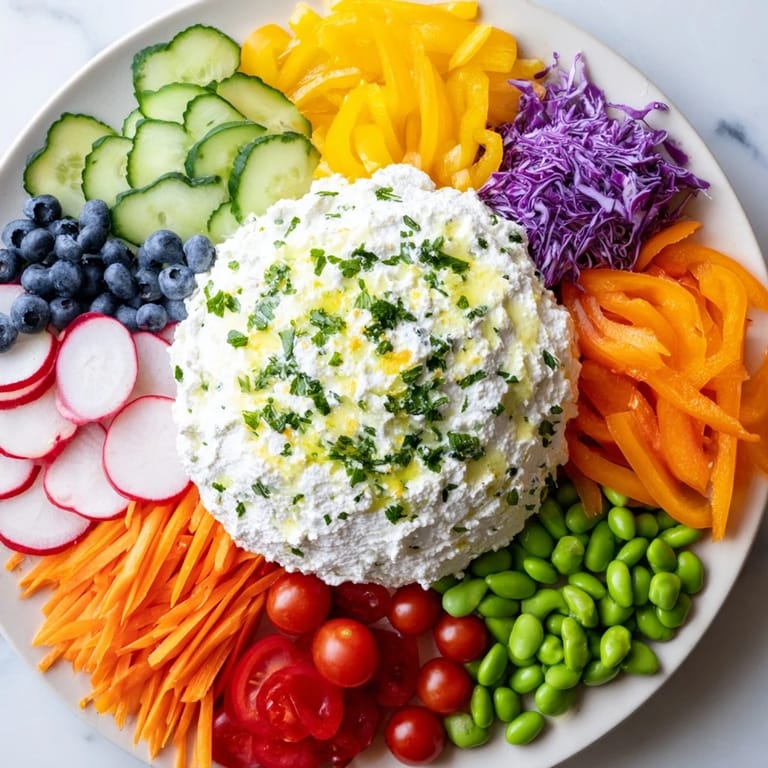
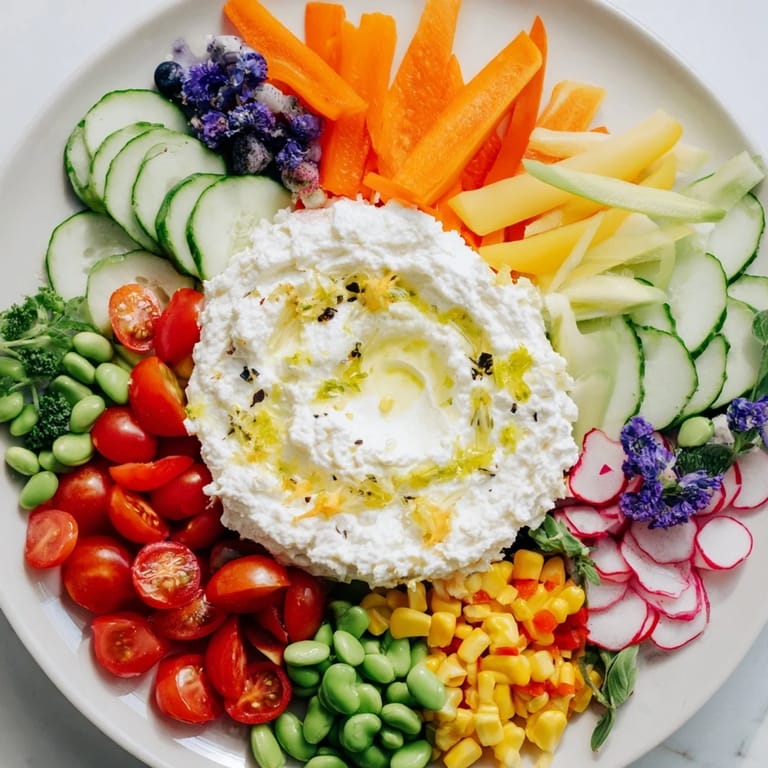
 I stumbled onto this salad completely by accident one afternoon when my kitchen caught golden light at just the right angle. I'd been chopping vegetables for what started as a boring side dish, and suddenly I noticed how each color sat in its own little pile—red, orange, yellow, green, blue, violet—like I'd accidentally recreated something from a physics textbook. Instead of tossing it all together, I grabbed the largest platter I owned and started arranging them in concentric rings around a dollop of creamy ricotta. My partner walked in mid-arrangement and just stopped, fork suspended in mid-air. That's when I knew this wasn't just salad anymore.
The real moment this became my go-to was when I made it for my sister's birthday potluck. Someone actually gasped when I set it down, and I'm not exaggerating—they physically gasped. What started as me trying to look clever turned into the first thing to disappear from the table, with people asking if I'd take commissions. That's the kind of salad this is: the one that makes you seem way more put-together than you actually are.
Ingredients
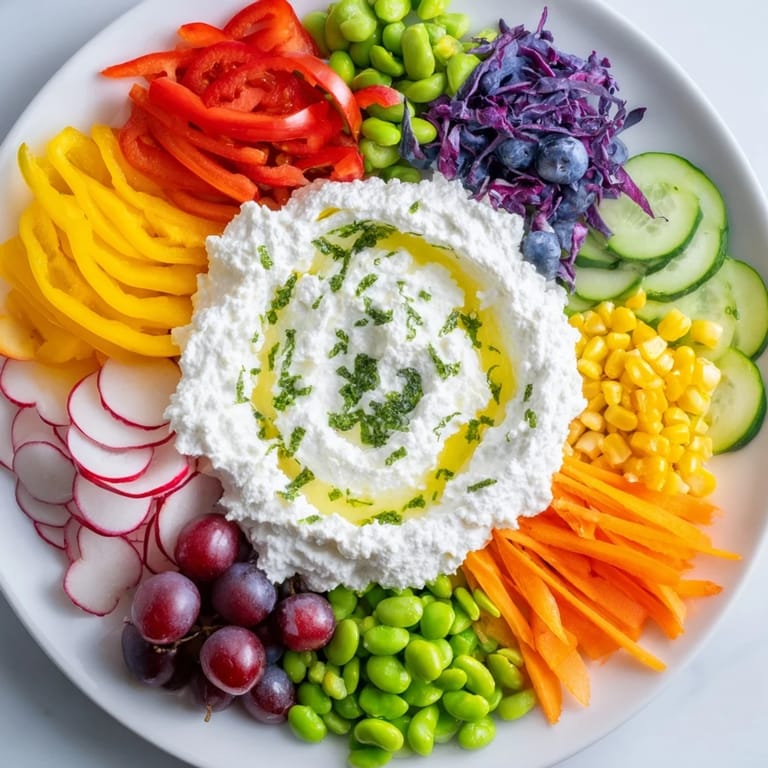
- Ricotta cheese or Greek yogurt: This is your creamy anchor, the pale canvas everything radiates from—use full-fat ricotta if you want richness, or swap to yogurt if you're after something lighter and tangier.
- Cherry tomatoes and red bell pepper: The red layer should feel fresh and juicy, so slice those tomatoes in half and keep the pepper crisp.
- Orange and yellow bell peppers with carrots: These warm middle tones bring sweetness and crunch; the carrots add a subtle earthiness that balances the pepper's brightness.
- Yellow bell pepper and corn: Sweet corn kernels soften slightly as they sit, creating little pockets of flavor against the bell pepper's firm snap.
- Cucumber, edamame, and fresh herbs: This is your green moment—cooling and grounding; fresh herbs tie the whole thing together with their aromatic lift.
- Blueberries and purple cabbage: These create that blue layer and add surprising tartness; the cabbage stays crunchy long after everything else softens slightly.
- Red grapes and radishes: The violet finishing layer brings a subtle sweetness and peppery bite that bridges the prism back toward the beginning.
- Dressing: Lemon juice is your backbone here, balanced with just enough honey to take the edge off and olive oil to make everything glide together.
Tired of Takeout? 🥡
Get 10 meals you can make faster than delivery arrives. Seriously.
One email. No spam. Unsubscribe anytime.
Instructions
- Build your white base:
- Mix ricotta with olive oil, lemon zest, salt, and pepper until it feels like something between spreadable and creamy. Spoon it onto your largest platter and spread it into a small circle roughly the size of a coffee mug—this is your anchor, your visual center of gravity.
- Prep and organize your colors:
- Get all your vegetables and fruits into separate small bowls before you start arranging. This takes three minutes but saves you from frantically chopping mid-assembly and losing your momentum.
- Fan out the prism:
- Start from that white center and begin layering outward: red first, then orange, then yellow, green, blue, and finally violet. Use your hands or the back of a spoon to keep the colors distinct and neat, working slowly enough that the stripes stay defined.
- Make your dressing:
- Whisk olive oil and lemon juice together, then add just a teaspoon of honey to round out the edges, along with salt and pepper. Taste it before you finish—you want brightness, not punch.
- Finish and serve:
- Either drizzle the dressing right across the whole thing or set it on the side, depending on whether you want the colors to stay crisp or soften slightly. Either way, a final scatter of fresh herbs and a crack of black pepper just before serving keeps everything feeling alive.
 Save to Pinterest
 I've learned that salads like this one remind people of something they forgot: eating with your eyes first is half the pleasure. There's something almost meditative about standing back and looking at it before anyone takes a bite, knowing you made that moment of pure joy.
The Psychology of Color on a Plate
There's actual science behind why people respond so intensely to this salad. When all seven colors sit in their own space, your brain doesn't just register flavor—it registers abundance and intention. The arrangement signals care, and care changes how food tastes, weird as that sounds. I've noticed people eat more slowly and more deliberately with this one, actually tasting each layer instead of just wolfing it down.
Adapting the Prism to What You Have
You don't need every single vegetable or fruit I listed to pull this off. I've made versions with just red, yellow, and green when that's what the farmer's market had. Beets can stand in for purple, shredded cheese for orange, blanched broccoli for green. The structure matters more than hitting every exact ingredient—as long as you've got a white base and at least three distinct colored layers radiating outward, you've got the magic.
Serving Strategies and Timing
Make this within an hour of serving if you can, though it holds up surprisingly well for up to four hours if you keep the dressing separate. The key is that the ricotta base stays creamy and the vegetables stay crisp enough to feel fresh. I usually assemble everything without dressing, then dress it lightly right before people gather, or pass the dressing on the side and let them control how much moisture hits their plate.
- For a richer version, drizzle the dressing over everything and let it sit for ten minutes before serving so the flavors meld.
- Toasted pumpkin or sunflower seeds add crunch that lasts through the whole meal.
- Edible flowers tucked between the layers turn this from pretty into restaurant-level stunning.
 Save to Pinterest
 This is one of those dishes that reminds you why you cook in the first place: not because you have to, but because turning simple things into something that makes people pause and smile feels like real magic. Make it, and let yourself enjoy the moment.
Questions & Answers
- → What is the central white base made of?
The base consists of ricotta cheese or Greek yogurt mixed with olive oil, lemon zest, salt, and pepper for a creamy, tangy foundation.
- → How are the colorful layers arranged?
The vibrant fruits and vegetables are fanned out around the white base in succession: red, orange, yellow, green, blue, and violet layers to mimic a prism.
- → Can this dish be made vegan?
Yes, by substituting the ricotta or Greek yogurt with a vegan cream cheese or plant-based alternative.
- → What kind of dressing is used?
A light dressing of olive oil, lemon juice, honey or agave syrup, salt, and pepper is drizzled over the layers just before serving.
- → Are there suggestions for added texture?
Toasted nuts or seeds like pumpkin, sunflower, or pine nuts can be added for extra crunch and flavor.