 Save to Pinterest
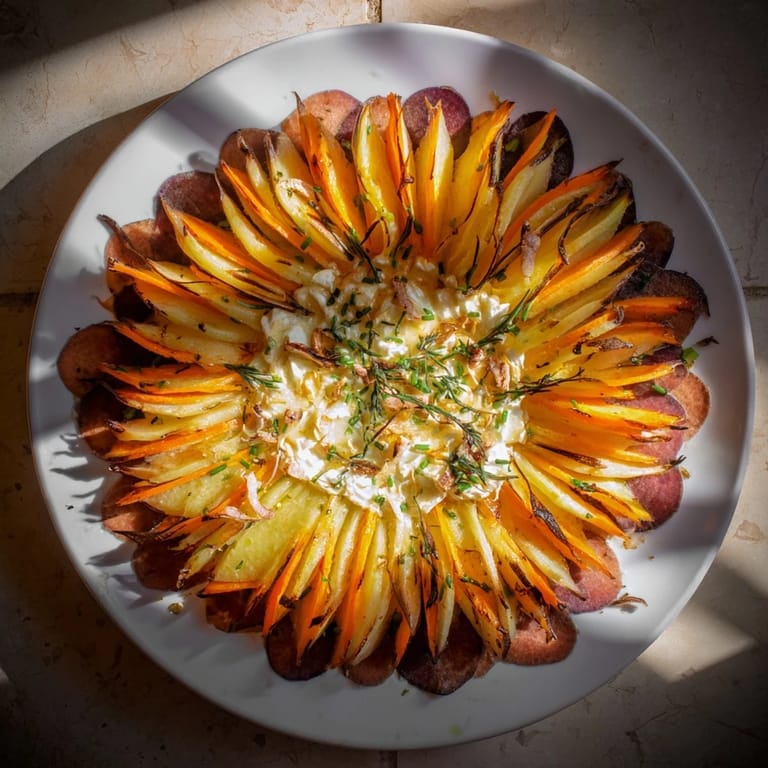
 I'll never forget the moment I first saw a radial symmetry sunburst salad at a dinner party—it was arranged on a white plate like an edible work of art, and I found myself staring at it for a full minute before anyone else even reached for their fork. The host laughed and said it was simpler than it looked, just vegetables fanned out in perfect circles. That night, I became obsessed with recreating it, and now it's my secret weapon whenever I want to impress without spending hours in the kitchen. There's something magical about arranging thin slices of colorful vegetables in a spiral—it feels meditative, almost like painting with your groceries.
I made this for my sister's dinner party last spring when she was going through a rough patch, and watching her face light up when she saw the sunburst pattern on the table felt like I'd given her a small gift wrapped in vegetables. She took three photos before eating a single bite, and then she told me it tasted like sunshine. That's when I knew this wasn't just about the flavors—it was about the moment you create when you put care into how something looks.
Ingredients
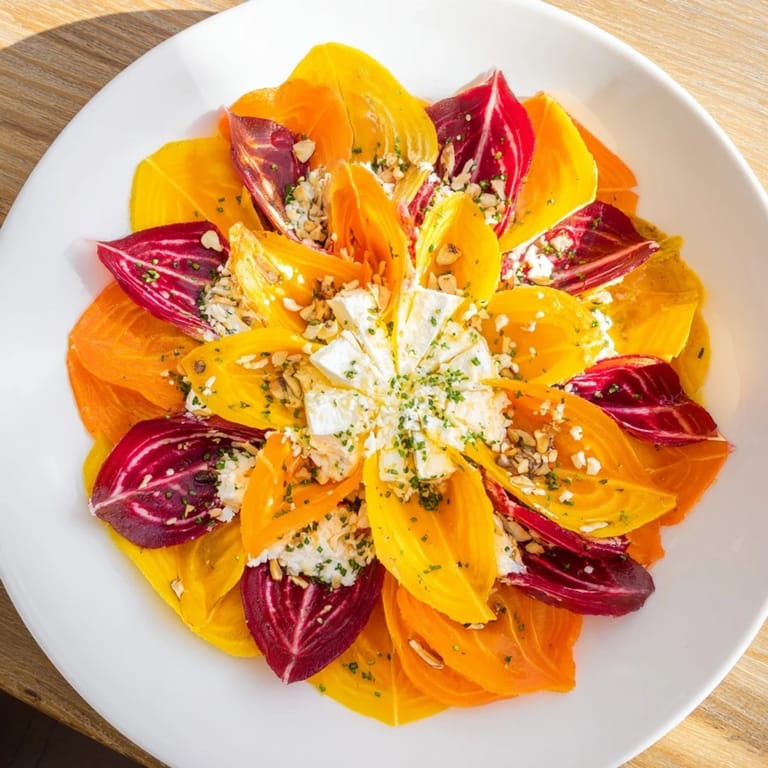
- Golden beet: Sweet and earthy, it provides warmth and natural sugar that makes the dressing cling beautifully. I learned to slice these paper-thin because that's when they become tender and almost translucent at the edges.
- Red beet: Deeper in flavor and richer in color, it's the dramatic counterpoint to the golden beet. The two together tell a story of contrast.
- Zucchini: Mild and delicate, it acts as a neutral canvas between the bolder vegetables. Slice it when it's just slightly firm, not too soft.
- Yellow squash: Sweeter than zucchini and a touch more buttery, it catches the light beautifully in the arrangement.
- Watermelon radish: This is the showstopper. When you slice it, those hidden pink and white stripes appear like a secret surprise. It's slightly peppery and adds personality to each bite.
- Carrot: The bright orange brings warmth to the whole composition, and its natural sweetness complements the honey in the dressing.
- Goat cheese: Tangy and creamy, it becomes the visual and flavor anchor in the center. The tanginess cuts through the sweet vegetables perfectly.
- Crème fraîche: This makes the goat cheese easier to spread and adds a subtle richness that feels luxurious without being heavy.
- Extra-virgin olive oil: Use the good stuff here—you can taste the difference when nothing else is cooking it down.
- Lemon juice: Freshly squeezed matters. Bottled tastes flat in comparison, and acidity is what wakes up all these raw vegetables.
- Honey: Just a touch to balance the lemon's sharpness and bring out the vegetables' natural sweetness.
- Fresh chives: Oniony and bright, they add a whisper of flavor and visual softness to all those geometric slices.
- Toasted sesame seeds: These add a nutty crunch that makes you want another bite. Toasting them yourself makes all the difference in flavor.
Tired of Takeout? 🥡
Get 10 meals you can make faster than delivery arrives. Seriously.
One email. No spam. Unsubscribe anytime.
Instructions
- Slice everything paper-thin:
- This is where the magic starts. Use a sharp knife or a mandoline, and take your time with each vegetable. The thinner you slice, the more delicate and elegant everything becomes. I like to lay out my slices on a clean kitchen towel as I go—it keeps them from sticking together and lets me see the colors I'm working with.
- Mark your center point:
- Place a small bowl or ramekin right in the middle of your large round platter. This is your anchor, your focal point. Step back and make sure it feels centered to you—this moment of positioning is important because everything radiates from here.
- Begin your sunburst:
- Start with one color and fan the slices outward from the center, overlapping each slice just slightly so they catch the light. Work your way around in a circle, then start the next ring with a different vegetable. The overlapping is what creates that sense of movement, like rays bursting outward. I usually alternate colors—golden beet, then zucchini, then red beet, then carrot—so your eye travels through the arrangement.
- Fill the center:
- Once your vegetable rings are perfect, remove that center bowl and mix your goat cheese with crème fraîche right there in the middle. It should be just creamy enough to spread, but still have some texture. This becomes both the visual anchor and the flavor bridge between all those raw vegetables.
- Make your dressing:
- Whisk the olive oil, lemon juice, honey, salt, and pepper together in a small bowl. Taste it—it should sing with brightness. If it tastes flat, add a touch more lemon or honey. This dressing is your finishing touch, so get it right.
- Drizzle and garnish:
- Drizzle the dressing evenly over the vegetables, letting some pool around the edges. Then scatter the chives and sesame seeds across the whole thing, and add edible flowers if you're feeling fancy. Step back and admire what you've created.
- Serve immediately:
- This dish is best eaten the moment it's finished, while everything is crisp and the colors are at their brightest. It's meant to be eaten with your eyes first, then your mouth.
 Save to Pinterest
 I've served this dish to people who claim they don't really like salad, and they always surprise themselves by eating more than they expected. There's something about the care in the presentation that changes how you experience the food—it stops being just vegetables and becomes an experience, a moment where someone took time to create something beautiful just for you.
Why This Works as an Appetizer
An appetizer should spark conversation and set the tone for the meal ahead. This sunburst does exactly that. It's light enough not to fill you up, but interesting enough that people linger over it. The combination of textures—creamy cheese against crisp vegetables—keeps your palate engaged. And because it's raw, it cleanses your palate for whatever comes next. I've found that when you lead with something this beautiful, it makes the entire meal feel more intentional, more special.
Variations That Keep It Fresh
Once you understand the basic structure, you can play with it endlessly. In summer, I've added thin slices of cucumber and heirloom tomatoes. In winter, I've used more root vegetables like parsnips and golden turnips. The principle stays the same—contrast colors, overlap thoughtfully, and let the vegetables speak for themselves. I once substituted ricotta for the goat cheese because that's what I had on hand, and it actually became creamier and more luxurious. Feta would give you a more Mediterranean vibe. The beauty of this dish is that it's more about technique than ingredients.
- Try adding thinly shaved fennel for a subtle anise note that surprises people
- Swap the goat cheese for burrata if you want pure indulgence in the center
- Add microgreens on top for extra delicate texture and visual interest
The Confidence of Simplicity
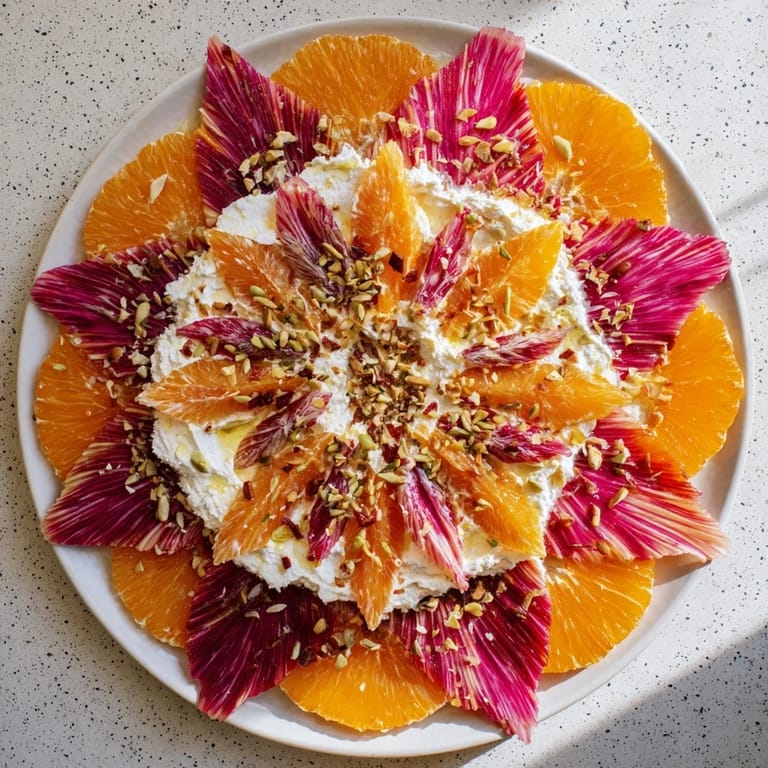
One of the best lessons cooking has taught me is that impressive doesn't have to mean complicated. This recipe requires no cooking skills, no special techniques, just an eye for color and a willingness to slow down and arrange things thoughtfully. The simplicity is actually what makes it powerful. There's nowhere to hide when you're working with just raw vegetables and a basic dressing—everything has to be fresh, everything has to be good quality, and everything has to be placed with intention.
- Quality vegetables matter more than any technique here, so choose the most vibrant produce you can find
- Don't rush the arrangement—this is meditative work, the kind that calms your mind while you prepare something beautiful
- Remember that people eat with their eyes first, and a moment of beauty can change someone's whole evening
 Save to Pinterest
 This sunburst salad is a reminder that sometimes the most beautiful things are also the simplest, and that taking 25 minutes to arrange vegetables with care can feel like an act of love. Serve it with confidence and watch the moment people realize they're about to eat something that looks like it belongs in a gallery.
Questions & Answers
- → How should the vegetables be prepared for the sunburst?
Slice all vegetables as thinly as possible using a sharp knife or mandoline to create delicate, uniform layers for the radial arrangement.
- → What cheeses work well in this dish?
Goat cheese is preferred for its creamy texture and tang, but ricotta or feta can be substituted depending on taste.
- → How is the dressing made for the sunburst?
Whisk together extra-virgin olive oil, freshly squeezed lemon juice, honey, salt, and pepper, then drizzle evenly over the arranged vegetables.
- → Can this be prepared ahead of time?
Vegetables can be sliced in advance, but assembling and dressing just before serving keeps the dish fresh and visually appealing.
- → What garnishes complement the sunburst presentation?
Fresh chives, toasted sesame seeds, and edible flowers add flavor, texture, and a pop of color to enhance the visual appeal.