 Save to Pinterest
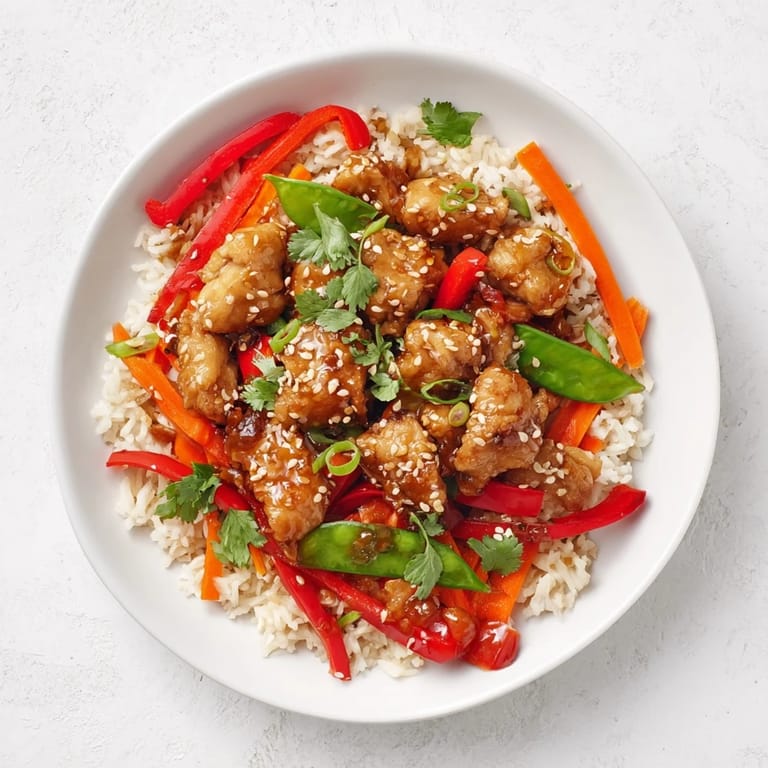
 There's something about the smell of sesame oil hitting a hot wok that makes me drop everything and pay attention. I discovered this bowl on a Tuesday evening when I had leftover jasmine rice and a handful of vegetables that needed rescuing, plus some chicken I'd thawed without a plan. The ginger-sesame sauce came together so quickly that I almost didn't believe how good it tasted, and my kitchen filled with this warm, nutty aroma that had my partner wandering in asking what I was making. It became the kind of meal I now make on autopilot when I want something that feels special but doesn't demand much from me.
I made this for my sister's surprise dinner after she'd been working long hours at the hospital, and watching her face light up when she tasted that sesame-ginger sauce told me everything I needed to know. She sat down and ate it quietly for a moment before saying it tasted like that restaurant she loved but somehow better because it was made with intention. Now whenever she visits, this is the first thing she asks for, and I love that I can deliver it in less time than it takes to order takeout.
Ingredients
- Chicken breast or thighs (500 g): Thighs stay juicier if you're not watching the pan like a hawk, but breasts work fine if you slice them thin and don't overcook them.
- Soy sauce (3 tbsp): Low sodium lets you taste the other flavors without getting smacked by salt—use regular if that's what you have, just go lighter.
- Toasted sesame oil (2 tbsp): The toasted kind is non-negotiable here; untoasted sesame oil tastes like nothing, and regular oil won't give you that nutty depth.
- Rice vinegar (1 tbsp): This keeps the sauce bright instead of heavy, and it's worth seeking out the good stuff.
- Honey or maple syrup (1 tbsp): Either works, though honey blends in more seamlessly if you're sensitive to maple's personality.
- Fresh ginger (2 tbsp, grated): Fresh only—that powdered stuff tastes like a memory of ginger, not the real thing.
- Garlic cloves (2, minced): More is not better here; two cloves keeps the ginger and sesame from being drowned out.
- Sriracha or chili garlic sauce (1 tbsp, optional): Leave it out if heat isn't your thing, but a little warmth rounds out all the other flavors beautifully.
- Jasmine or short-grain white rice (250 g): Jasmine has a gentle floral note that pairs perfectly with sesame; rinse it until the water runs clear so you get fluffy grains.
- Water (500 ml): This ratio works every time—no guessing, no stress.
- Carrot (1 medium): Julienne it thin so it cooks in seconds and stays bright orange and crisp.
- Red bell pepper (1): The sweetness balances the salty-ginger sauce, and red looks prettier than green.
- Sugar snap peas or snow peas (100 g): These add a snap that makes the whole bowl feel fresh and alive.
- Spring onions (2): A raw pop of onion flavor that you want to taste, so save these for garnish.
- Toasted sesame seeds (2 tbsp): Toast them yourself if you can; they're nuttier and the smell alone is worth it.
- Fresh coriander (cilantro): Some people hate it, but if you're one of us, don't skip it.
- Lime wedges: The acid at the end lifts everything, and the green looks beautiful against the rice.
Tired of Takeout? 🥡
Get 10 meals you can make faster than delivery arrives. Seriously.
One email. No spam. Unsubscribe anytime.
Instructions
- Build the sauce:
- Whisk soy sauce, sesame oil, rice vinegar, honey, ginger, garlic, and sriracha together in a bowl until the honey dissolves and everything looks glossy. Split this in half—one half goes on the chicken, the other half waits to drizzle at the end.
- Marinate the chicken:
- Toss your chicken pieces with half the sauce and let them sit for 15 minutes while you prep everything else. This isn't long, but it's enough time for the flavors to start getting to know each other.
- Cook the rice:
- Rinse the jasmine rice under cold running water, stirring it gently with your fingers until the water runs completely clear—this removes the starchy coating and gives you separate, fluffy grains. Combine the rice with water in a saucepan, bring it to a boil, then reduce the heat to low, cover, and let it steam undisturbed for 12 to 15 minutes until the water is absorbed and the grains are tender.
- Sear the chicken:
- Heat a large skillet or wok over medium-high heat until it's hot enough that a drop of water sizzles immediately. Add the marinated chicken (you can skip the excess marinade—it's done its job) and let each piece get golden on both sides, stirring occasionally, for about 5 to 7 minutes total until cooked through and no longer pink inside.
- Stir-fry the vegetables:
- In that same hot pan, add your carrot, bell pepper, and snap peas and keep them moving for 2 to 3 minutes—you want them to soften just enough to taste cooked while still having a little resistance under your teeth. They should smell fragrant and look vibrant.
- Assemble and finish:
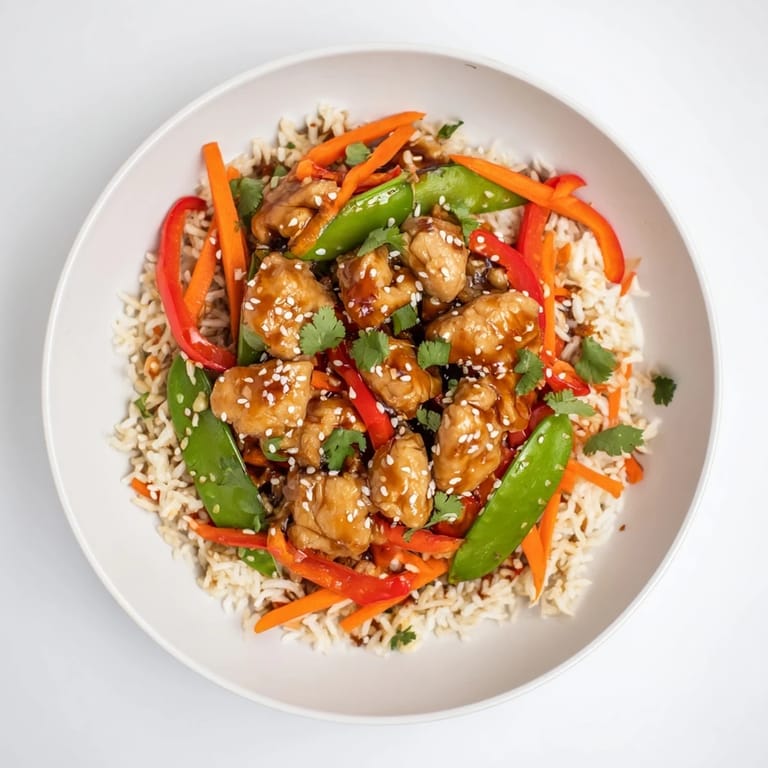
- Divide the fluffy rice among four bowls, creating a little nest for the chicken and vegetables. Top each bowl with the chicken and vegetables, drizzle with that reserved sauce you set aside, then scatter spring onions, sesame seeds, and fresh cilantro over the top. Squeeze lime over everything right before you eat it.
 Save to Pinterest
 I made a full batch of this for a potluck once, and a friend who usually sticks to plain food tried it almost by accident while standing near the serving table. She came back three times that night, and the last time she admitted she usually finds Asian food too adventurous for her, but something about this one just worked for her. That's when I realized this recipe doesn't feel intimidating or show-offy—it just tastes like care, which is maybe the best thing a dish can do.
The Magic of Sesame Oil
Sesame oil is the secret backbone of this entire bowl, and it's worth understanding why it matters so much. Toasted sesame oil has been roasted, which gives it that deep, nutty flavor that makes people lean in and ask what you did to make it taste so good. It's fragrant and assertive, so you don't need much—a little goes a long way. I learned this the hard way by dumping in too much once and turning the whole thing unpleasantly oily, so now I measure carefully and remember that balance is everything.
Rice Matters More Than You Think
The rice here isn't just a base; it's a vehicle for everything else, so it needs to be cooked well. Jasmine rice has a gentle, slightly floral sweetness that complements the ginger-sesame sauce without competing with it. The rinsing step is important because it removes the starch that makes rice gluey, and once you've done it a few times, it becomes meditative—just cool water, your fingers, and grains getting cleaner and cleaner until you know it's right. Short-grain white rice works too if that's what you have, and it will give you a slightly different texture that's still delicious.
Vegetable Prep and Speed
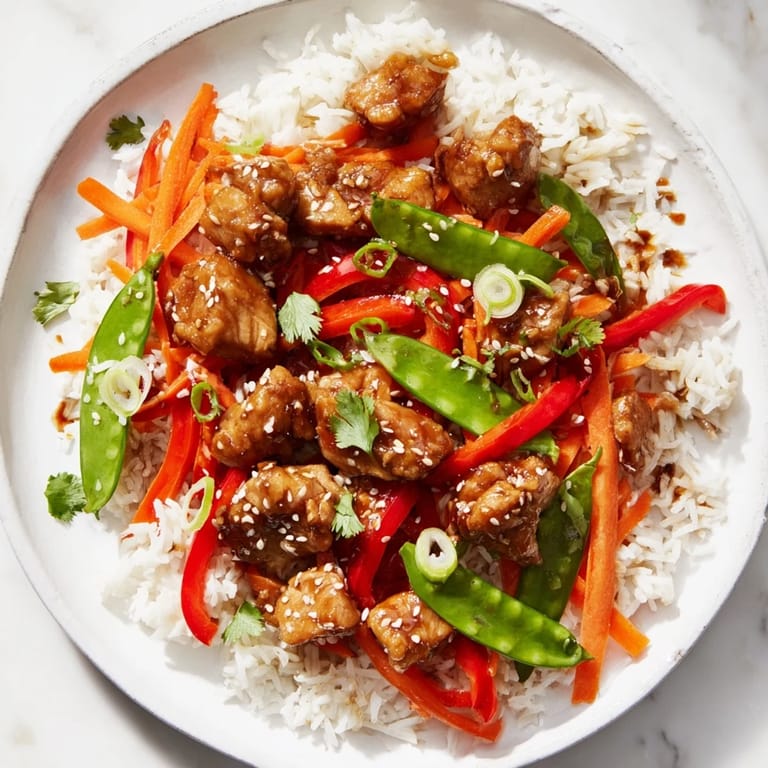
The vegetables need to be cut thin and uniform so they cook evenly and quickly, and honestly, this is where a sharp knife makes all the difference. When your knife is dull, you hack at the vegetables and they leak juice and fall apart; when it's sharp, you slice through them with barely any pressure and they stay crisp and intact. I also prep everything before I start cooking because once you're moving fast in a hot wok, there's no time to search for a cutting board or figure out where the snap peas went.
- Julienne your carrot into thin matchsticks so it cooks in the time it takes to blink.
- Slice the bell pepper into strips that are wide enough to hold their shape but thin enough to cook through quickly.
- Cut the snap peas in half lengthwise so they lay flat and cook evenly instead of rolling around.
 Save to Pinterest
 This bowl has become one of my most-made recipes because it delivers on every level—it's fast, it tastes restaurant-quality, and it makes people happy. The best part is how flexible it is; you can swap vegetables, add avocado or edamame, use tofu instead of chicken, and it still works beautifully every single time.
Questions & Answers
- → What type of rice works best for this dish?
Jasmine or short-grain white rice is ideal for its fluffy texture and subtle aroma, which complements the bold flavors.
- → Can I substitute chicken with plant-based proteins?
Yes, firm tofu or tempeh work well as alternatives, absorbing the marinade flavors nicely.
- → How do I achieve a crispy texture for the vegetables?
Stir-fry the vegetables quickly over high heat for 2-3 minutes to keep them tender-crisp.
- → Is it necessary to marinate the chicken?
Marinating enhances flavor and tenderness, but if short on time, cooking the chicken with the sauce still provides good taste.
- → What garnishes add the best finishing touch?
Toasted sesame seeds, fresh coriander leaves, and lime wedges brighten and add texture to the bowl.