 Save to Pinterest
 I discovered this dish while standing in front of a gallery window one autumn afternoon, completely mesmerized by a contemporary painting of light and shadow dancing across a dark canvas. The artist had layered deep purples and blacks with bright golds, creating this striking visual tension that wouldn't leave my mind. That night, I found myself in the kitchen thinking about how food could do the same thing—how a plate could tell a story through color and contrast rather than just flavor alone. The idea of building something as much for the eye as for the palate felt like a small rebellion against everything I'd learned about cooking. So I started pulling vegetables from my crisper drawer, and this dish emerged from that playful, almost obsessive need to translate visual drama into something you could actually eat.
I made this for the first time when my partner's parents were visiting, and I'll admit I was nervous about serving something so avant-garde to people who preferred comfort food. But watching them lean in close to examine the plate before tasting it, then seeing their faces shift from curiosity to genuine delight, reminded me that food doesn't have to be traditional to be memorable. That meal became less about impressing and more about sharing something I'd genuinely learned to love.
Ingredients
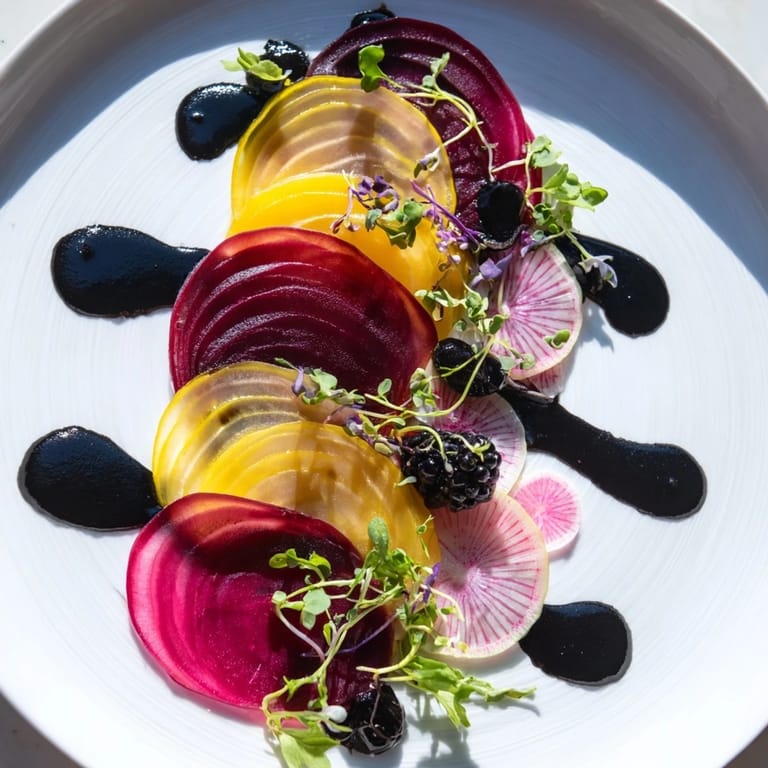
- Golden beets: The sweetness here is your anchor—they soften the earthiness of the red beets and provide warmth against the cool darkness that follows.
- Red beets: These are your first visual statement, deep and grounding, but don't let them dominate; thin slicing is everything.
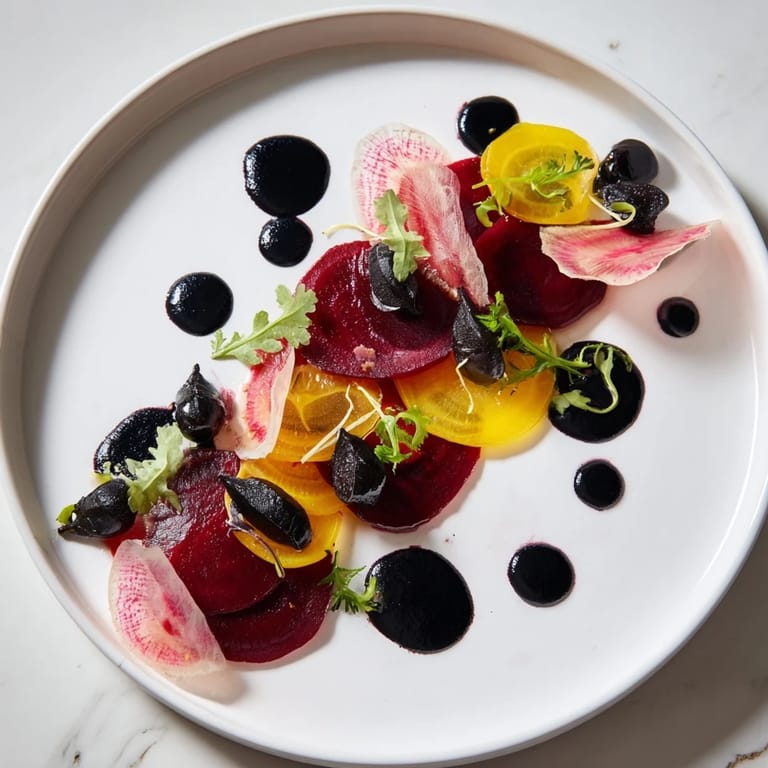
- Watermelon radish: This is the plot twist—pale green exterior gives way to that shocking pink and white interior when sliced, and it tastes like a whisper of peppery freshness.
- Baby arugula: The green here matters less than its peppery bite; it cuts through the sweetness of the beets and grounds the whole composition.
- Blackberries: These aren't just color—their tartness balances the sweet dressing and tahini, and they should stay whole to catch the light.
- Black olives: Halve them so they nestle into the negative space; they add a savory anchor that keeps the plate from feeling too precious.
- Black tahini: If you can't find it, regular tahini tinted with squid ink works beautifully; it's your artistic shadow, meant to be smeared and imperfect.
- Extra virgin olive oil: Quality matters here because the dressing is so simple—it's practically the only thing holding the flavors together.
- Lemon juice: Fresh squeezed if you can manage it; bottled shifts something about the brightness you're trying to achieve.
- Honey: Just a teaspoon, enough to smooth the acidity and add a whisper of floral sweetness that won't overwhelm.
- Microgreens: These are your final punctuation—choose purple radish or basil depending on whether you want more visual drama or herbal clarity.
Tired of Takeout? 🥡
Get 10 meals you can make faster than delivery arrives. Seriously.
One email. No spam. Unsubscribe anytime.
Instructions
- Slice with intention:
- Use a mandoline if you have one, but a sharp knife and patience work just as well. Aim for beets so thin you could almost read through them; this is where texture becomes visual magic.
- Build your foundation:
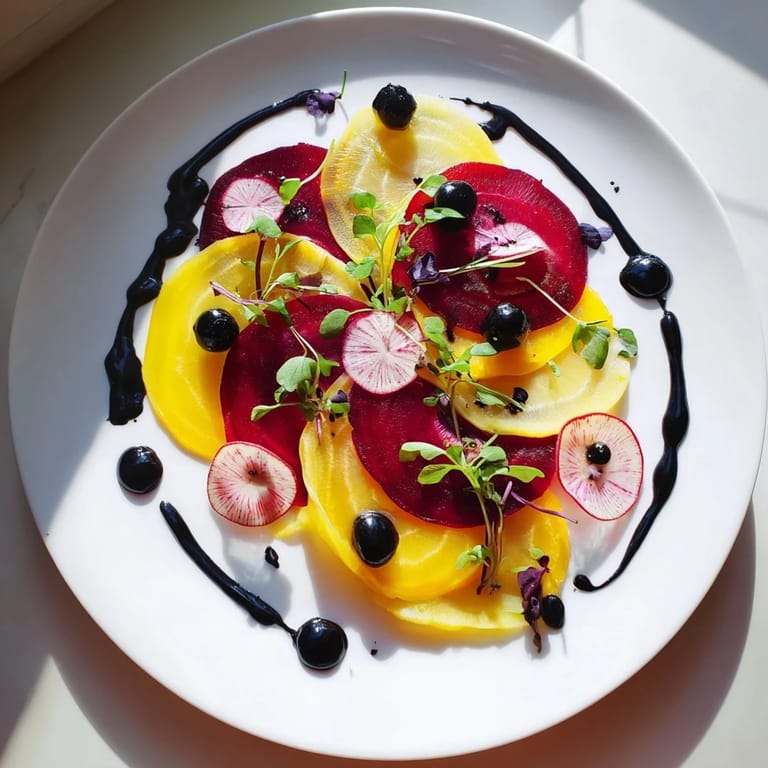
- Lay golden and red beet slices in an overlapping pattern like roof shingles, letting each slice's edge just barely show. The alternation of warm and deep red creates the first visual rhythm.
- Layer the brightness:
- Fan your watermelon radish across the beets—they should look almost random, but position them so their pale interiors catch light. Scatter arugula loosely over top, creating little pockets of green.
- Place the shadows:
- This is the moment where you step back and squint at the plate. Arrange blackberries and black olives strategically; they're not decorative extras but compositional elements, creating visual depth and mystery.
- Mix your dressing simply:
- Whisk olive oil, lemon juice, and honey together just enough to emulsify slightly. Taste and adjust—the dressing should taste almost bright, with salt and pepper not overpowering but present.
- Apply the tahini:
- Spoon small dollops around the plate's edges and in pockets, then use the back of your spoon to drag and smear gently. This shouldn't look precise; it should look like shadows cast by the vegetables above.
- Garnish with confidence:
- Scatter microgreens and any edible flowers you're using, focusing them in the gaps where plate shows through. Serve immediately before the vegetables begin to wilt.
 Save to Pinterest
 There was a moment during one dinner party when the evening light hit the plates just right, and suddenly all the layering and shadow work clicked into something I hadn't quite anticipated—the vegetables looked almost three-dimensional, like they were lifting off the plate. That's when I realized this dish isn't really about any single ingredient or technique; it's about understanding how light and darkness make each other matter.
The Art of Vegetable Selection
Choosing vegetables for this dish is less about availability and more about understanding what each one contributes visually and texturally. Golden beets bring warmth and sweetness, red beets bring earthiness and drama, and watermelon radishes bring that shocking moment of discovery when cut open. The blackberries and olives aren't afterthoughts—they're your visual anchors, the elements that create contrast and draw the eye through the composition. I've learned that what makes this dish work isn't perfection but intentionality; every element should be there because it serves both your eye and your palate.
The Shadow Effect and Plate Composition
Creating visual depth on a plate feels intimidating until you realize it's just about understanding how colors interact and how negative space works. The black tahini and olives aren't meant to hide but to make everything else pop; they're the visual equivalent of a pause in music. I've found that stepping back from the plate before serving, squinting at it, and asking whether your eye knows where to travel—that's your answer for whether the composition is working. If your gaze gets caught in the center and stays there, you've succeeded.
Making This Dish Your Own
Once you understand the principle of light and shadow, you can adapt this with whatever vegetables you have on hand—roasted purple carrots, charred eggplant, black garlic, or even thinly sliced purple cabbage can replace the dark elements. The structure stays the same: bright colors creating visual contrast against deep, dark accents, all bound together with a simple dressing that lets each ingredient speak. The magic isn't in following steps exactly but in understanding why each step matters and feeling free to experiment within those boundaries.
- If blackberries aren't in season, substitute with pomegranate seeds or even thin slices of dried plum for that visual pop and tart note.
- Black tahini can be swapped for black garlic paste or a reduced balsamic glaze smeared in artistic drags across the plate.
- Edible flowers aren't just garnish—choose them based on flavor too, so nasturtiums add peppery notes and pansies add subtle floral sweetness.
 Save to Pinterest
 This dish taught me that cooking isn't always about complexity or technique; sometimes it's about paying attention to how simple things interact when arranged with intention. Every time I make it, I see something new in the composition.
Questions & Answers
- → What techniques create the shadow effect?
Placing dark ingredients such as blackberries and black olives behind bright beet slices creates dramatic silhouettes and depth on the plate.
- → Can the honey dressing be modified for vegan diets?
Yes, substitute honey with agave syrup to keep the dressing vegan-friendly without compromising sweetness.
- → What tools are recommended for slicing beets thinly?
A mandoline slicer or a sharp knife ensures uniformly thin, delicate slices for layering and visual appeal.
- → How does black tahini contribute to the dish?
Black tahini adds both a rich color contrast and creamy texture that enhances the shadow play effect on the plate.
- → What wine pairing suits this dish best?
A crisp Sauvignon Blanc or a light, earthy Pinot Noir complements the fresh and layered flavors beautifully.