 Save to Pinterest
 The first time I made paella, I was standing in my friend's kitchen on a humid summer evening, staring at a paella pan I'd borrowed and barely knew how to use. She'd mentioned in passing that her abuela made it every Sunday, and somehow that offhand comment stuck with me. I wanted to understand why something so simple—rice, seafood, a pinch of saffron—could feel like an event, like something worth gathering around. That night taught me that paella isn't just a dish; it's an invitation to slow down and let the kitchen fill with anticipation.
I made this paella for a dinner party once, and I remember the moment someone cracked open a mussel and the briny steam rose up—everyone at the table went quiet for just a second, then started talking at once about the flavor. There's something about watching people experience a dish you've made that shifts how you think about cooking. It stopped being about following steps and became about creating a moment.
Ingredients
- Saffron threads: Just a quarter teaspoon, but this is where the soul of paella lives—soak it in warm broth to unlock that golden color and subtle earthiness.
- Short-grain paella rice (Bomba or Arborio): These varieties absorb liquid without getting mushy, which is exactly what you want for that tender-but-structured texture.
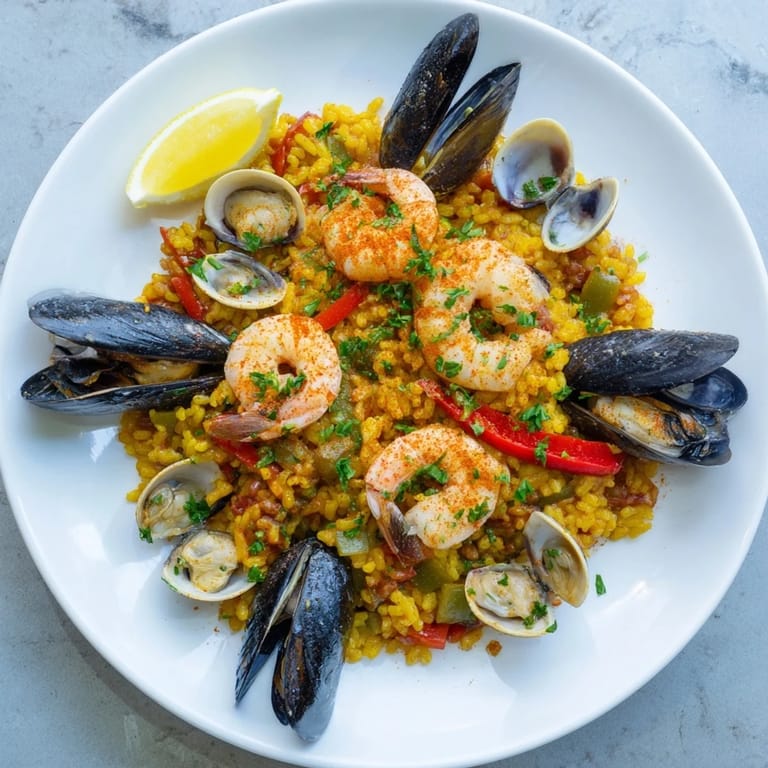
- Shrimp, mussels, and clams: Make sure they're fresh; ask your fishmonger if they're good quality, and get them the day you're cooking if possible.
- Fish or seafood stock: Homemade is ideal, but a quality store-bought version works—this is your liquid foundation, so it matters.
- Smoked paprika: Don't skip this; it adds a subtle warmth and depth that transforms the rice.
- Bell peppers: Any color works, but red and green together give you both sweetness and a pop of color that makes the final dish feel alive.
- Olive oil: Use a good one; it's one of just a few fat sources, so it shapes the flavor.
Tired of Takeout? 🥡
Get 10 meals you can make faster than delivery arrives. Seriously.
One email. No spam. Unsubscribe anytime.
Instructions
- Warm your stock with saffron:
- Pour your stock into a saucepan, add the saffron threads, and let them steep over low heat while you prep everything else. You'll see the broth turn that deep golden color, and when you lean in close, the smell is extraordinary—that's how you know it's working.
- Build your base:
- Heat olive oil in your paella pan over medium heat. Sauté the onion until it softens and turns translucent, then add garlic until it fills the air with that pungent, toasty aroma.
- Add color and body:
- Stir in the bell peppers and let them soften for a few minutes, then add the grated tomato. Cook until the liquid mostly evaporates and everything starts to caramelize slightly at the edges.
- Toast your rice:
- Add the rice and stir it constantly for a minute or two, coating each grain with the oil and vegetables. You'll hear it click slightly against the pan—that's the rice toasting, which adds a subtle nuttiness.
- Pour in the stock and resist the urge to stir:
- Pour the warm saffron broth over the rice, distributing it evenly. This is the hard part—you have to leave it alone now. No stirring, no poking around; just let the rice absorb the liquid and cook gently.
- Nestle in your seafood:
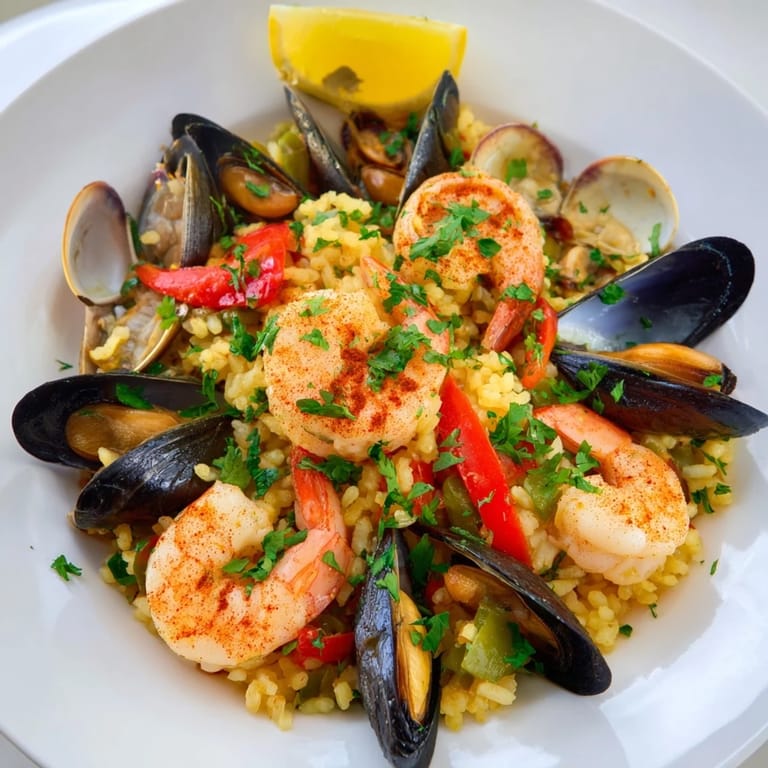
- After the rice has cooked for about 15 minutes, arrange your shrimp, mussels, and clams on top. Cover loosely with foil or a lid and let everything finish cooking together for another 10 minutes or so, until the shellfish open and the rice is tender.
- Rest before serving:
- Turn off the heat, keep the lid on, and let the paella sit for 5 minutes. This gives everything time to settle and allows any remaining liquid to be absorbed.
 Save to Pinterest
 There's a moment near the end of cooking when the kitchen fills with this incredible combination of ocean salt, saffron warmth, and caramelized rice—it's when you realize this dish is more than just dinner. It becomes proof that you've done something that brought people together, and that matters.
About Saffron and Timing
The first time I used saffron, I didn't steep it properly and ended up with pale rice that disappointed me. I learned that saffron needs warmth and time to bloom—it's not impatient like other spices. Steeping it in warm broth before adding it to the pan ensures you get that full golden color and complex flavor that makes paella unmistakable. The investment in good saffron and the patience to use it right is what separates a passable paella from one people remember.
Wine Pairings and Serving
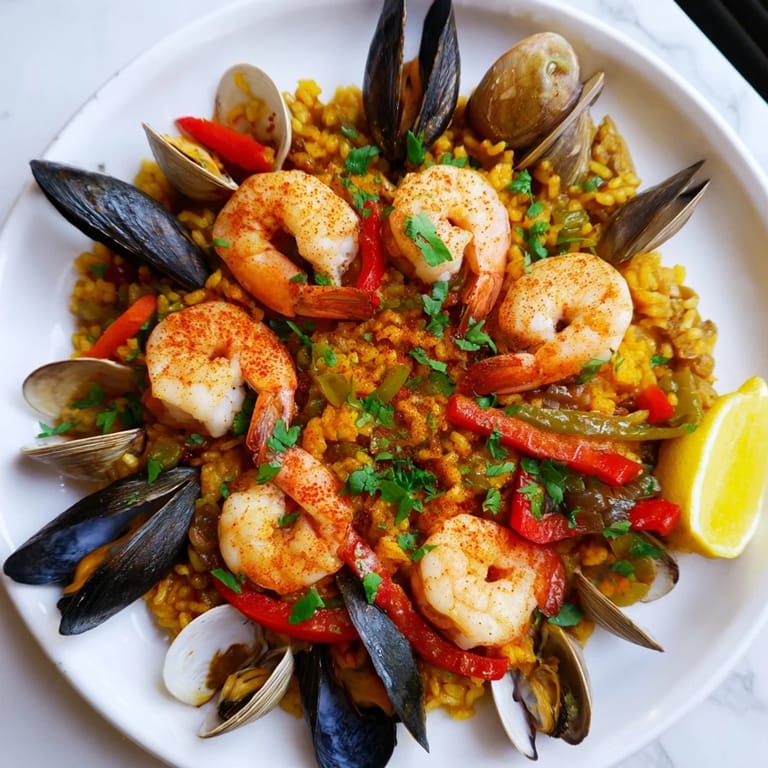
Spanish white wines are the natural partner for this dish—something crisp and minerally like Albariño cuts through the richness of the seafood and complements the saffron beautifully. I've served this with Verdejo too, and both feel right in a way that matters. Lemon wedges are essential; let your guests squeeze them over their portion just before eating, because that burst of acid brightens everything and makes the seafood taste even more alive.
Variations and Substitutions
Paella is more flexible than people think, even though it feels formal and specific. I've made it with calamari when mussels weren't available, and it was just as satisfying. A handful of frozen peas stirred in during the last few minutes adds sweetness and texture, or you can add diced chorizo for smokiness if your guests aren't strictly pescatarian. The skeleton of the recipe stays the same, but the filling changes with what's in front of you and who you're cooking for.
- Try adding a pinch of cayenne or a few saffron threads scattered on top at the end for visual drama and extra flavor depth.
- Frozen seafood works fine if fresh isn't available; just thaw it thoroughly and pat it dry before adding to the pan.
- If you don't have a paella pan, a large, wide skillet with a lid works perfectly—you want even heat and room for everything to spread out.
 Save to Pinterest
 Making paella is an act of presence, a way of saying you care enough about the people around your table to spend an hour tending a single, beautiful dish. Every time I make it, I understand a little more why my friend's abuela served it every Sunday.
Questions & Answers
- → What type of rice is best for paella?
Short-grain rice varieties like Bomba or Arborio absorb flavors well and maintain a firm texture essential for paella.
- → How should seafood be prepared before cooking?
Seafood should be scrubbed, debearded, peeled, and deveined as needed to ensure cleanliness and optimal taste.
- → Can I substitute the seafood with other ingredients?
Yes, calamari or firm white fish can replace some seafood varieties while maintaining the dish's essence.
- → Why is saffron important in this dish?
Saffron imparts a unique aroma, vibrant color, and classic flavor that defines the character of the dish.
- → What is the best way to cook the rice evenly?
Pour the warm saffron-infused stock evenly over rice without stirring afterward to allow proper absorption and texture.